
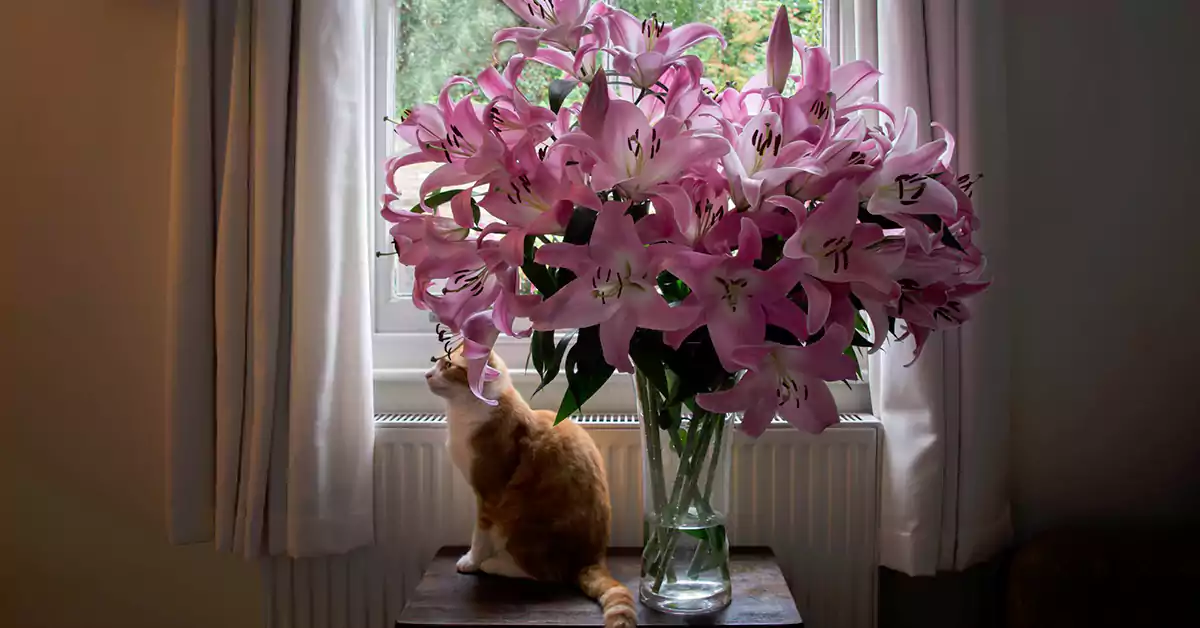
Lilies are beautiful flowers commonly used in homes, bouquets, and on special occasions. Unfortunately, for cat owners, lilies are one of the most dangerous plants you can bring into your home. So if you are a cat parent like me and want to know whether lily flowers are safe or dangerous for your cat, then you should check this detailed post where we have done thorough research and tried to answer all your questions that’d eliminate all doubts in your mind whether to let your cat eat lilies flower.
If you live with a cat, even brief contact with lilies — such as chewing a leaf, licking pollen, or drinking water from a vase — can lead to serious health emergencies. As a cat parent, you should also know that not only lilies but also other popular houseplants, such as snake plants can also be toxic to cats
| Feature | Cat Grass Kit | Cat Water Fountain | Cat Probiotics | Healthy Cat Treats | Interactive Cat Toy |
|---|---|---|---|---|---|
| Image |

|

|
|

|

|
| Product Name | Cat Grass Growing Kit | Cat Water Fountain | Cat Digestive Probiotics | Healthy Cat Treats | Interactive Cat Toy |
| Best For | Indoor cats & safe grazing | Hydration & urinary health | Digestive support | Rewards & nutrition | Exercise & enrichment |
| Affiliate Potential | ⭐⭐⭐⭐☆ | ⭐⭐⭐⭐⭐ | ⭐⭐⭐⭐⭐ | ⭐⭐⭐⭐☆ | ⭐⭐⭐☆☆ |
| Why Buy? | Provides a safe alternative to outdoor grass and supports digestion. | Encourages cats to drink more water throughout the day. | Supports a healthy gut and reduces digestive discomfort. | Delicious rewards with added nutritional benefits. | Keeps indoor cats active and mentally stimulated. |
| Buy Now | Buy Now | Buy Now | Buy Now | Buy Now | Buy Now |
So the big question many cat parents ask is:
Are lilies toxic to cats?
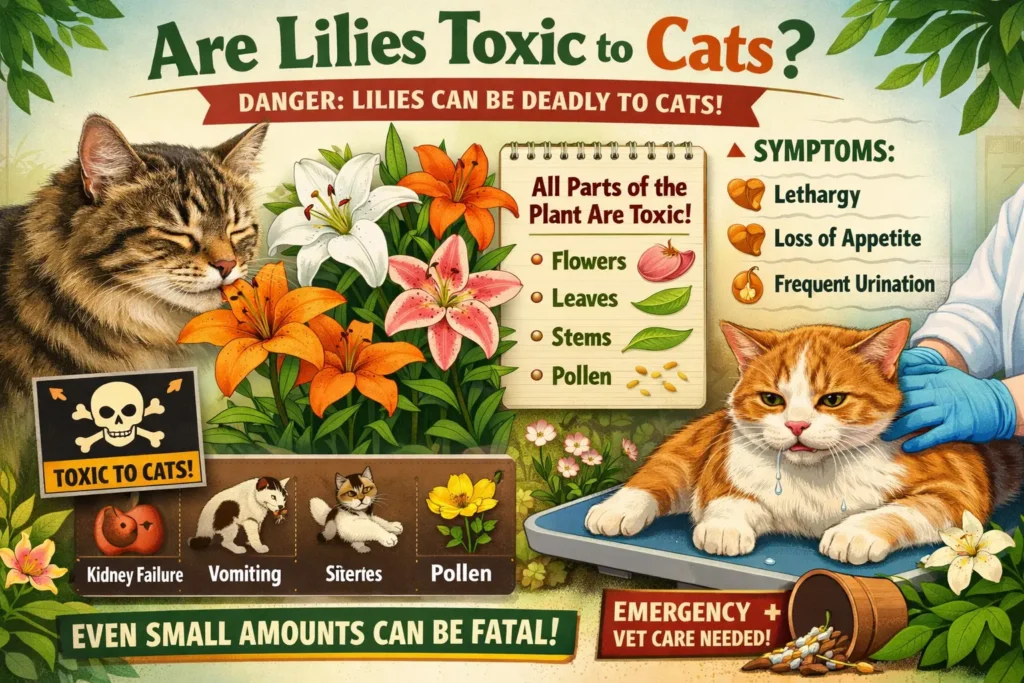
The clear and honest answer is YES — lilies are extremely toxic to cats, and exposure can be life-threatening.
Also, I have written a detailed guide on which herbs, plants are safe or toxic for cats. If you want to know at one place then you can read the complete guide here: Plants That Can Be Deadly for Cats: Safe and Toxic Herbs, Flowers & Houseplants
Before going deeper, here’s a quick safety overview of common lilies and their risk level for cats
Lily Toxicity in Cats – Quick Safety Table
| Lily Type | Toxic to Cats? | Risk Level | Important Notes |
|---|---|---|---|
| Easter lily | ✅ Yes | 🚨 Extremely toxic | Can cause kidney failure |
| Tiger lily | ✅ Yes | 🚨 Extremely toxic | All parts are poisonous |
| Asiatic lily | ✅ Yes | 🚨 Extremely toxic | Common in flower bouquets |
| Stargazer lily | ✅ Yes | 🚨 Extremely toxic | Pollen alone is dangerous |
| Daylily | ✅ Yes | 🚨 Extremely toxic | Same risk as true lilies |
| Peace lily | ⚠️ Mildly toxic | ⚠️ Moderate | Causes mouth irritation, not kidney failure |
| Calla lily | ⚠️ Mildly toxic | ⚠️ Moderate | Oral irritation and drooling |
| Lily of the valley | ⚠️ Toxic | ⚠️ Serious | Affects the heart |
👉 Any plant classified as a “true lily” should never be kept in a home with cats.
Are Lilies Toxic to Cats?
Yes — lilies are extremely toxic to cats, and exposure can be life-threatening.
Even tiny amounts of a true lily can cause acute kidney failure in cats. This includes:
- Chewing a leaf
- Licking pollen off fur
- Drinking water from a vase
- Brushing against fallen pollen
There is no safe amount of lily exposure for cats.
Why Are Lilies So Dangerous for Cats?
Unlike many other toxic plants, lilies affect a cat’s kidneys directly.
The exact toxin in lilies is still unknown, but veterinarians know this:
- Cats’ bodies cannot process it
- Kidney damage can begin within hours
- Without fast treatment, the damage may become irreversible
This is why lilies are considered a true emergency for cat owners.
Which Lilies Are Most Dangerous to Cats?
🚨 True Lilies (Extremely Toxic)
These lilies can cause kidney failure:
- Easter lily
- Tiger lily
- Asiatic lily
- Stargazer lily
- Japanese show lily
- Daylily
⚠️ All parts are toxic — flowers, leaves, stems, pollen, and even vase water.
⚠️ Not “True Lilies” but Still Toxic
Some plants have “lily” in the name but work differently:
- Peace lily – causes mouth irritation, drooling, vomiting
- Calla lily – oral irritation only
- Lily of the valley – affects the heart (also very dangerous)
These usually do not cause kidney failure, but they are still unsafe.
What Happens If a Cat Is Exposed to Lilies?
Symptoms can start very quickly or may be delayed, which makes lilies extra dangerous.
Early Symptoms (Within 2–6 Hours)
- Drooling
- Vomiting
- Loss of appetite
- Lethargy
- Pawing at mouth (sometimes)
Later Symptoms (12–72 Hours)
- Increased thirst
- Increased or reduced urination
- Dehydration
- Severe lethargy
- Signs of kidney failure
🚨 By the time later symptoms appear, kidney damage may already be severe.
Can Lilies Kill Cats?
Yes.
Untreated lily exposure can be fatal for cats.
Even cats that seem “fine” at first can develop kidney failure within 1–3 days. This is why immediate action is critical.
What To Do If Your Cat Eats or Touches a Lily
If by any chance your cat chew lilies, then Treat this as an emergency.
Immediate Steps
- Remove the cat from the area
- Prevent grooming (pollen on fur is dangerous)
- Call your vet or emergency clinic immediately
- Go to the vet ASAP, even if there are no symptoms yet
❌ Do NOT wait for symptoms
❌ Do NOT try home remedies
❌ Do NOT assume “just a lick” is safe
Early treatment within 6–12 hours can save your cat’s life.
Is Lily Pollen Dangerous to Cats?
Yes — lily pollen alone is extremely dangerous.
Cats often get pollen on their:
- Fur
- Paws
- Face
When they groom themselves, they ingest the toxin. Even a small amount can be enough to cause poisoning.
Is Lily Water Toxic to Cats?
Yes.
Water from a vase containing lilies is highly toxic.
Cats should never be allowed to drink it.
Should Cat Owners Ever Keep Lilies at Home?
No.
If you have a cat, the safest option is to never bring lilies into your home — not even for a short time. Even some plants that look harmless, such as money plants, can still be unsafe for cats
This includes:
- Bouquets
- Gifts
- Funeral flowers
- Wedding decorations
Safe Alternatives to Lilies for Cat Owners
If you love flowers and want to keep flowers at your home, then here we are suggesting some safe alternatives to lilies that you can plant at your home.
- Roses
- Orchids
- Sunflowers
- Gerbera daisies
- Snapdragon
- Zinnias
If you want greenery at home, consider safer options like spider plants, which are generally considered cat-friendly. Always double-check plant safety before bringing them home.
Frequently Asked Questions (FAQs) (General Safety)
Are lilies toxic to cats if smelled?
Smelling alone is usually not harmful, but pollen can easily transfer to fur and be ingested later. So the risk is still very high.
Can cats survive lily poisoning?
Yes, if treated early. Cats treated within the first 6–12 hours often recover. Delayed treatment greatly reduces survival chances.
Are dried lilies or fake lilies safe?
Dried real lilies can still carry pollen residue.
Fake lilies are safer, but make sure no real plant parts are mixed in.
Are lilies toxic to kittens?
Yes. Kittens are just as vulnerable, and sometimes even more sensitive.
Is the peace lily as dangerous as true lilies?
No. Peace lilies do not cause kidney failure, but they still cause painful mouth irritation and vomiting. They are not safe either.
Frequently Asked Questions (Emergency & Real-World Concerns)
Not necessarily. One of the most dangerous aspects of lily poisoning is that serious kidney damage can occur before obvious symptoms appear. Some cats may seem completely fine for several hours after exposure.
If your cat has eaten, chewed, or even licked a lily, veterinary attention is still recommended as soon as possible, even if there are no visible symptoms yet.
Early signs often appear within a few hours and may include:
1. Drooling
2. Vomiting
3. Loss of appetite
4. Lethargy
As poisoning progresses, symptoms related to kidney failure may develop. Early treatment greatly improves outcomes.
All true lilies are extremely toxic to cats, including:
1. Easter lilies
2. Tiger lilies
3. Asiatic lilies
4. Stargazer lilies
5. Daylilies
All parts of these plants are dangerous, including pollen and vase water.
There is no safe amount of lily pollen for cats. Even a small amount of pollen transferred to a cat’s fur and ingested during grooming can cause poisoning.
Yes. White lilies, including Easter lilies, are among the most dangerous types for cats. Their color does not reduce toxicity — they are extremely poisonous.
Survival depends heavily on how quickly treatment begins. Cats treated within the first 6–12 hours after exposure often recover well. Delayed treatment significantly lowers survival chances and increases the risk of permanent kidney damage.
If treated early, many cats recover fully. If kidney damage occurs, long-term health issues are possible.
Final Verdict: Are Lilies Safe for Cats?
No, lilies flower are extremely dangerous for cats. You should avoid planting lilies at your home, and not your cat go near it.
They are one of the most toxic plants a cat can be exposed to, and even minimal contact can be life-threatening. Because safer flower options exist, lilies should be completely avoided in cat-friendly homes.
Protecting your cat means knowing which plants to keep far away — and lilies are at the top of that list.
| Feature | Cat Grass Kit | Cat Water Fountain | Cat Probiotics | Healthy Cat Treats | Interactive Cat Toy |
|---|---|---|---|---|---|
| Image |
|
|
|
|
|
| Product Name | Cat Grass Growing Kit | Cat Water Fountain | Cat Digestive Probiotics | Healthy Cat Treats | Interactive Cat Toy |
| Best For | Indoor cats & safe grazing | Hydration & urinary health | Digestive support | Rewards & nutrition | Exercise & enrichment |
| Affiliate Potential | ⭐⭐⭐⭐☆ | ⭐⭐⭐⭐⭐ | ⭐⭐⭐⭐⭐ | ⭐⭐⭐⭐☆ | ⭐⭐⭐☆☆ |
| Why Buy? | Provides a safe alternative to outdoor grass and supports digestion. | Encourages cats to drink more water throughout the day. | Supports a healthy gut and reduces digestive discomfort. | Delicious rewards with added nutritional benefits. | Keeps indoor cats active and mentally stimulated. |
| Buy Now | Buy Now | Buy Now | Buy Now | Buy Now | Buy Now |