
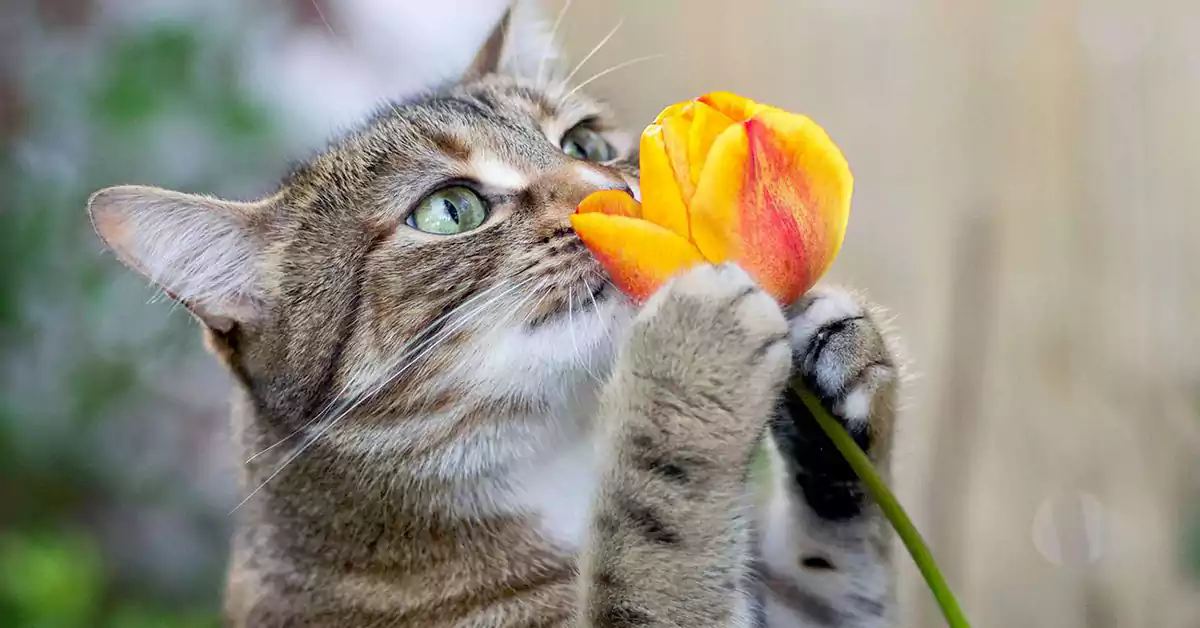
Tulips are bright, elegant flowers often associated with spring, celebrations, and home décor. You’ll commonly find them in gardens, bouquets, and even potted plants kept indoors. While tulips may look harmless and beautiful, cat owners often pause and wonder:
Are tulips toxic to cats?
The clear answer is YES — tulips are toxic to cats, but the level of danger depends on which part of the plant is involved and how much exposure occurs. Tulips are not as deadly as lilies, but they can still cause noticeable illness and discomfort in cats.
| Feature | Cat Grass Kit | Cat Water Fountain | Cat Probiotics | Healthy Cat Treats | Interactive Cat Toy |
|---|---|---|---|---|---|
| Image |

|

|

|

|

|
| Product Name | Cat Grass Growing Kit | Cat Water Fountain | Cat Digestive Probiotics | Healthy Cat Treats | Interactive Cat Toy |
| Best For | Indoor cats & safe grazing | Hydration & urinary health | Digestive support | Rewards & nutrition | Exercise & enrichment |
| Affiliate Potential | ⭐⭐⭐⭐☆ | ⭐⭐⭐⭐⭐ | ⭐⭐⭐⭐⭐ | ⭐⭐⭐⭐☆ | ⭐⭐⭐☆☆ |
| Why Buy? | Provides a safe alternative to outdoor grass and supports digestion. | Encourages cats to drink more water throughout the day. | Supports a healthy gut and reduces digestive discomfort. | Delicious rewards with added nutritional benefits. | Keeps indoor cats active and mentally stimulated. |
| Buy Now | Buy Now | Buy Now | Buy Now | Buy Now | Buy Now |
This guide explains exactly how tulips affect cats, which parts are most dangerous, symptoms to watch for, what to do if exposure happens, and whether tulips should be kept in homes with cats.
Also, I have written a detailed guide on which herbs, plants are safe or toxic for cats. If you want to know at one place, then you can read the complete guide here: Plants That Can Be Deadly for Cats: Safe and Toxic Herbs, Flowers & Houseplants
| Aspect | Details |
|---|---|
| Plant name | Tulip (Tulipa species) |
| Toxic to cats? | ⚠️ Yes |
| Toxic compounds | Tulipalin A and Tulipalin B |
| Most toxic part | 🚨 Bulb |
| Toxicity level | Moderate |
| Common symptoms | Drooling, vomiting, mouth irritation, diarrhea |
| Onset of symptoms | Within a few hours |
| Life-threatening? | ❌ Rarely |
| Organ damage | Does not cause kidney failure |
| Risk comparison | Less dangerous than lilies, more irritating than poinsettias |
What Are Tulips?
Tulips (Tulipa species) are flowering plants grown from bulbs and belong to the Liliaceae family. They are popular both outdoors in gardens and indoors as decorative cut flowers.
Tulips contain natural chemical compounds that protect the plant from pests — unfortunately, these same compounds can be harmful to cats.
Are Tulips Toxic to Cats?
Yes, tulips are toxic to cats.
They contain toxins called tulipalin A and tulipalin B, which can irritate a cat’s digestive system and mouth when ingested. While all parts of the tulip plant are toxic, the bulb is the most dangerous part.
Most cases of tulip poisoning are not life-threatening, but they should never be ignored.
Which Parts of a Tulip Are Most Toxic?
Tulip toxicity varies depending on the part of the plant:
- Tulip bulbs – 🚨 Most toxic
- Stems and leaves – Moderately toxic
- Flowers (petals) – Mildly toxic
Bulbs contain the highest concentration of tulipalin compounds. Cats digging in gardens or playing with potted plants are at greater risk of bulb exposure.
Why Do Cats Chew Tulips?
Cats don’t chew tulips because they need nutrients from plants. In most cases, plant chewing is driven by behavior, curiosity, and instinct, not hunger.
Tulips, in particular, attract cats for several reasons.
First, curiosity plays a major role. Cats explore their environment with their mouths, especially when they encounter something new. The bright colors, soft petals, and upright stems of tulips can easily catch a cat’s attention, especially in indoor spaces where stimulation is limited.
Second, movement and texture make tulips tempting. Petals and leaves often move slightly with air flow, which triggers a cat’s hunting instincts. The smooth yet slightly firm texture of tulip leaves can also feel interesting when bitten or chewed.
Another common reason is boredom. Indoor cats that lack environmental enrichment may chew plants simply as a way to relieve boredom or stress. This is especially common in homes where cats do not have access to safe plant alternatives like cat grass.
Smell also plays a role. While tulips don’t have a strong scent to humans, cats experience smells differently. Certain plant compounds can be mildly stimulating or irritating, which may encourage nibbling followed by stopping after one or two bites.
Finally, age matters. Kittens and young cats are much more likely to chew on plants because they are still learning about their surroundings. They are curious, playful, and less cautious than adult cats.
What Happens If a Cat Eats a Tulip?
When a cat eats or chews part of a tulip, the plant’s natural toxins begin to irritate the mouth and digestive tract. Symptoms usually appear within a few hours, although the timing can vary depending on how much was eaten and which part of the plant was involved.
In many cases, the first reaction occurs in the mouth and stomach. A cat may begin drooling excessively or pawing at its mouth due to irritation. This is often followed by nausea or vomiting as the body attempts to expel the irritating compounds.
As the toxins move through the digestive system, some cats may experience loss of appetite, mild diarrhea, or lethargy. These symptoms are usually temporary but can last longer if a larger amount was consumed.
Exposure to tulip bulbs tends to cause more noticeable symptoms. Bulbs contain higher concentrations of tulipalin compounds, which can lead to stronger stomach upset and longer recovery times compared to eating leaves or petals.
Most cats recover fully with rest and monitoring, but symptoms should never be ignored. If vomiting becomes frequent, the cat refuses food for an extended period, or behavior changes significantly, veterinary advice is recommended.
Common Symptoms of Tulip Poisoning in Cats
Signs of tulip exposure can vary from cat to cat, but the most commonly observed symptoms include:
- Excessive drooling or foaming at the mouth
- Vomiting, sometimes occurring more than once
- Nausea or gagging
- Reduced or complete loss of appetite
- Redness or irritation around the mouth
- Diarrhea in some cases
- Unusual tiredness or lethargy
If a cat ingests a tulip bulb, symptoms may be more intense and last longer than with leaves or flowers.
Is Tulip Poisoning Life-Threatening for Cats?
In most cases, tulip poisoning is not fatal, especially when compared to extremely toxic plants like lilies. However, severe symptoms can occur if a large amount — particularly bulbs — is eaten.
Kittens, senior cats, or cats with sensitive digestive systems may react more strongly.
Prompt care usually leads to a full recovery.
What Should You Do If Your Cat Eats a Tulip?
If you suspect your cat has chewed or eaten part of a tulip plant, follow these steps:
1. Remove Access Immediately
Take the tulip plant away so your cat cannot ingest more.
2. Check for Plant Pieces
Look for chewed leaves, petals, or disturbed soil around bulbs.
3. Offer Fresh Water
This may help reduce irritation in the mouth and throat.
4. Monitor Closely
Watch your cat for vomiting, drooling, or changes in behavior over the next 24 hours.
5. Contact Your Veterinarian
If symptoms are severe, persistent, or worsen, call your vet for advice.
❌ Do not induce vomiting
❌ Do not try home remedies without veterinary guidance
How Much Tulip Is Dangerous for Cats?
There is no safe amount of tulip for cats.
Even small amounts can cause stomach upset. Larger amounts, especially bulbs, increase the risk of more severe symptoms.
Are Tulips Dangerous if Only Smelled?
No.
Simply smelling tulips does not cause poisoning. Toxicity occurs only when parts of the plant are chewed, swallowed, or ingested.
Can Cats Touch Tulips?
Yes, touching tulips is generally not dangerous. However, if sap or plant residue gets on the fur, cats may ingest it later while grooming.
Wiping your cat’s fur with a damp cloth can help reduce risk.
Should Cat Owners Keep Tulips at Home?
Tulips are not ideal for homes with cats.
While not deadly in most cases, they still pose a preventable risk. Many cat owners choose to avoid tulips entirely and opt for safer alternatives.
If tulips are kept:
- Place them well out of reach
- Avoid potted tulips with exposed bulbs
- Dispose of fallen petals immediately
Safer Flower Alternatives for Cat Owners
If you love flowers but want to reduce risk, consider:
- Roses
- Orchids
- Gerbera daisies
- Sunflowers
- Snapdragons
Always confirm plant safety before bringing them home.
Frequently Asked Questions (FAQs)
Tulips are unlikely to kill cats, especially when only small amounts of leaves or petals are consumed. However, eating tulip bulbs can cause more severe illness and should be treated seriously.
Yes. Tulip bulbs contain the highest concentration of toxins and are the most dangerous part of the plant for cats.
Symptoms usually appear within a few hours, but mild digestive upset may last up to a day.
Even if your cat seems fine initially, monitoring is important. Some symptoms develop gradually. If anything unusual appears, consult your veterinarian.
No. Tulips are toxic, but lilies are far more dangerous and can cause kidney failure even with minimal exposure. Tulips generally cause digestive irritation rather than organ damage.
Yes. Kittens are just as vulnerable and may react more strongly because of their smaller size and curiosity.
Yes. Dried or wilted tulips can still contain toxic compounds and should be kept away from cats.
Emergency care is usually not required unless your cat shows severe or persistent symptoms. When in doubt, contacting your vet is always the safest option.
Final Verdict: Are Tulips Safe for Cats?
No — tulips are not safe for cats.
While they are not among the most deadly plants, they can still cause vomiting, irritation, and digestive distress, especially if bulbs are eaten. Because safer flower options exist, avoiding tulips in cat-friendly homes is the best choice.
Protecting your cat means understanding which plants pose risks — even the ones that look innocent.
| Feature | Cat Grass Kit | Cat Water Fountain | Cat Probiotics | Healthy Cat Treats | Interactive Cat Toy |
|---|---|---|---|---|---|
| Image |
|
|
|
|
|
| Product Name | Cat Grass Growing Kit | Cat Water Fountain | Cat Digestive Probiotics | Healthy Cat Treats | Interactive Cat Toy |
| Best For | Indoor cats & safe grazing | Hydration & urinary health | Digestive support | Rewards & nutrition | Exercise & enrichment |
| Affiliate Potential | ⭐⭐⭐⭐☆ | ⭐⭐⭐⭐⭐ | ⭐⭐⭐⭐⭐ | ⭐⭐⭐⭐☆ | ⭐⭐⭐☆☆ |
| Why Buy? | Provides a safe alternative to outdoor grass and supports digestion. | Encourages cats to drink more water throughout the day. | Supports a healthy gut and reduces digestive discomfort. | Delicious rewards with added nutritional benefits. | Keeps indoor cats active and mentally stimulated. |
| Buy Now | Buy Now | Buy Now | Buy Now | Buy Now | Buy Now |