
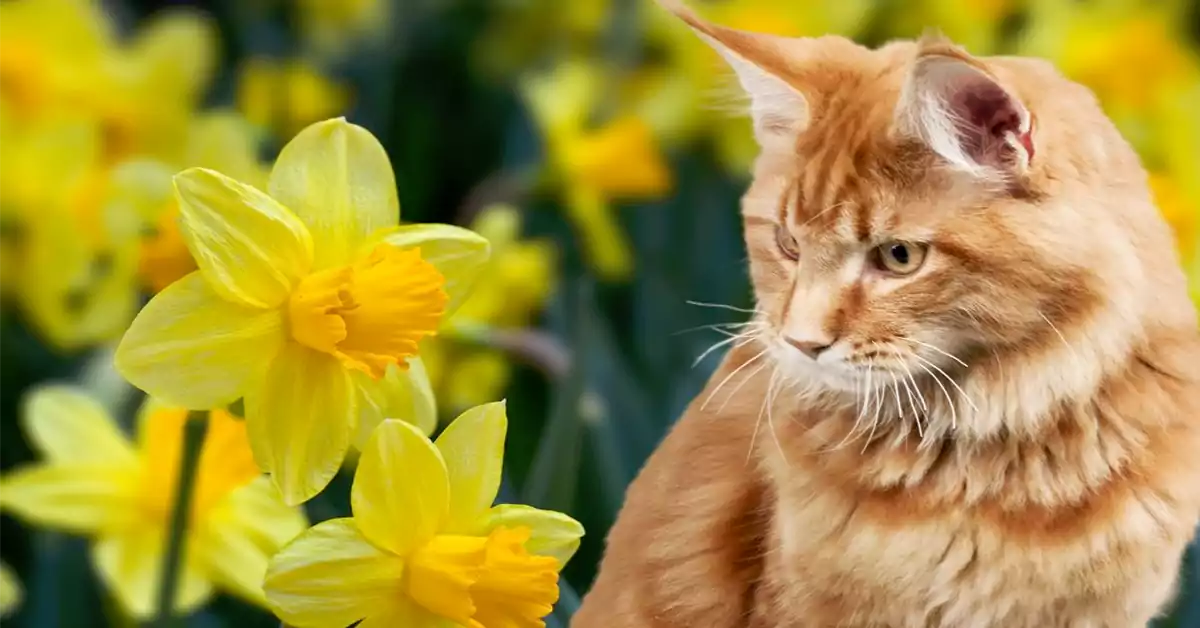
Bright yellow daffodils are one of the first signs that spring has arrived. They’re cheerful, common in gardens, and often brought indoors as cut flowers. But for cat owners, these pretty blooms raise an important and serious question:
Are daffodils poisonous to cats?
Yes — daffodils are toxic to cats.
| Feature | Cat Grass Kit | Cat Water Fountain | Cat Probiotics | Healthy Cat Treats | Interactive Cat Toy |
|---|---|---|---|---|---|
| Image |

|

|

|

|

|
| Product Name | Cat Grass Growing Kit | Cat Water Fountain | Cat Digestive Probiotics | Healthy Cat Treats | Interactive Cat Toy |
| Best For | Indoor cats & safe grazing | Hydration & urinary health | Digestive support | Rewards & nutrition | Exercise & enrichment |
| Affiliate Potential | ⭐⭐⭐⭐☆ | ⭐⭐⭐⭐⭐ | ⭐⭐⭐⭐⭐ | ⭐⭐⭐⭐☆ | ⭐⭐⭐☆☆ |
| Why Buy? | Provides a safe alternative to outdoor grass and supports digestion. | Encourages cats to drink more water throughout the day. | Supports a healthy gut and reduces digestive discomfort. | Delicious rewards with added nutritional benefits. | Keeps indoor cats active and mentally stimulated. |
| Buy Now | Buy Now | Buy Now | Buy Now | Buy Now | Buy Now |
Every part of the daffodil plant can cause poisoning, but the bulbs are especially dangerous and can lead to severe symptoms if chewed or swallowed.
This guide explains why daffodils are toxic, what symptoms to watch for, how serious exposure can be, and what to do if your cat comes into contact with them.
Also, I have written a detailed guide on which herbs, plants are safe or toxic for cats. If you want to know at one place, then you can read the complete guide here: Plants That Can Be Deadly for Cats: Safe and Toxic Herbs, Flowers & Houseplants
Quick Safety Table: Daffodils & Cats
| Question | Answer |
|---|---|
| Are daffodils toxic to cats? | Yes — poisonous |
| Most dangerous part | Bulb (highest toxin concentration) |
| Mild symptoms | Drooling, vomiting, diarrhea |
| Severe symptoms | Tremors, heart issues, low blood pressure |
| Is sniffing dangerous? | Usually no |
| Is daffodil water toxic? | Yes, can cause symptoms |
| Vet visit needed? | Yes, if ingestion occurs |
What Are Daffodils?
Daffodils (Narcissus species) are flowering plants known for their trumpet-shaped yellow or white blooms. They’re commonly planted outdoors in gardens and are also sold as cut flowers or potted plants during spring.
While beautiful, daffodils contain natural chemical compounds that are harmful to cats and other pets.
Why Are Daffodils Poisonous to Cats?
Daffodils contain several toxic compounds, including:
- Lycorine – causes vomiting and neurological effects
- Calcium oxalate crystals – irritate the mouth and digestive tract
- Other alkaloids – can affect the heart and nervous system
The bulbs contain the highest concentration of toxins, making them far more dangerous than the leaves or flowers.
Even small amounts can cause illness.
Which Parts of the Daffodil Are Toxic?
All parts of the plant are unsafe:
- Bulbs ❌ (most dangerous)
- Flowers ❌
- Leaves ❌
- Stems ❌
- Sap ❌
- Vase water ❌
Cats are less likely to dig up bulbs than dogs, but indoor cats may chew leaves or flowers, especially if bored or curious.
What Happens If a Cat Eats a Daffodil?
Symptoms usually appear within 30 minutes to a few hours after exposure.
Common Symptoms
- Excessive drooling
- Vomiting
- Nausea
- Diarrhea
- Loss of appetite
- Lethargy
More Serious Symptoms
- Tremors or shaking
- Irregular heartbeat
- Low blood pressure
- Difficulty breathing
- Seizures (rare but possible)
Severity depends on:
- Which part was eaten
- Amount ingested
- Size and health of the cat
Are Daffodil Bulbs More Dangerous Than Flowers?
Yes — daffodil bulbs are significantly more toxic than the rest of the plant.
Bulb ingestion can cause:
- Severe gastrointestinal distress
- Neurological symptoms
- Cardiovascular complications
This is why daffodil poisoning is considered moderate to severe, not mild.
Is Daffodil Vase Water Toxic to Cats?
Yes.
When daffodils sit in water, toxins leach into the vase water. Cats that drink this water may develop symptoms even if they never touch the plant itself.
This is an often-overlooked risk.
What to Do If Your Cat Eats a Daffodil
Step 1: Remove Access Immediately
Take away the plant and prevent further exposure.
Step 2: Do NOT Induce Vomiting
Never try home remedies unless directed by a veterinarian.
Step 3: Rinse the Mouth (If Safe)
If your cat allows it, gently wipe the mouth with a damp cloth.
Step 4: Contact a Vet Immediately
Especially if:
- Bulbs were involved
- Vomiting is persistent
- Neurological symptoms appear
Early treatment leads to better outcomes.
How Is Daffodil Poisoning Treated?
Treatment depends on severity and timing, but may include:
- Activated charcoal
- IV fluids
- Anti-vomiting medication
- Heart and neurological monitoring
Most cats recover fully with prompt veterinary care.
Can Cats Die From Daffodil Poisoning?
Deaths are rare, but severe poisoning can be life-threatening if untreated, especially when bulbs are consumed.
This is why daffodils should be considered unsafe to keep in cat-accessible areas.
Are Daffodils Safe to Keep Outdoors If You Have a Cat?
Outdoor risk is lower for cats that:
- Don’t dig
- Don’t chew plants
However:
- Indoor–outdoor cats
- Curious kittens
- Cats that chew plants
may still be at risk.
If you plant daffodils outdoors, keep cats away from bulbs and freshly sprouted leaves.
Safer Flower Alternatives for Cat Homes
If you love flowers but share your home with cats, consider safer options:
- Roses
- Orchids
- Sunflowers
- Gerbera daisies
- Spider plants (non-toxic, but chewing discouraged)
Always double-check plant safety before bringing flowers home.
Frequently Asked Questions (FAQs)
Yes. Daffodils are more dangerous than many common flowers due to their alkaloid content and highly toxic bulbs.
Licking alone usually causes mild irritation, but monitor closely for drooling or vomiting.
Yes. Drying does not remove toxic compounds.
Yes, and kittens are more vulnerable due to their small size and immature digestive systems.
Sniffing is generally safe, but chewing or drinking vase water is not.
No. Daffodils do not cause the same kidney failure seen with true lilies, but they can still cause serious illness.
With treatment, most symptoms resolve within 24–72 hours.
Yes, if you have cats that chew plants or explore countertops.
Final Verdict: Are Daffodils Poisonous to Cats?
Yes — daffodils are poisonous to cats and should be avoided in cat-friendly homes.
While many cases cause mild to moderate illness, bulb ingestion can lead to severe symptoms and requires immediate veterinary care.
Key takeaways for cat parents:
- All parts of daffodils are toxic
- Bulbs are the most dangerous
- Vase water can cause poisoning
- Early vet care is crucial
- Choose safer flower alternatives whenever possible
Protecting your cat means being cautious with even the most beautiful plants.
| Feature | Cat Grass Kit | Cat Water Fountain | Cat Probiotics | Healthy Cat Treats | Interactive Cat Toy |
|---|---|---|---|---|---|
| Image |
|
|
|
|
|
| Product Name | Cat Grass Growing Kit | Cat Water Fountain | Cat Digestive Probiotics | Healthy Cat Treats | Interactive Cat Toy |
| Best For | Indoor cats & safe grazing | Hydration & urinary health | Digestive support | Rewards & nutrition | Exercise & enrichment |
| Affiliate Potential | ⭐⭐⭐⭐☆ | ⭐⭐⭐⭐⭐ | ⭐⭐⭐⭐⭐ | ⭐⭐⭐⭐☆ | ⭐⭐⭐☆☆ |
| Why Buy? | Provides a safe alternative to outdoor grass and supports digestion. | Encourages cats to drink more water throughout the day. | Supports a healthy gut and reduces digestive discomfort. | Delicious rewards with added nutritional benefits. | Keeps indoor cats active and mentally stimulated. |
| Buy Now | Buy Now | Buy Now | Buy Now | Buy Now | Buy Now |