
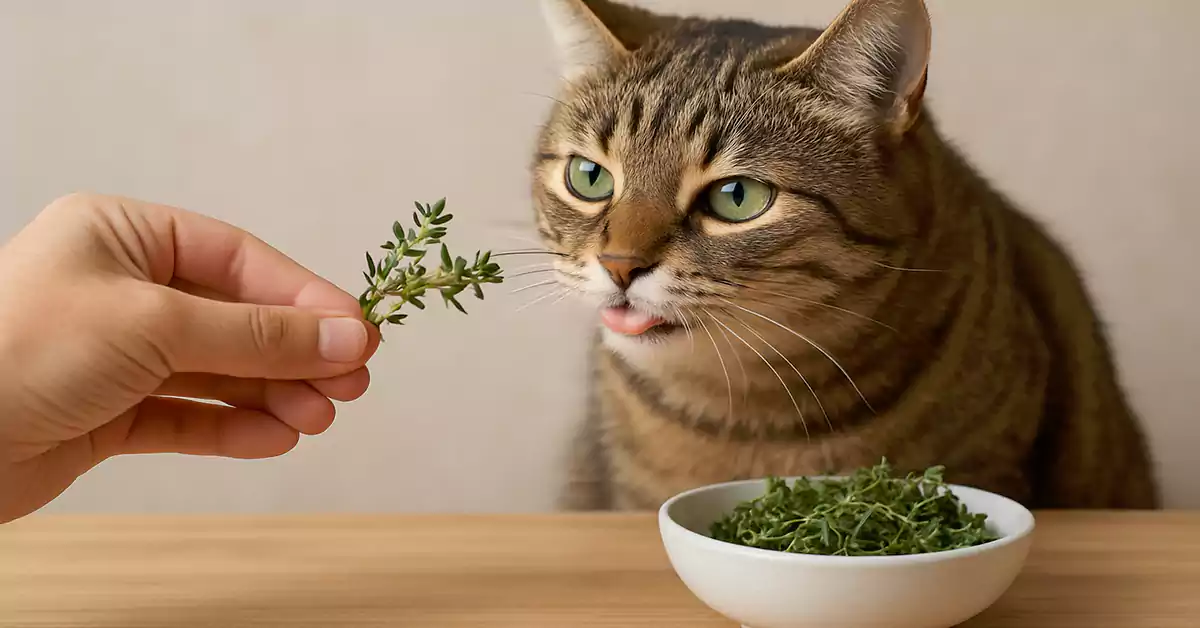
Thyme is a fragrant Mediterranean herb commonly used in soups, marinades, pastas, roasted vegetables, and herbal remedies. Its woody smell and soft leaves often attract curious cats, especially when the herb is grown indoors in pots or used frequently in the kitchen.
This raises an important question for pet owners:
| Feature | Cat Grass Kit | Cat Water Fountain | Cat Probiotics | Healthy Cat Treats | Interactive Cat Toy |
|---|---|---|---|---|---|
| Image |

|

|

|

|

|
| Product Name | Cat Grass Growing Kit | Cat Water Fountain | Cat Digestive Probiotics | Healthy Cat Treats | Interactive Cat Toy |
| Best For | Indoor cats & safe grazing | Hydration & urinary health | Digestive support | Rewards & nutrition | Exercise & enrichment |
| Affiliate Potential | ⭐⭐⭐⭐☆ | ⭐⭐⭐⭐⭐ | ⭐⭐⭐⭐⭐ | ⭐⭐⭐⭐☆ | ⭐⭐⭐☆☆ |
| Why Buy? | Provides a safe alternative to outdoor grass and supports digestion. | Encourages cats to drink more water throughout the day. | Supports a healthy gut and reduces digestive discomfort. | Delicious rewards with added nutritional benefits. | Keeps indoor cats active and mentally stimulated. |
| Buy Now | Buy Now | Buy Now | Buy Now | Buy Now | Buy Now |
Can cats eat thyme safely?
The good news is yes — thyme is safe and non-toxic to cats. In fact, thyme is considered one of the safest herbs for cats, even safer than mint or rosemary. However, cats should still eat thyme only in small amounts, and certain forms (like essential oils) must be avoided.
This complete guide covers everything cat owners should know: safety, benefits, risks, serving size, preparation tips, and what to do if your cat eats too much.
Also Read: Can Cats Eat Rosemary? Safe or Toxic? Full Vet-Aware Guide
Moreover, i have written a detailed guide on which herbs, plants are safe or toxic for cats, if you want to know at one place then you can read the complete guide here: Plants That Can Be Deadly for Cats: Safe and Toxic Herbs, Flowers & Houseplants
Is Thyme Safe for Cats?
Yes. Thyme (Thymus vulgaris) is classified as non-toxic to cats by veterinary toxicology databases. The leaves and stems are safe in small quantities, and most cats tolerate thyme better than other herbs.
Safe forms for cats include:
- Fresh thyme leaves
- Fresh thyme stems (finely chopped)
- Small amounts of dried thyme
- Lemon thyme (also non-toxic)
Forms to avoid:
- Thyme essential oil (toxic)
- Thyme in heavily seasoned foods
- Thyme from chemical-treated plants
Even though thyme is safe, it should still be offered responsibly and in very small amounts.
Do Cats Like Thyme? Why Many Cats React to It
Surprisingly, a good number of cats enjoy thyme. Unlike mint, thyme does not mimic catnip chemically, but it has a strong earthy aroma that stimulates a cat’s sense of smell.
Cats may:
- Sniff thyme intensely
- Rub their face against thyme plants
- Paw at thyme leaves
- Roll around near the herb
- Chew on thyme plants
Some cats even show mild, playful behavior similar to how they react to valerian or silvervine.
This interest is sensory — not nutritional. Thyme smells interesting and fun, but cats do not crave it for vitamins or minerals.
Health Benefits of Thyme for Cats
Thyme is one of the few herbs with gentle, natural properties that may actually benefit cats when given in moderation.
1. Antioxidant Support
Thyme is rich in flavonoids and antioxidants, which help protect cells from oxidative damage. While cats get antioxidants from their regular diet, thyme can provide a mild additional boost.
2. Antimicrobial Properties
Thyme has natural antibacterial and antifungal effects. This does not mean it cures infections in cats, but it may mildly support oral or digestive health.
3. Digestive Support
Thyme has a natural carminative effect, meaning it can help reduce:
- Gas
- Bloating
- Mild digestive discomfort
Though the effect is gentle, some cats tolerate thyme better than herbs like mint or peppermint.
4. Respiratory Comfort (Mild)
Humans use thyme for cough and congestion. In cats, thyme aroma may support easier breathing when sniffed, not eaten.
5. Safe Enrichment
Thyme is safe for cats to smell and interact with. Many owners grow it as a non-toxic alternative to houseplants.
Remember:
These benefits are mild. Thyme should never replace veterinary care or medicine.
Risks of Thyme for Cats
Even safe herbs can cause problems if overfed. Here are the risks associated with thyme:
1. Digestive Upset (if overeaten)
Large amounts of thyme may irritate a cat’s stomach.
Symptoms include:
- Vomiting
- Diarrhea
- Drooling
- Gas
- Loss of appetite
Start with a small amount to see how your cat reacts.
2. Essential Oil Toxicity
Thyme essential oil contains thymol, which is harmful to cats.
Thyme essential oil exposure can cause:
- Drooling
- Tremors
- Difficulty breathing
- Diarrhea
- Lethargy
- Liver stress
Never diffuse thyme essential oil or apply it near your cat.
3. Allergic Reaction (rare)
Some cats may react to thyme with:
- Sneezing
- Itchy skin
- Face rubbing
- Red eyes
This is uncommon but possible.
4. Plant Contamination
Store-bought thyme sometimes contains pesticides or fertilizers.
Always wash it thoroughly before offering to cats.
How Much Thyme Can a Cat Eat?
Thyme should be treated as an occasional, tiny treat.
Safe serving size:
- 1 small leaf
- A finely chopped pinch
- Less than 1/8 teaspoon of dried thyme
Safe frequency:
→ Once every 1–2 weeks
Thyme should never make up a regular part of your cat’s diet.
How to Safely Feed Thyme to Cats?
To ensure safety, follow these steps:
1. Wash the thyme thoroughly
Remove dirt, chemicals, and pesticide residue.
2. Chop or crush it finely
Large leaves or stems may cause gagging or irritation.
3. Offer only a tiny amount
Cats don’t need much — treat thyme like a seasoning, not a food.
4. Never mix thyme with seasoned foods
Most foods containing thyme include:
- Salt
- Garlic
- Onion
- Spices
- Oil
- Butter
These ingredients are dangerous for cats.
5. Let your cat smell thyme as enrichment
Cats can safely sniff or play with fresh thyme leaves or branches.
6. Avoid essential oils completely
Thyme essential oil is toxic, even when diffused.
Can Cats Eat Lemon Thyme?
Yes. Lemon thyme is safe for cats and is considered non-toxic. However, its citrusy aroma may repel some cats.
The feeding rule remains the same:
→ Very tiny amounts only.
Can Cats Eat Thyme Stems?
Yes, thyme stems are safe but fibrous. If feeding stems, mince them into tiny, soft pieces. Most cats prefer the leaves.
Can Thyme Help With Worms or Parasites?
Some natural pet websites claim thyme helps fight intestinal parasites. This is not scientifically proven, and thyme alone cannot treat worms in cats.
If you suspect parasites, always use veterinarian-approved dewormers.
Can Thyme Be Used for Cat Respiratory Issues?
Thyme aroma may provide mild respiratory comfort when nearby, but never use thyme oils or steam inhalation.
For respiratory infections, always consult a veterinarian.
Is Thyme Good for Cat Anxiety?
Thyme is not known for calming effects in cats. Safe alternatives include:
- Catnip
- Valerian
- Silvervine
These herbs interact naturally with feline receptors.
What to Do If Your Cat Eats Too Much Thyme?
Thyme overdose is uncommon, but overeating may cause digestive upset.
Watch for:
- Vomiting
- Loose stool
- Drooling
- Gas
- Lethargy
Most symptoms resolve within 12–24 hours.
Contact a vet if:
- Symptoms worsen
- They persist beyond 24 hours
- Your cat has an underlying health condition
DETAILED FAQ — Cats & Thyme
1. Is thyme poisonous to cats?
No. Common thyme and lemon thyme are non-toxic to cats when eaten in tiny amounts.
2. Can cats eat dried thyme?
Yes, but only a tiny pinch. Dried thyme is more concentrated and may irritate the stomach if overfed.
3. Can cats eat thyme every day?
No. Cats should not eat thyme daily. Herbs are not part of a cat’s natural diet and can irritate digestion.
4. Can thyme help with bad breath in cats?
Maybe very mildly, but thyme will NOT fix dental disease. If your cat has bad breath, they likely need dental cleaning.
5. Can thyme make my cat sick?
Only if eaten in large quantities or if your cat has a sensitive stomach. Vomiting or diarrhea are possible signs.
6. Can cats eat thyme from cooked dishes?
No. Cooked dishes often contain garlic, onion, oil, butter, or salt — all unsafe for cats.
7. Is thyme essential oil safe for cats?
NO — thyme essential oil is toxic. Do not diffuse, apply, or spray thyme oil around cats.
8. What if my cat chews on a thyme plant?
A few small nibbles are safe. Just monitor for mild stomach upset.
9. Can kittens eat thyme?
Avoid giving herbs to kittens. Their digestive systems are still developing.
10. Can thyme help with hairballs?
Not significantly. Pumpkin works far better for hairball control.
11. Is thyme safe for pregnant or elderly cats?
Yes, in tiny amounts. Avoid thyme essential oil completely.
12. Is wild thyme safe?
Yes, wild thyme (creeping thyme) is also non-toxic for cats.
Conclusion — Should Cats Eat Thyme?
Thyme is one of the safest herbs for cats. It is non-toxic, gentle, and generally well-tolerated when eaten in very small amounts. Cats often enjoy the smell of thyme and may occasionally nibble the leaves.
However, thyme is not nutritionally necessary, and overeating can cause digestive upset. Always avoid thyme essential oils and heavily seasoned dishes containing thyme.
In summary:
Thyme is safe — but in tiny, occasional amounts.
It’s a harmless herb for cats to sniff, explore, or nibble lightly.
| Feature | Cat Grass Kit | Cat Water Fountain | Cat Probiotics | Healthy Cat Treats | Interactive Cat Toy |
|---|---|---|---|---|---|
| Image |
|
|
|
|
|
| Product Name | Cat Grass Growing Kit | Cat Water Fountain | Cat Digestive Probiotics | Healthy Cat Treats | Interactive Cat Toy |
| Best For | Indoor cats & safe grazing | Hydration & urinary health | Digestive support | Rewards & nutrition | Exercise & enrichment |
| Affiliate Potential | ⭐⭐⭐⭐☆ | ⭐⭐⭐⭐⭐ | ⭐⭐⭐⭐⭐ | ⭐⭐⭐⭐☆ | ⭐⭐⭐☆☆ |
| Why Buy? | Provides a safe alternative to outdoor grass and supports digestion. | Encourages cats to drink more water throughout the day. | Supports a healthy gut and reduces digestive discomfort. | Delicious rewards with added nutritional benefits. | Keeps indoor cats active and mentally stimulated. |
| Buy Now | Buy Now | Buy Now | Buy Now | Buy Now | Buy Now |