
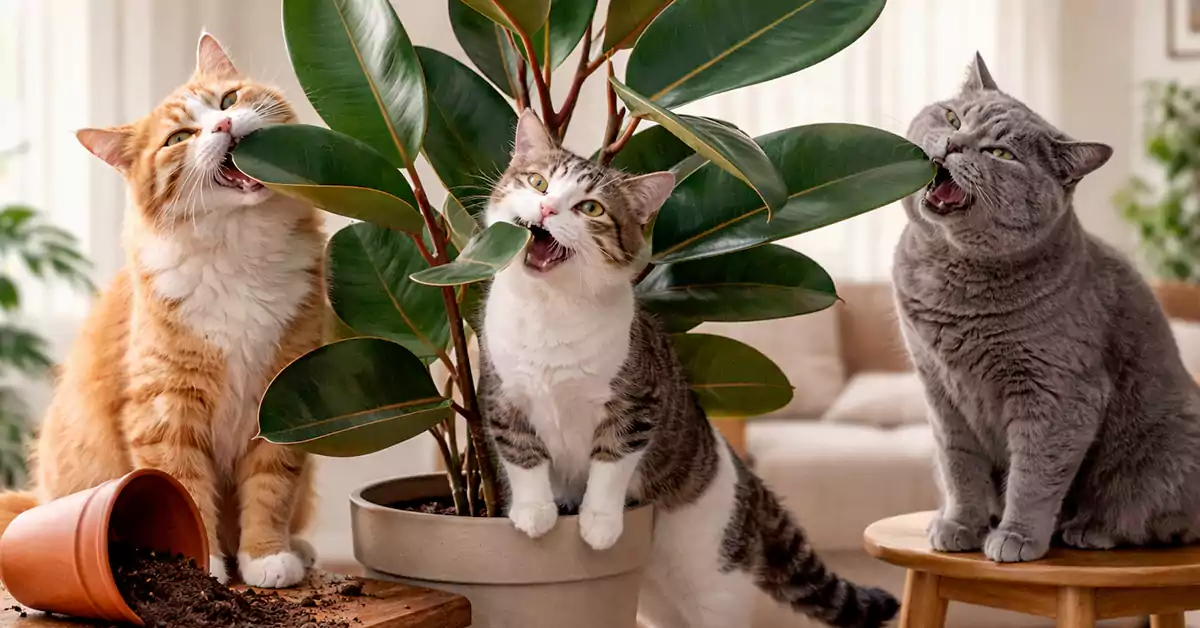
Rubber plants are popular houseplants because of their thick, glossy leaves and low maintenance. But if you live with a cat, you may find yourself asking an important and worrying question: are rubber plants toxic to cats?
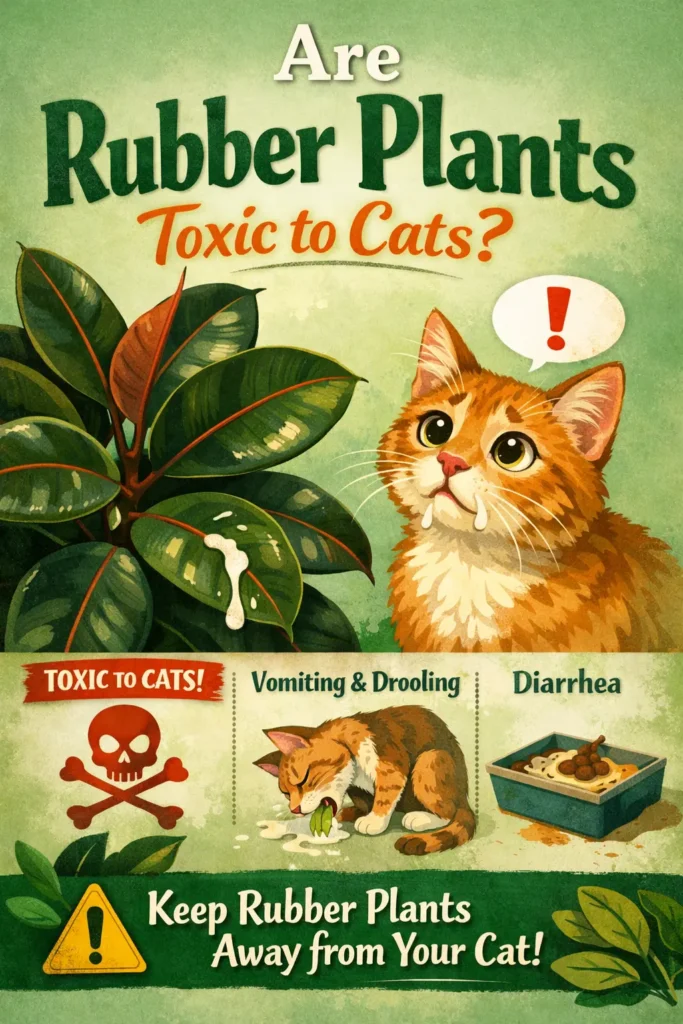
Yes — rubber plants are toxic to cats.
While they are not usually fatal, rubber plants can cause significant irritation, digestive upset, and discomfort if a cat chews or bites the leaves or stems. Because cats are curious and often explore plants with their mouths, rubber plants pose a real risk in cat-friendly homes.
| Feature | Cat Grass Kit | Cat Water Fountain | Cat Probiotics | Healthy Cat Treats | Interactive Cat Toy |
|---|---|---|---|---|---|
| Image |

|

|
|

|

|
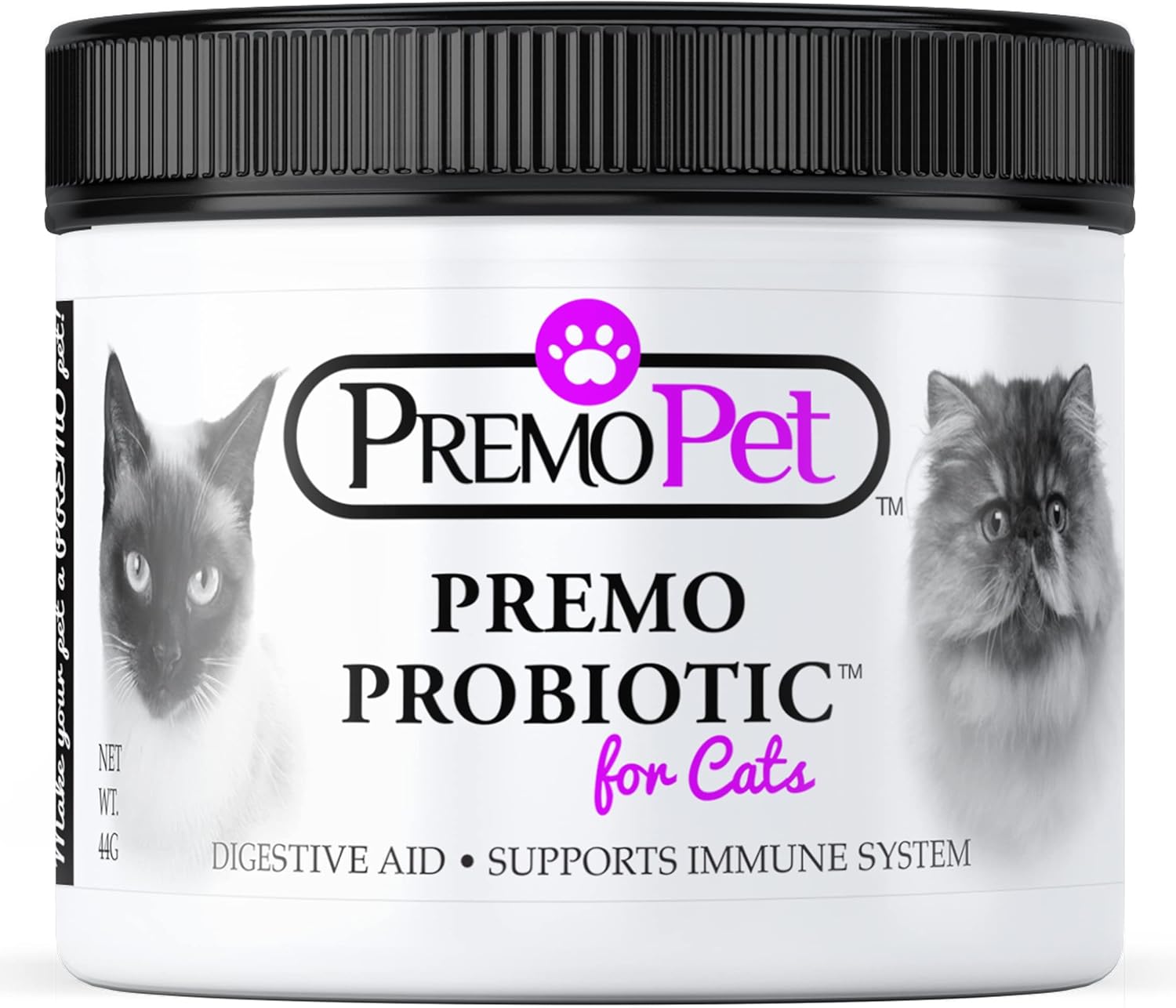
| Product Name | Cat Grass Growing Kit | Cat Water Fountain | Cat Digestive Probiotics | Healthy Cat Treats | Interactive Cat Toy |
| Best For | Indoor cats & safe grazing | Hydration & urinary health | Digestive support | Rewards & nutrition | Exercise & enrichment |
| Affiliate Potential | ⭐⭐⭐⭐☆ | ⭐⭐⭐⭐⭐ | ⭐⭐⭐⭐⭐ | ⭐⭐⭐⭐☆ | ⭐⭐⭐☆☆ |
| Why Buy? | Provides a safe alternative to outdoor grass and supports digestion. | Encourages cats to drink more water throughout the day. | Supports a healthy gut and reduces digestive discomfort. | Delicious rewards with added nutritional benefits. | Keeps indoor cats active and mentally stimulated. |
| Buy Now | Buy Now | Buy Now | Buy Now | Buy Now | Buy Now |
This guide explains why rubber plants are dangerous for cats, what symptoms to watch for, what to do if your cat eats one, and how to keep your cat safe
Also, I have written a detailed guide on which herbs, plants are safe or toxic for cats. If you want to know at one place, then you can read the complete guide here: Plants That Can Be Deadly for Cats: Safe and Toxic Herbs, Flowers & Houseplants
What Is a Rubber Plant?
The term “rubber plant” usually refers to Ficus elastica, a common indoor plant with large, dark green leaves. It belongs to the fig (Ficus) family, which includes several plants known to be irritating or toxic to pets.
Rubber plants contain a milky sap (latex) that is the main source of toxicity for cats.
Are Rubber Plants Toxic to Cats?
| Question | Answer |
|---|---|
| Are rubber plants toxic to cats? | Yes |
| How dangerous are they? | Mild to moderate toxicity |
| Main toxic part | Milky sap (latex) |
| Common symptoms | Drooling, vomiting, mouth irritation |
| Is it life-threatening? | Usually no, but uncomfortable |
| Safe for kittens? | ❌ No |
| What to do if eaten | Remove plant & contact vet if symptoms |
Why Are Rubber Plants Toxic to Cats?
Rubber plants are toxic because of compounds found in their sap and leaves.
Milky Latex Sap
When a rubber plant leaf or stem is damaged, it releases a white, sticky sap. This sap contains irritating chemicals that can harm a cat’s mouth, stomach, and digestive system.
Plant Defense Chemicals
These chemicals are meant to protect the plant from insects and animals. Cats, however, lack the enzymes needed to safely break them down.
Even small amounts can trigger symptoms, especially in kittens or sensitive cats.
What Happens If a Cat Eats a Rubber Plant?
If a cat chews on a rubber plant, symptoms usually appear quickly — often within minutes to a few hours.
Common effects include:
- Mouth irritation and burning
- Drooling or foaming
- Vomiting
- Diarrhea
- Pawing at the mouth
- Loss of appetite
- Lethargy
While rubber plant poisoning is rarely life-threatening, it can be very uncomfortable and stressful for your cat.
Symptoms of Rubber Plant Poisoning in Cats
Not all cats react the same way, but watch closely for these signs:
Mild to Moderate Symptoms
- Excessive drooling
- Vomiting (sometimes repeatedly)
- Loose stools or diarrhea
- Decreased interest in food
Oral Irritation Symptoms
- Pawing or rubbing the mouth
- Swollen lips or tongue
- Reluctance to eat or drink
Behavioral Changes
- Hiding
- Lethargy
- Restlessness
If symptoms worsen or last more than 24 hours, veterinary care is recommended.
How Much Rubber Plant Is Dangerous for Cats?
There is no safe amount of rubber plant for cats.
- Even a few bites can cause symptoms
- Sap exposure alone can irritate the mouth
- Repeated chewing increases the risk
Cats often stop chewing due to the bitter taste, but damage may already be done.
Is Rubber Plant Poisoning Fatal for Cats?
In most cases, rubber plant poisoning is not fatal.
However:
- Severe vomiting or diarrhea can lead to dehydration
- Kittens and older cats are more vulnerable
- Cats with existing health conditions may struggle more
Prompt care helps prevent complications.
What To Do If Your Cat Eats a Rubber Plant?
Step 1: Remove Access Immediately
Move the plant completely out of reach.
Step 2: Gently Rinse the Mouth (If Possible)
If your cat allows it, offer a small amount of water to help rinse irritants from the mouth. Do not force.
Step 3: Do NOT Induce Vomiting
This can worsen throat irritation.
Step 4: Monitor Closely
Watch for vomiting, drooling, or behavioral changes over the next 24 hours.
Step 5: Contact Your Vet
Especially if symptoms are severe or persistent.
Why Cats Are Attracted to Rubber Plants?
Cats don’t chew rubber plants because they’re hungry.
Common reasons include:
Texture
The thick, leathery leaves feel interesting to bite.
Movement
Leaves that sway slightly attract playful behavior.
Boredom
Indoor cats without enough stimulation may chew plants for entertainment.
Curiosity
New plants often trigger investigation.
Are Rubber Plants Safe to Touch for Cats?
Touching is usually less dangerous than chewing, but the sap can still irritate:
- Mouth
- Eyes
- Skin (rarely)
If sap gets on your cat’s fur, they may ingest it while grooming.
How to Keep Cats Away From Rubber Plants?
Here we are sharing a few tips to keep your cats away from the rubber plants.
1. Remove the Plant
The safest option in a cat household.
2. Use Hanging or Closed Planters
Keep plants completely inaccessible.
3. Offer Safe Plant Alternatives
- Cat grass
- Wheatgrass
- Catnip
4. Increase Enrichment
More playtime reduces destructive behavior.
5. Use Cat-Safe Bitter Sprays
These discourage chewing without harming your cat.
Are Artificial Rubber Plants Safe for Cats?
Not always.
Artificial plants may contain:
- Plastic
- Wire
- Glue
- Chemical dyes
Cats may chew or swallow pieces, leading to choking or intestinal blockage.
Can Kittens Be Affected More by Rubber Plants?
The simple answer to this question is ‘YES’. Kittens are at higher risk if they consume rubber plants because:
- Smaller body size
- Developing the digestive system
- Strong curiosity
Even mild poisoning can affect kittens more severely.
FAQ: Rubber Plants and Cats
Rubber plants are considered toxic, but they usually cause irritation rather than life-threatening poisoning. The milky sap irritates the mouth and digestive tract, leading to drooling, vomiting, and discomfort.
Symptoms often appear within minutes to a few hours. Mouth irritation and drooling are usually the first signs, followed by vomiting or diarrhea.
In mild cases, yes. Many cats recover within 12–24 hours with rest and monitoring. However, veterinary care is recommended if symptoms are severe or do not improve.
Yes. The sap contains the highest concentration of irritants. Even a small amount of sap exposure can cause mouth irritation and drooling.
If your cat shows symptoms, yes. Even one bite can cause irritation. If there are no symptoms, monitor closely for the next 24 hours.
Yes. Rubber plants can also irritate dogs, causing vomiting and mouth irritation, though symptoms are usually mild.
Veterinarians generally recommend not keeping rubber plants in homes with cats, especially plant-chewers. Removing the plant is the safest option.
Cat grass, wheatgrass, and catnip are much safer options if your cat enjoys chewing greenery.
Final Verdict: Are Rubber Plants Toxic to Cats?
Yes — rubber plants are toxic to cats and should be kept out of reach or removed entirely.
While poisoning is usually mild, the discomfort, vomiting, and irritation it causes are avoidable risks.
Best advice for cat parents:
- Do not allow cats to chew rubber plants
- Remove toxic houseplants when possible
- Offer safe alternatives like cat grass
- Monitor closely if exposure occurs
Your cat’s curiosity is natural — protecting them from hidden dangers inside your home is part of responsible pet care.
| Feature | Cat Grass Kit | Cat Water Fountain | Cat Probiotics | Healthy Cat Treats | Interactive Cat Toy |
|---|---|---|---|---|---|
| Image |
|
|
|
|
|
| Product Name | Cat Grass Growing Kit | Cat Water Fountain | Cat Digestive Probiotics | Healthy Cat Treats | Interactive Cat Toy |
| Best For | Indoor cats & safe grazing | Hydration & urinary health | Digestive support | Rewards & nutrition | Exercise & enrichment |
| Affiliate Potential | ⭐⭐⭐⭐☆ | ⭐⭐⭐⭐⭐ | ⭐⭐⭐⭐⭐ | ⭐⭐⭐⭐☆ | ⭐⭐⭐☆☆ |
| Why Buy? | Provides a safe alternative to outdoor grass and supports digestion. | Encourages cats to drink more water throughout the day. | Supports a healthy gut and reduces digestive discomfort. | Delicious rewards with added nutritional benefits. | Keeps indoor cats active and mentally stimulated. |
| Buy Now | Buy Now | Buy Now | Buy Now | Buy Now | Buy Now |