
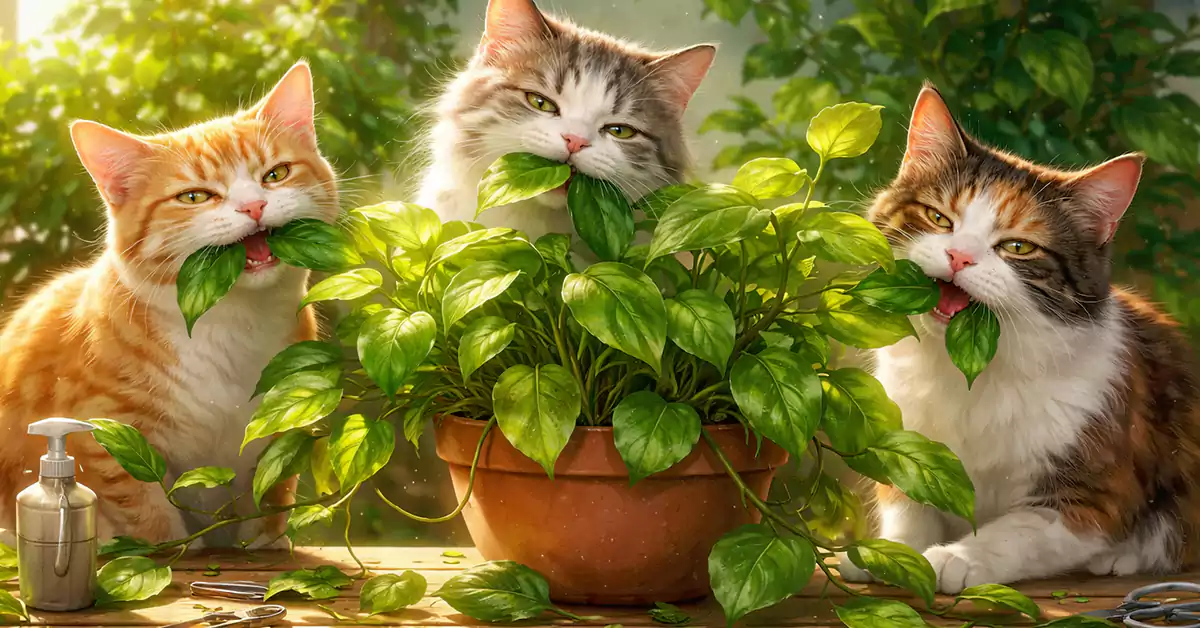
Money plants are one of the most common houseplants found in Indian homes and apartments around the world. They are loved for their low maintenance, attractive heart-shaped leaves, and the belief that they bring good luck and positive energy. Because they are often kept indoors, cats come into close contact with them.
If you’re a cat owner, a very natural question comes to mind:
Are money plants safe for cats?
The clear and honest answer is NO — money plants are toxic to cats.
Even though money plants are popular and look harmless, they can cause mouth irritation, digestive issues, and discomfort if a cat chews on their leaves or stems.
This guide explains everything you need to know — why money plants are unsafe, symptoms to watch for, what to do if your cat eats one, and safe alternatives you can keep at home.
Also Read: Are Spider Plants Safe for Cats? Benefits, Risks & Safety Guide
Also, I have written a detailed guide on which herbs, plants are safe or toxic for cats, if you want to know at one place, then you can read the complete guide here: Plants That Can Be Deadly for Cats: Safe and Toxic Herbs, Flowers & Houseplants
What Is a Money Plant?
The plant commonly called a money plant is usually Golden Pothos (Epipremnum aureum). It is also known by names like:
- Devil’s Ivy
- Pothos
- Marble Queen
- Jade Pothos
These plants are often grown in water bottles, hanging pots, or soil-filled planters indoors, which makes them easily accessible to curious cats.
Are Money Plants Toxic to Cats?
A common questions arise in the mind of cat parents about whether money plants are toxic to cats. So the answer is Yes, money plants are toxic to cats.
Money plants contain insoluble calcium oxalate crystals, which are sharp microscopic compounds found inside the plant’s leaves and stems. When a cat bites or chews the plant, these crystals get released and irritate the soft tissues of the mouth and digestive tract.
This toxicity is not usually fatal, but it can be very uncomfortable and painful for cats.
Why Do Cats Chew Money Plants?
Cats don’t chew plants because they are hungry. Common reasons include:
- Curiosity
- Boredom
- Attraction to dangling or trailing leaves
- Texture of the leaves
- Mild digestive discomfort
Indoor cats, especially kittens, are more likely to chew on houseplants simply because they don’t have many natural distractions.
What Happens If a Cat Eats a Money Plant?
When a cat chews a money plant, the oxalate crystals immediately irritate the mouth and throat. This usually causes discomfort within minutes.
Common Symptoms of Money Plant Poisoning in Cats
Symptoms can vary depending on how much was chewed, but commonly include:
- Excessive drooling
- Pawing at the mouth
- Swelling of lips, tongue, or gums
- Mouth irritation or redness
- Vomiting
- Difficulty swallowing
- Loss of appetite
- Mild diarrhea (in some cases)
Most cats stop eating the plant after one or two bites because of the unpleasant sensation.
Is Money Plant Poisoning Life-Threatening?
In most cases, money plant poisoning is not life-threatening, but it should never be ignored.
Severe reactions are rare, but swelling in the mouth or throat can make swallowing uncomfortable. Kittens, senior cats, or cats with sensitive digestive systems may react more strongly.
Prompt care and observation usually lead to a full recovery.
What Should You Do If Your Cat Eats a Money Plant?
If you catch your cat chewing on a money plant, stay calm and follow these steps:
1. Remove the Plant Immediately
Take the plant away so your cat cannot chew more leaves.
2. Rinse the Mouth (If Possible)
If your cat allows it, gently offer fresh water to help wash away plant residue. Do not force water into their mouth.
3. Watch for Symptoms
Monitor your cat closely for the next few hours for drooling, vomiting, or swelling.
4. Contact Your Vet
If symptoms are severe, persistent, or worsening, contact your veterinarian for guidance.
❌ Do Not Induce Vomiting
Never try home remedies or induce vomiting unless instructed by a vet.
How Much Money Plant Is Dangerous for Cats?
There is no safe amount of money plant for cats.
Even a small bite can cause irritation. Larger amounts may increase discomfort but do not usually cause systemic poisoning.
Can Cats Be Around Money Plants Without Eating Them?
While some cats ignore plants completely, it’s still risky to keep money plants in a home with cats.
Cats may suddenly chew a plant they ignored for months due to:
- Stress
- Boredom
- New smells
- Digestive upset
Prevention is always safer than treatment.
Are Money Plants Safe for Other Pets?
Money plants are also toxic to:
- Dogs
- Rabbits
- Other small pets
If you have multiple pets, removing the plant is the safest option.
Safe Alternatives to Money Plants for Cat Owners
As we already told you that you should avoid money plants at your home. However, If you love greenery but want a cat-safe home, consider these non-toxic plants:
- Spider plant
- Areca palm
- Calathea
- Boston fern
- Bamboo palm
- Parlor palm
These plants are considered safer for homes with cats when kept properly.
How to Make Your Home Plant-Safe for Cats
If you are a cat parent and planning to plant, then you should choose the flowers that are safe for cats. Here we are sharing a few tips to make your home plant safe for cats.
- Avoid toxic plants altogether
- Place plants in rooms that cats cannot access
- Use hanging baskets out of reach
- Provide cat grass to satisfy chewing instincts
- Keep cats mentally stimulated to reduce boredom
Frequently Asked Questions (FAQs)
No, money plants are unlikely to kill cats, but they can cause painful mouth irritation, vomiting, and discomfort. Immediate care helps prevent complications.
Yes. Whether grown in soil or water, money plants remain toxic. The growing medium does not change the plant’s toxicity.
Cats chew plants due to curiosity, boredom, or instinct. Trailing leaves of money plants are especially tempting for cats.
If your cat consumes money plants, then your cat will have several health issues, ranging from vomiting, distress. Mild symptoms usually improve within a few hours to one day. If symptoms last longer than 24 hours, consult a veterinarian.
No. Kittens are more sensitive and should never be exposed to toxic plants like money plants.
No. Dried leaves still contain oxalate crystals and can irritate your cat’s mouth. So we will not advise you to give this to your cat.
Yes. The safest option is to remove money plants completely from a home with cats. Eating money plant can make your cat go sick, so you should not let your cat eat it.
Final Verdict: Are Money Plants Safe for Cats?
In simple words, money plants are not safe for the cats. Although unlike other toxic plants, this may not be severely poisonous but it can lead to painful irritation, vomiting, and distress. So if your cat tries to eat the money plant, keep it at a safe distance from your cat. Moreover, if you own a cat, then you should not have a money plant; instead that you can go for several other safe options which are immensely safe for your cats.
Creating a safe environment helps prevent unnecessary emergencies and keeps your cat comfortable, curious, and healthy.