
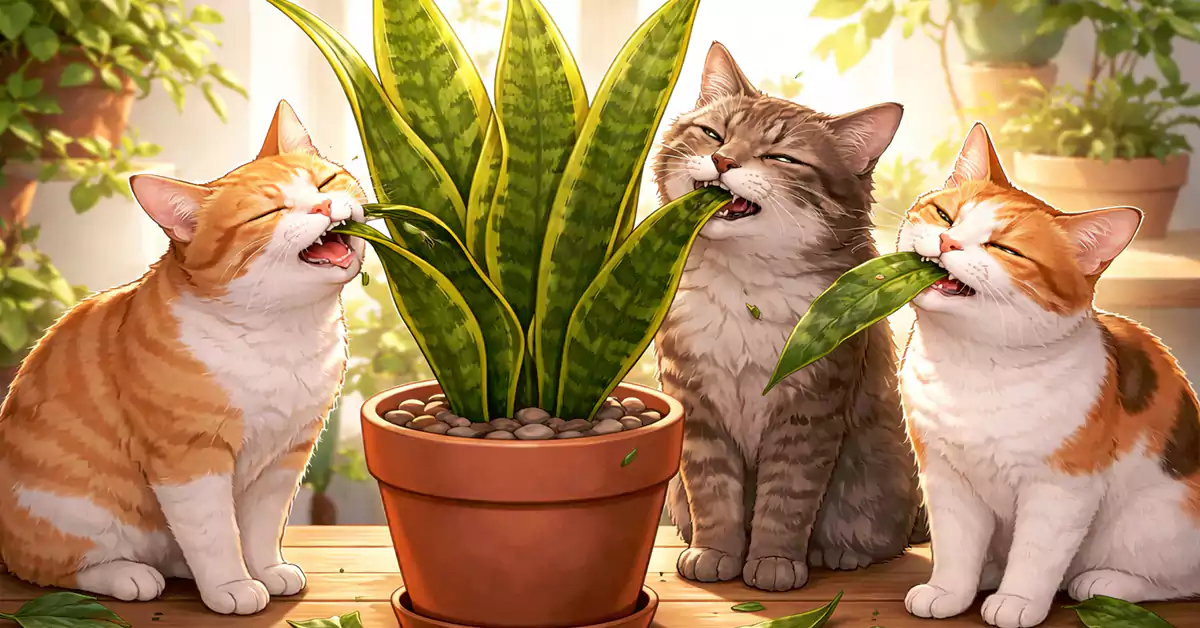
Snake plants are one of the most popular indoor plants because they are hardy, stylish, and easy to maintain. But if you share your home with a cat, an important question naturally comes up: are snake plants toxic to cats?
Yes — snake plants are toxic to cats.
While they are not usually fatal, snake plants can cause vomiting, nausea, drooling, and digestive upset if a cat chews on their leaves. Because cats often explore plants out of curiosity or boredom, snake plants pose a real risk in cat households.
This guide explains why snake plants are toxic, what symptoms to watch for, what to do if your cat eats one, and how to keep your cat safe.
Also Read: Are Bay Leaves Toxic to Cats? Why This Common Spice Can Be Dangerous
Also i have written a detailed guide on which herbs, plants are safe or toxic for cats, if you want to know at one place then you can read the complete guide here: Plants That Can Be Deadly for Cats: Safe and Toxic Herbs, Flowers & Houseplants
Quick Safety Overview: Snake Plants & Cats
| Question | Answer |
|---|---|
| Are snake plants toxic to cats? | Yes |
| Toxicity level | Mild to moderate |
| Main toxic compound | Saponins |
| Common symptoms | Vomiting, drooling, nausea |
| Is it life-threatening? | Rarely |
| Safe for kittens? | ❌ No |
| What to do if eaten | Remove plant & monitor / call vet |
What Is a Snake Plant?
Snake plants are commonly known as Sansevieria or Dracaena trifasciata. They are popular houseplants recognized by their long, upright, sword-shaped leaves.
Because they thrive in low light and need minimal watering, snake plants are commonly found in homes, offices, and apartments — often within easy reach of curious cats.
Why Are Snake Plants Toxic to Cats?
Snake plants contain saponins, which are naturally occurring chemicals used by plants to protect themselves from insects and animals.
What are saponins?
Saponins are bitter-tasting compounds that:
- Irritate the mouth and digestive tract
- Cause nausea and vomiting
- Disrupt normal digestion in cats
Cats lack the digestive enzymes needed to safely process saponins, which is why even small amounts can trigger symptoms.
What Happens If a Cat Eats a Snake Plant?
When a cat chews or bites a snake plant leaf, symptoms usually appear within a few hours.
Common reactions include:
- Excessive drooling
- Vomiting (sometimes repeated)
- Nausea
- Loose stools or diarrhea
- Decreased appetite
- Lethargy
Most cats stop chewing quickly because of the bitter taste, but irritation may already have occurred.
Symptoms of Snake Plant Poisoning in Cats
Symptoms vary depending on how much was eaten and your cat’s sensitivity.
Mild Symptoms
- Drooling
- Gagging
- Reduced appetite
Moderate Symptoms
- Vomiting
- Diarrhea
- Lethargy
- Hiding behavior
Rare but Concerning Signs
- Continuous vomiting
- Signs of dehydration
- Refusal to eat or drink for 24 hours
If symptoms worsen or persist, veterinary care is recommended.
How Much Snake Plant Is Dangerous for Cats?
There is no safe amount of snake plant for cats.
- Even a few bites can cause symptoms
- Repeated chewing increases irritation
- Kittens and small cats are more affected
While poisoning is usually mild, it is still preventable and unnecessary.
Is Snake Plant Poisoning Fatal to Cats?
In most cases, snake plant poisoning is not fatal. However:
- Severe vomiting can lead to dehydration
- Kittens are more vulnerable
- Cats with health conditions may struggle more
Prompt care and monitoring prevent complications.
What To Do If Your Cat Eats a Snake Plant?
Step 1: Remove Access Immediately
Move the plant out of reach or remove it from the room.
Step 2: Check Your Cat’s Mouth
Look for drooling, swelling, or irritation.
Step 3: Do NOT Induce Vomiting
This can worsen throat irritation.
Step 4: Monitor for 24 Hours
Watch for vomiting, diarrhea, or lethargy.
Step 5: Call Your Vet
Especially if symptoms are severe, persistent, or your cat is a kitten.
Why Cats Are Attracted to Snake Plants?
Cats don’t chew snake plants because they’re hungry.
Common reasons include:
- Thick, upright leaves that are fun to bite
- Movement when brushed against
- Boredom or lack of stimulation
- Curiosity about new objects
Are Snake Plants Safe for Cats to Touch?
Touching is usually less dangerous than chewing, but:
- Sap residue on leaves may irritate sensitive skin
- Cats may ingest toxins later while grooming
So even contact should be minimized.
How to Keep Cats Away From Snake Plants?
Here we are sharing a few tips to keep your cat away from snake plants
1. Remove the Plant
Safest and simplest solution.
2. Place Plants Out of Reach
High shelves or closed rooms only.
3. Offer Safe Plant Alternatives
- Cat grass
- Wheatgrass
- Catnip
4. Increase Play & Enrichment
Bored cats chew more.
5. Use Cat-Safe Deterrent Sprays
Bitter sprays discourage chewing.
Are Artificial Snake Plants Safe for Cats?
No artificial snake plants are always safe for your cats. So if your cat is trying to eat the artificial snake plant, then you should not let eat it as it contains plastic and chemical dyes, which are bad for your cat.
Artificial plants may contain:
- Plastic pieces
- Wire supports
- Chemical dyes
Cats may chew or swallow parts, leading to choking or intestinal blockage.
Can Kittens Eat Snake Plants?
If you are wondering whether kittens can eat snake plants and what would happen if they eat snake plants. Kittens are at higher risk because:
- Their bodies are smaller
- Their digestive systems are still developing
- They are extremely curious
Even mild poisoning can affect kittens more strongly.
FAQ: Snake Plants and Cats
Snake plants are considered toxic, but their toxicity is usually mild to moderate. The main issue is digestive irritation rather than life-threatening poisoning
Symptoms typically appear within a few hours. Drooling and vomiting are often the first signs.
Many cats recover on their own within 12–24 hours if symptoms are mild. However, veterinary advice is recommended if symptoms persist.
All parts of the snake plant contain saponins, so any portion can cause symptoms.
If your cat shows symptoms, yes. If not, monitor closely for the next 24 hours and contact your vet if anything changes.
Yes. Snake plants can also cause vomiting and nausea in dogs, though symptoms are usually mild.
Most veterinarians recommend avoiding snake plants entirely in cat homes, especially if your cat is a known plant-chewer.
Cat grass, wheatgrass, and certain palms labeled pet-safe are better options.
Final Verdict: Are Snake Plants Toxic to Cats?
Yes — snake plants are toxic to cats and should be kept out of reach or removed.
Although poisoning is usually mild, the vomiting and discomfort it causes are completely avoidable.
Best advice for cat parents:
- Remove snake plants from cat-accessible areas
- Offer safe plant alternatives
- Monitor your cat closely if exposure occurs
- Contact a vet if symptoms appear
Your cat’s safety always comes before decoration.