
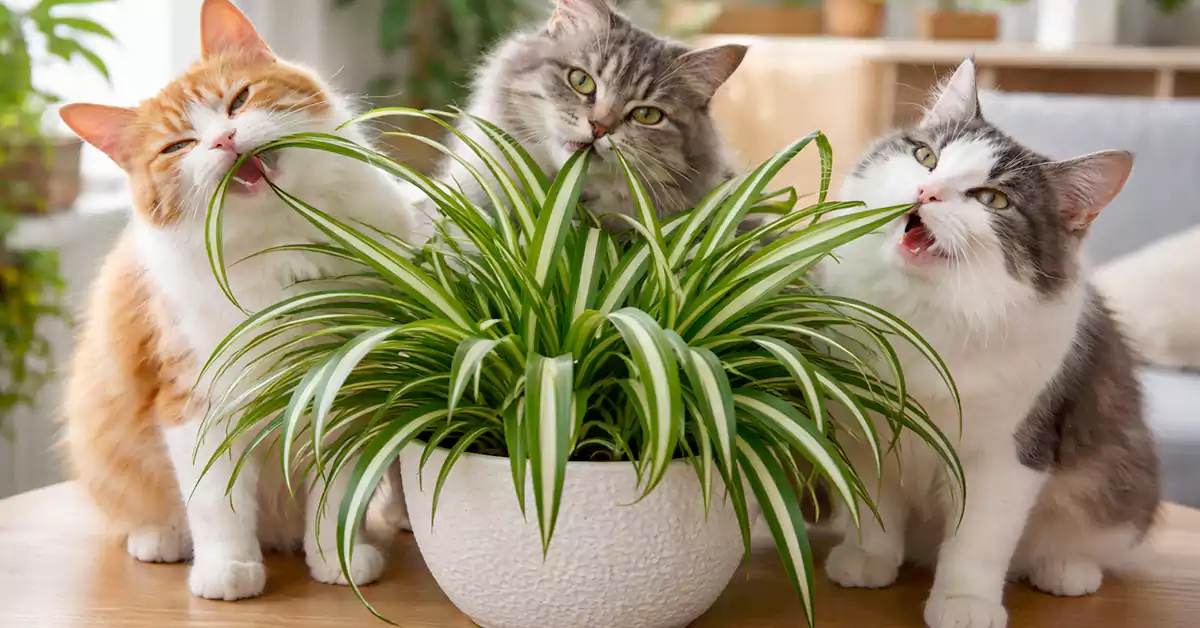
Spider plants are often recommended as “pet-friendly” houseplants, and many cat owners keep them indoors without worry. But if you’ve ever seen your cat chewing on the long, arching leaves, a natural question arises: are spider plants really safe for cats?
Yes — spider plants are considered non-toxic and generally safe for cats.
However, “safe” does not mean they should be eaten freely. Chewing on spider plants can still cause mild digestive upset, vomiting, or behavioral issues if a cat eats too much.
This guide explains why spider plants are labeled safe, how they affect cats, possible side effects, and how to manage plant-chewing behavior responsibly.
Also, I have written a detailed guide on which herbs, plants are safe or toxic for cats. If you want to know at one place, then you can read the complete guide here: Plants That Can Be Deadly for Cats: Safe and Toxic Herbs, Flowers & Houseplants
Quick Safety Overview: Spider Plants & Cats
| Question | Answer |
|---|---|
| Are spider plants toxic to cats? | No (non-toxic) |
| Safe for cats to chew? | In small amounts only |
| Common effects | Mild vomiting, loose stool |
| Psychoactive effect | Possible mild stimulation |
| Safe for kittens? | Best avoided |
| Vet emergency? | Rarely |
| Better plant alternative | Cat grass or wheatgrass |
What Is a Spider Plant?
Spider plant (Chlorophytum comosum) is a popular indoor plant known for its long, narrow green leaves and small offshoot “spiderettes.” It’s easy to grow, air-purifying, and commonly found in homes, offices, and apartments.
Spider plants are frequently listed as non-toxic by veterinary and pet safety organizations, which is why many cat owners choose them over other houseplants.
Why Spider Plants Are Considered Safe for Cats
Spider plants do not contain known toxic compounds that cause organ damage or severe poisoning in cats.
They lack:
- Calcium oxalates
- Saponins
- Alkaloids
- Cardiac glycosides
This means they don’t pose the same risk as lilies, aloe vera, snake plants, or rubber plants.
Why Do Cats Love Spider Plants So Much?
Many cat owners notice that cats are unusually attracted to spider plants. This happens for a few reasons.
1. Grass-Like Texture
The long, thin leaves resemble grass, which naturally attracts cats.
2. Mild Stimulant Effect
Spider plants may have a very mild hallucinogenic or stimulating effect on some cats, similar (but much weaker) than catnip.
3. Movement
Leaves sway easily, triggering hunting and play instincts.
4. Boredom
Indoor cats may chew plants for stimulation when under-enriched.
What Happens If a Cat Eats a Spider Plant?
Although spider plants are non-toxic, eating them can still cause mild side effects, especially if eaten in large amounts.
Possible effects include:
- Mild vomiting
- Soft stools or diarrhea
- Temporary stomach discomfort
- Increased playfulness or restlessness
These symptoms usually resolve on their own within 12–24 hours.
Can Spider Plants Make Cats High?
Some cats show playful, excited, or slightly “spacey” behavior after chewing spider plants. This is believed to be due to mild natural compounds that affect feline behavior, though the effect is subtle and temporary.
Important:
- Not all cats react this way
- Effects are not dangerous
- Overconsumption can upset the stomach
How Much Spider Plant Is Too Much for Cats?
There is no official “safe serving size,” but moderation is key.
- A few nibbles → usually harmless
- Repeated chewing → digestive upset
- Eating large portions → vomiting or diarrhea
Kittens and smaller cats are more sensitive.
Are Spider Plants Safe for Kittens?
Spider plants are non-toxic, but kittens are more vulnerable because:
- Their digestive systems are still developing
- They are more likely to over-chew plants
- They may swallow larger pieces
It’s best to limit or prevent access for kittens.
Are Spider Plants Better Than Other Houseplants for Cats?
Yes — spider plants are safer than many common indoor plants, including:
- Snake plants
- Aloe vera
- Rubber plants
- Pothos
- Peace lilies
However, “safer” does not mean “recommended as a chew toy.”
How to Stop Cats From Over-Chewing Spider Plants?
If your cat constantly chews spider plants, it’s best to redirect the behavior.
1. Provide Safe Alternatives
- Cat grass
- Wheatgrass
- Catnip (in moderation)
2. Increase Play & Enrichment
More toys and interaction reduce plant-chewing.
3. Move the Plant
Hanging baskets or high shelves work well.
4. Use Cat-Safe Deterrents
Bitter sprays can discourage chewing.
Are Artificial Spider Plants Safe for Cats?
Not necessarily.
Artificial plants may contain:
- Plastic
- Wire supports
- Glue
- Dyes
Cats may chew and swallow pieces, leading to choking or intestinal blockage.
FAQ: Spider Plants and Cats
Spider plants are non-toxic, meaning they do not cause poisoning or organ damage. However, eating large amounts can still cause vomiting or digestive discomfort.
Cats are attracted to spider plants because of their grass-like shape, movement, and possible mild stimulating effects. Curiosity and boredom also play a role.
No. While spider plants are safer than many houseplants, cat grass is specifically grown for cats and is a much better option.
Usually no, unless your cat shows persistent vomiting, diarrhea, or unusual behavior lasting more than 24 hours.
There is no evidence that spider plants cause long-term harm. Occasional mild stomach upset is the most common issue.
Yes. Spider plants are also considered non-toxic for dogs, though mild digestive upset is still possible.
Yes, spider plants are one of the safer houseplant choices for cat owners, but it’s still wise to limit excessive chewing.
Final Verdict: Are Spider Plants Safe for Cats?
Yes — spider plants are generally safe and non-toxic for cats.
However, they are not meant to be eaten regularly and can cause mild digestive upset if chewed excessively.
Best advice for cat owners:
- Spider plants are safer than many houseplants
- Limit access if your cat chews excessively
- Provide cat grass as a safer alternative
- Monitor kittens more closely
Spider plants can coexist with cats — as long as moderation and supervision are maintained.