
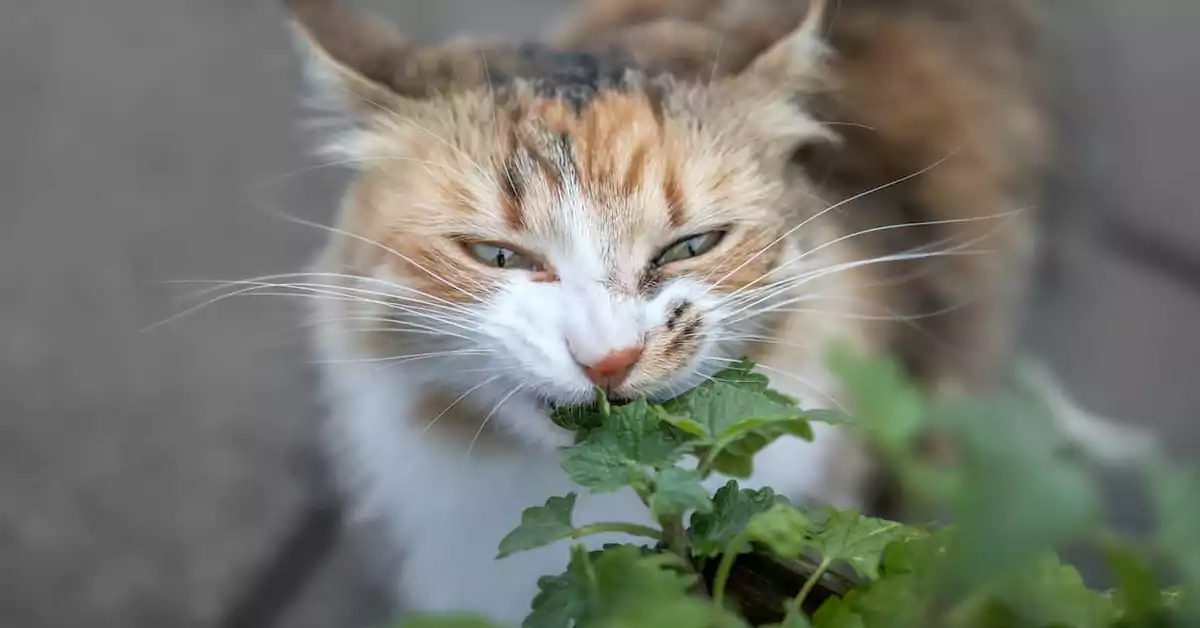
You’ve ever given your cat a pinch of catnip and watched them instantly transform—rolling on the floor, rubbing their face, purring loudly, and doing zoomies—you’ve already seen how powerful this little herb can be.
Catnip is one of the rare plants that actually seems made for cats.
But many owners still ask:
- Is it safe to eat?
- Why does my cat behave strangely after sniffing it?
- Can kittens have catnip?
- Can a cat get addicted or overdose?
This guide breaks down how catnip works, how much is safe, why some cats feel “high”, and how to use it in a healthy way.
Also, I have written a detailed guide on which herbs, plants are safe or toxic for cats. If you want to know at one place, then you can read the complete guide here: Plants That Can Be Deadly for Cats: Safe and Toxic Herbs, Flowers & Houseplants
Quick Safety Table: Catnip for Cats
| Question | Answer |
|---|---|
| Can cats eat catnip? | Yes — safe in small amounts. |
| Is catnip toxic? | No — non-toxic. Rare side effects. |
| Why do cats react? | Nepetalactone binds to smell receptors. |
| Can kittens have it? | Under 6 months → usually no reaction. |
| Can too much cause issues? | Yes, can cause mild vomiting or diarrhea. |
| Best form to give? | Dried catnip, catnip spray, fresh leaves. |
| Frequency? | A few times a week, not daily. |
What Exactly Is Catnip?
Catnip (Nepeta cataria) belongs to the mint family.
It grows easily indoors and outdoors, and when cats interact with it—especially by sniffing—they experience a temporary emotional and sensory shift.
The magic ingredient is a compound called nepetalactone.
When a cat smells nepetalactone, it stimulates receptors in the nose that send signals to the brain’s:
- amygdala (emotion processing)
- hypothalamus (behavioral response)
This creates the famous “catnip effect.”
So, Can Cats Eat Catnip?
Yes. Catnip is safe for cats to EAT as well as sniff.
Cats generally interact with it in two different ways:
1. Sniffing it — creates the “High”
- rolling
- rubbing
- zoomies
- playful behavior
2. Eating it — creates the “Calm”
When cats chew or swallow catnip, it has the opposite effect:
- more relaxed
- sleepy
- slightly mellow
This is why some people use edible catnip to help with:
- anxiety
- stress
- travel nervousness
- boredom in indoor cats
Why Do Cats Act Strangely With Catnip?
Catnip affects cats in several possible ways:
✔ Hyperactive Mode
Running around, playful, energetic.
✔ Sedated Mode
Sleepy or relaxed—common when eaten.
✔ Social Mode
Affectionate, rubbing against you or the floor.
✔ Zoomies Mode
Racing through the house like they’re on a mission.
✔ Vocal Mode
Meowing, chirping, or purring loudly.
Every cat is different. Some become excited; others become calm.
And some cats… nothing happens at all.
Why Some Cats Don’t React to Catnip?
Up to 30% of cats lack the genetic trait needed to respond to catnip.
If your cat shows NO reaction, it means:
- genetics → they don’t have the “catnip gene”
- age → kittens under 6 months rarely react
- form → low-quality or old catnip loses potency
Try fresh or organic catnip before assuming your cat is non-responsive.
Is Catnip Safe for Cats to Eat? (Yes, with limits)
Catnip is non-toxic. But that doesn’t mean unlimited eating is good.
Safe amount:
A pinch. About the size of a quarter teaspoon.
What happens if they eat too much?
- mild stomach upset
- vomiting
- diarrhea
- gassiness
- temporary discomfort
Nothing life-threatening, but uncomfortable.
Cats usually self-regulate and stop eating once they’ve had enough.
How to Give Catnip Safely?
If you are planning to give catnip to your cat safely, then here we are sharing how you can give it to your cat.
1. Dried catnip (most common)
Sprinkle on the floor, scratcher, or toy.
2. Fresh catnip leaves
Safe to chew. More aroma. Stronger reaction.
3. Catnip toys
Stuffed with dried catnip. Low mess.
4. Catnip spray
Minimal cleanup. Good for training.
5. Catnip-infused treats
Mild effect. Good for beginners.
6. Homemade catnip garden
Fresh, chemical-free leaves from your own plant.
How Often Can Cats Have Catnip?
Catnip is safe only when given in moderation.
Recommended frequency:
2–3 times per week
Why not daily?
Cats develop temporary tolerance.
If you give catnip every day, the effect weakens and becomes boring.
Give your cat at least 24 hours between sessions for the effect to reset.
Can Catnip Help with Stress or Anxiety?
Yes, many cat parents use edible catnip or fresh leaves to help with:
- grooming anxiety
- nail trimming
- travel stress
- separation anxiety
- boredom
- adjustment to a new home
However, for heavy anxiety, calming pheromones or vet-guided supplements may help more.
Can Catnip Make Cats Aggressive?
Rarely — but possible.
If your cat becomes:
- territorial
- rough
- overstimulated
- too excited
Simply reduce the amount and frequency.
Aggression is usually seen in dominant male cats.
Can Kittens Have Catnip?
Kittens under 6 months usually show no reaction.
It’s safe for them, but pointless.
Their sensory receptors are not fully developed yet.
Can Cats Get Addicted to Catnip?
No.
Catnip isn’t addictive.
Cats don’t:
- crave it
- depend on it
- suffer withdrawal
- require increasing doses
Their reaction is purely sensory and temporary.
Can Catnip Be Used for Training?
Absolutely — it’s a great training tool.
Use catnip to help your cat:
- use a scratching post
- sit in a carrier
- explore a new bed
- play more
- stop chewing furniture
Sprinkle a small amount on the desired object.
Most cats will instantly explore it.
Does Catnip Have Health Benefits?
Indirectly, yes.
✔ Encourages exercise
Overweight or lazy cats become active.
✔ Reduces stress
Helps anxious cats relax.
✔ Provides mental stimulation
Prevents boredom in indoor cats.
✔ Great enrichment
Good for cats who live alone or indoors 24/7.
Different Types of Catnip & Which Is Best
1. Fresh catnip
Strongest smell. Strongest reaction.
2. Dried catnip
Most common and long-lasting.
3. Catnip buds (premium)
More potent than regular dried leaves.
4. Catnip toys
Good for first-timers.
5. Catnip spray
Great for training. Mild effect.
Which is best?
Fresh leaves → best for eating
Dried leaves → best for play
Can Too Much Catnip Hurt My Cat?
Yes, eating too much catnip is not good for your cat. I will advise every cat parent to moderate the quantity of catnip that they can give their cat.
Side effects of too much include:
- vomiting
- runny stool
- dizziness
- sleepiness
All pass within a few hours.
If symptoms last more than 24 hours, call your vet.
Is Catnip Related to Toxic Mint Plants?
No, catnip is not related to toxic mint plants. It is a part of the mint family, but unlike:
- pennyroyal (toxic)
- mint essential oils (toxic)
Catnip is non-toxic and safe.
DETAILED FAQ — Catnip & Cats
10–15 minutes. After that, cats lose interest.
Around 1–2 hours.
Indirectly. Increased activity helps move digestion along.
Avoid giving it. It may overstimulate.
Yes — it’s often beneficial for mobility and enrichment.
Yes. It grows easily in pots and is safe to keep indoors.
Yes, dogs can eat catnip, but it won’t cause the same behavior.
Final Verdict: Should You Give Your Cat Catnip?
Yes catnip is one of the safest and most enjoyable treats you can give your cat. It’s non-toxic, easy to use, and offers both mental and physical stimulation.
Just keep doses small, avoid giving it daily, and monitor your cat’s reaction. Whether you use dried catnip, fresh leaves, or toys, it’s an excellent way to enrich your cat’s indoor life.
If your cat doesn’t respond, it’s simply genetics—not a problem at all.