
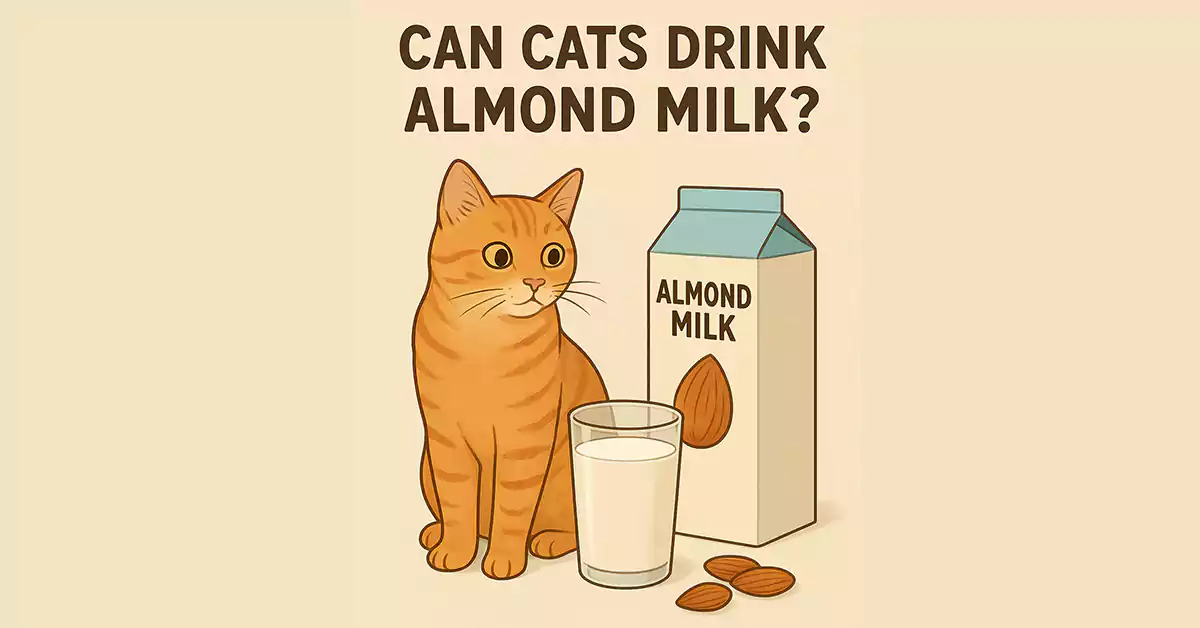
Can Cats Drink Almond Milk?
Yes — cats can drink almond milk in very small amounts, but it is not recommended as a regular part of their diet. Almond milk is not toxic to cats, but it does not provide any nutritional benefits and can cause stomach upset if given too often.
Cats are obligate carnivores, which means their bodies are designed to digest meat, not nuts or plant-based milks. Almond milk might look harmless, but it can still cause digestive issues depending on the brand, ingredients, and quantity.
Let’s break it down simply.
Also Read: Can Cats Eat Cauliflower? Vet-Approved Safety Guide, Risks & Benefits (2026)
Is Almond Milk Safe for Cats?
Almond milk is safe for cats only if it meets these conditions:
- Plain (no flavor)
- Unsweetened
- No added sugar
- No artificial sweeteners (especially no xylitol)
- No chocolate or vanilla flavoring
- Given in very tiny portions
Most commercial almond milk is made by blending almonds with water and filtering the mixture. The drink itself is usually low in calories, but some brands add:
- Sugar
- Salt
- Preservatives
- Thickening agents
- Flavors
These can upset a cat’s stomach.
Why Do Some Cats Like Almond Milk?
Many cats are attracted to creamy textures and the smell of fat. While almond milk does not contain dairy, it can still have a smooth, fatty aroma that makes cats curious.
But remember — liking something and tolerating it are two different things.
Do Cats Need Almond Milk?
No.
Cats do not need any plant-based milks.
Cats get all their hydration from:
- Fresh water
- Wet cat food
- Natural moisture in meat
Almond milk does not add any essential nutrients. For cats with dehydration problems, water or cat-safe broth is a much better choice.
Risks of Almond Milk for Cats
While almond milk is not poisonous, it comes with risks.
1. Digestive Upset
Cats can experience:
- Vomiting
- Diarrhea
- Gas
- Bloating
- Soft stools
Almonds are fatty, and the cat digestive system is not designed for nut-based products.
2. Added Sugar Is Harmful
Many almond milk brands contain sugar, which can cause:
- Obesity
- Diabetes
- Dental problems
Cats cannot process sugar well.
3. Artificial Sweeteners Are Dangerous
Some flavored almond milks contain sweeteners like xylitol, which is highly toxic to cats.
Even a small amount of xylitol can cause:
- Low blood sugar
- Seizures
- Liver failure
Always check labels carefully.
4. Flavored Almond Milk Is Unsafe
Common flavors like:
- Chocolate
- Vanilla
- Honey
- Cinnamon
- Caramel
…are all unsafe for cats. Chocolate is especially dangerous.
How Much Almond Milk Can a Cat Drink?
If you want to offer almond milk as a rare treat:
Safe serving size
- 1–2 teaspoons
- Once every 1–2 weeks
- Only plain, unsweetened almond milk
Unsafe serving
- A full bowl
- Daily consumption
- Sweetened or flavored almond milk
Moderation is extremely important.
Signs Almond Milk Doesn’t Suit Your Cat
Stop giving almond milk immediately if your cat shows:
- Vomiting
- Diarrhea
- Bad-smelling gas
- Lethargy
- Loss of appetite
Cats have sensitive stomachs, so even mild reactions matter.
Can Kittens Drink Almond Milk?
No — absolutely not.
Kittens have delicate digestive systems and require proper kitten formula if they are not nursing. Almond milk lacks the essential nutrients kittens need and can cause diarrhea, dehydration, and malnutrition.
Kittens should never drink:
- Almond milk
- Cow’s milk
- Soy milk
- Oat milk
Only approved kitten formula is safe.
Can Cats Drink Other Plant-Based Milks?
Here’s a quick overview:
- Soy milk → Not recommended (gas & allergies)
- Oat milk → Safe only in tiny amounts
- Coconut milk → High fat, may cause diarrhea
- Rice milk → Mostly carbs, not suitable
All plant milks should only be occasional treats.
Is Almond Milk Better Than Cow’s Milk for Cats?
Yes — almond milk is usually less harmful than cow’s milk because cats are often lactose intolerant.
Cow’s milk can cause:
- Diarrhea
- Bloating
- Gas
But neither cow’s milk nor almond milk is ideal.
If your cat wants “milk,” the best option is a cat-specific milk product.
Healthier Alternatives to Almond Milk
If you want to treat your cat safely, try:
Safe alternatives
- Cat-safe lactose-free milk (sold in pet stores)
- Bone broth (no salt, no onion, no garlic)
- Tuna water (from tuna in water)
- Homemade chicken broth (plain)
These are far healthier and easier for cats to digest.
Frequently Asked Questions
Plain, unsweetened almond milk is not toxic, but flavored or sweetened versions can be harmful.
No. It should only be an occasional treat.
Watch for stomach upset. If symptoms persist, call your vet.
Cats like creamy textures and smells, but that doesn’t mean it’s good for them.
Better to avoid — older cats often have sensitive digestion
Final Verdict: Can Cats Drink Almond Milk?
Yes — cats can drink a very small amount of plain, unsweetened almond milk, but it should not become a regular habit. Almond milk offers no real nutritional value and may cause digestive issues if overfed.
If your cat enjoys almond milk, keep portions tiny and infrequent. Always avoid flavored or sweetened varieties, and never give almond milk to kittens.
Healthy hydration always comes from fresh water and a good meat-based diet — not almond milk.