
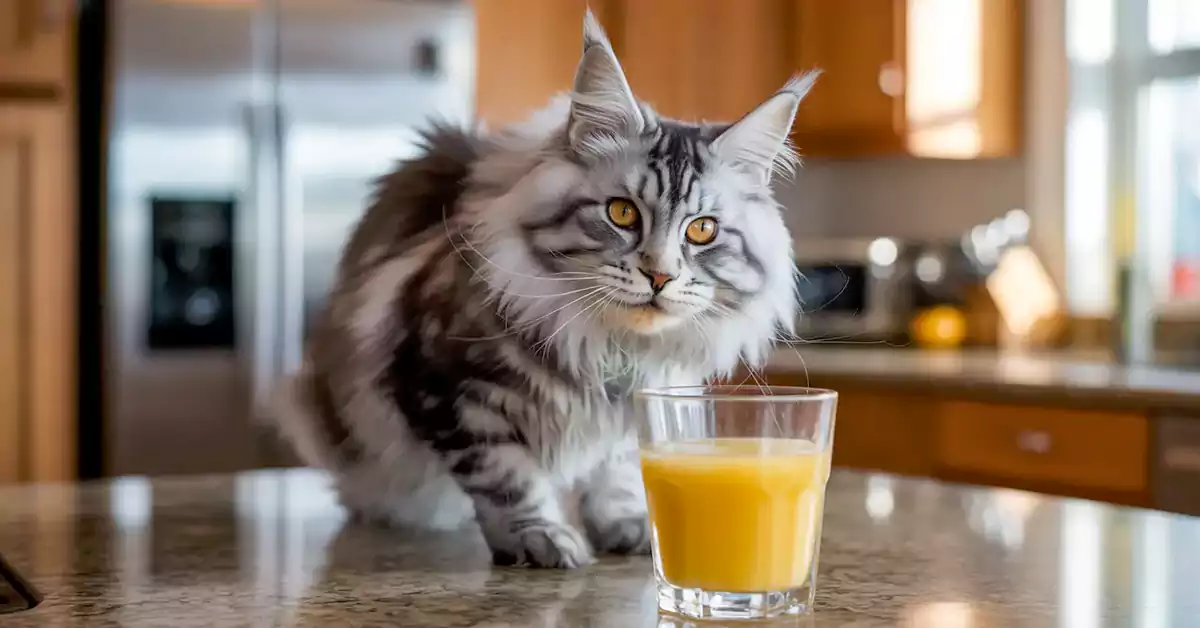
Can Cats Drink Juice?
Short answer: No, cats should not drink juice.
While a tiny accidental sip won’t usually harm a healthy adult cat, fruit juices contain too much sugar, too much acidity, and zero nutritional value for cats. Some juices can also be toxic, depending on the fruit.
Cats are obligate carnivores — their bodies are designed to run on animal proteins and fats, not fruit sugars. Even juices that seem “healthy” for humans can cause digestive upset or long-term health problems in cats.
In this in-depth guide, we’ll break down why juice is unsafe, which juices are dangerous, what to do if your cat drinks juice, and healthier alternatives to keep your cat hydrated.
Also Read: Can Cats Drink Coffee? A Vet-Reviewed Guide for Cat Owners 2026
Why Cats Should Not Drink Juice?
Even though juice is just liquid fruit, it’s not appropriate for a cat’s digestive system.
Here are the main reasons:
1. Juice Is Loaded With Sugar
Most juices — fresh or packaged — contain high levels of fructose (fruit sugar).
Cats do not have the enzymes to handle sugar effectively.
Too much sugar can lead to:
- Diarrhea
- Vomiting
- Weight gain
- Diabetes
- Tooth decay
- Increased thirst and urination
Even “no sugar added” juices contain natural sugar, which is still excessive for cats. If you’re curious about plant-based drinks, you can also read my guide on Can cats drink almond milk?
2. Cats Cannot Taste Sweetness
Cats lack taste receptors for sweetness.
So even if you offer juice, it provides nothing enjoyable or beneficial from a flavor standpoint.
If your cat drinks it, it’s usually curiosity — not preference.
3. Juice Is Too Acidic
Fruit juices are naturally acidic.
Acidity can irritate a cat’s:
- Stomach lining
- Intestines
- Throat
Citrus juices (orange, lemon, lime) are the worst offenders — they can cause immediate drooling, vomiting, or stomach pain. Some owners confuse juice with dairy alternatives—here’s a full breakdown in Can cats drink oat milk?.
4. Juice Has No Nutritional Benefit for Cats
Cats get their nutrients from meat, not fruit.
Juice offers:
- No protein
- No healthy fats
- No taurine
- No essential amino acids
It’s simply a sugary liquid with nothing a cat’s body needs.
5. Some Juices Are Potentially Toxic
Grapes and raisins are dangerous for cats — even tiny amounts can cause kidney failure.
This means:
- Grape juice is toxic
- Raisin juice is toxic
- Mixed juices containing grapes are also dangerous
Always avoid them completely.
Is Any Juice Safe for Cats?
Technically, some juices are less harmful than others, but still not recommended.
Relatively safer (but still not ideal):
- Watermelon juice (diluted heavily with water)
- Coconut water (tiny amounts only, not for daily use)
- Carrot juice (tiny amounts, cooked/softened)
- Apple juice (unsweetened, tiny amounts)
Even the “safer” juices can still cause stomach upset if given regularly.
Juices that are always unsafe:
- Grape juice (toxic)
- Orange juice (too acidic)
- Lemon/lime juice (too acidic)
- Cherry juice (contains compounds dangerous for cats)
- Cranberry juice with added sugar
- Packaged juices with colors, flavors, and preservatives
If there’s ever a doubt — avoid it.
What Happens If a Cat Drinks Juice?
A single lick or small accidental sip usually won’t cause serious harm.
Your cat may experience:
- Slight stomach discomfort
- Soft stool
- Mild diarrhea
- Increased thirst
These symptoms typically pass within a few hours.
If your cat drank grape juice or a large amount of citrus, contact your veterinarian right away.
What to Do If Your Cat Drinks Juice?
1. Don’t panic
A small amount is rarely deadly unless it’s a toxic fruit.
2. Identify the juice
Check the ingredients — especially if it’s a mixed fruit juice.
3. Offer fresh water immediately
This helps dilute the sugar and flush the system.
4. Monitor symptoms for 24 hours
Watch for:
- Vomiting
- Diarrhea
- Lethargy
- Excessive drooling
- Loss of appetite
5. Call your vet if it was:
- Grape juice
- Citrus juice
- A large amount of any juice
- Juice with artificial sweeteners (especially xylitol — extremely toxic)
Never wait if you’re unsure. It’s always safer to ask your vet.
Can Kittens Drink Juice?
Absolutely not.
Kittens have:
- Weak digestive systems
- Low tolerance to sugar
- Higher risk of dehydration from diarrhea
Even a small amount can lead to immediate stomach issues.
Stick to:
- Fresh water
- Kitten milk replacer (if needed)
- Kitten-formulated food
Never give a kitten fruit or juice.
Why Some Cats Are Attracted to Juice?
Even though cats can’t taste sweetness, they may be curious about juice because:
- It smells interesting
- It’s colorful
- You are drinking it
- It’s in a glass or a cup that they want to investigate
It’s behavioral curiosity — not nutritional desire.
Can Juice Ever Be Used for Medical Purposes?
In some limited cases, vets may recommend cranberry extract for urinary health — but NOT cranberry juice.
Cranberry juice in stores:
- Contains sugar
- Contains preservatives
- Can irritate the stomach
Only vet-approved cranberry supplements are safe.
Never use human juices as a medical remedy for cats.
Healthy Alternatives to Juice for Cats
If you’re looking for safe hydration or treats:
1. Water
The best and only daily liquid cats should drink.
2. Bone broth (unsalted, homemade)
Provides hydration + nutrients.
3. Tuna water (from tuna packed in water)
A great flavor boost to increase water intake.
4. Chicken broth (plain)
Must be free from:
- Salt
- Onion
- Garlic
5. Wet cat food
Contains 70–80% moisture.
6. Cat-safe electrolyte solutions (vet-recommended)
Useful for dehydration only under guidance.
Frequently Asked Questions
A tiny amount won’t harm them, but it’s still not recommended due to sugar.
No — it’s too acidic and can cause stomach irritation.
No — grapes are toxic to cats.
Very small amounts may be safe, but not daily.
Plain, cooked carrot purée is safer than juice.
No. Juice provides no nutritional value to cats.
Final Verdict: Can Cats Drink Juice?
No — cats should not drink juice.
While a tiny accidental sip usually isn’t harmful, juice contains too much sugar, too much acidity, and offers zero nutritional value for felines. Some juices — like grape — can be dangerously toxic.
Stick to water, cat-safe broths, and wet food for your cat’s hydration needs.
If your cat shows interest in your glass of juice, gently redirect and offer fresh water instead.