
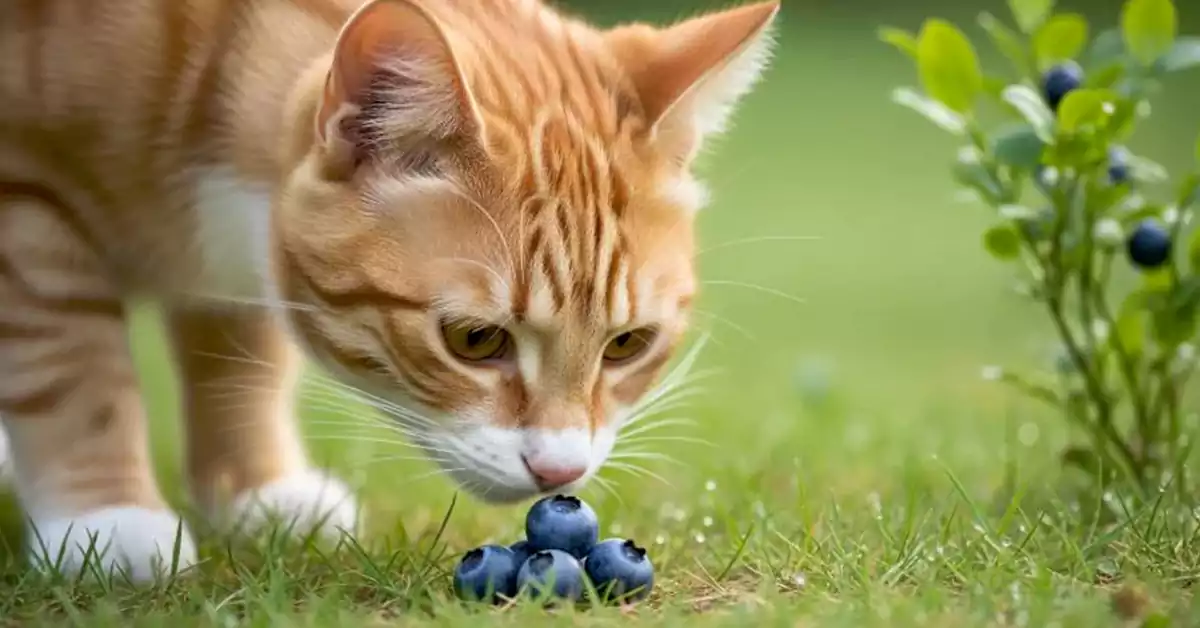
Blueberries are one of the healthiest fruits for humans — rich in antioxidants, low in calories, and naturally sweet. But what about cats? If your feline friend tries to sniff or paw at your bowl of blueberries, you may wonder: Can cats eat blueberries?
The short answer is yes — cats can eat blueberries in small amounts. Blueberries are non-toxic and generally safe, but like all fruits, they should only be served occasionally and in tiny portions.
In this detailed guide, we’ll explore the benefits, risks, serving size, and how to prepare blueberries for cats, and answer common questions.
Also Read: Can Cats Eat Strawberries? A Complete Guide for Pet Owners
Moreover, I have written a complete list of safe, unsafe & toxic fruits that your cats can have or not, check it out the complete guide: Can Cats Eat Fruits? The Complete List (Safe, Unsafe, Toxic, How Much & Vet Guide)
Are Blueberries Safe for Cats?
Yes, blueberries are safe for cats when served correctly.
✔ Safe for cats:
- Fresh blueberries
- Frozen blueberries (thawed)
- Mashed blueberries
- Tiny bite-sized pieces
✘ Not safe for cats:
- Blueberry muffins
- Blueberry jam
- Blueberry yogurt (sweetened)
- Blueberry pancakes
- Canned blueberries in syrup
Cats can enjoy blueberries as a tiny treat — not a regular snack.
Do Cats Even Like Blueberries?
Cats don’t have taste receptors for sweetness, so they don’t actually enjoy blueberries for their flavor.
However, cats may be attracted to blueberries because of:
- The size
- The round shape (looks like a toy)
- The texture
- The scent
- Pure curiosity
Some cats may enjoy one or two blueberries; others may ignore them completely — both are normal.
Nutritional Value of Blueberries (For Humans vs. Cats)
Blueberries are known as a “superfood” for humans because they are packed with:
- Antioxidants
- Fiber
- Vitamin C
- Vitamin K
- Manganese
- Low calories
While cats don’t need fruit for nutrition, blueberries may offer a few optional benefits when given safely.
Benefits of Blueberries for Cats (Small but Real)
✔ 1. Antioxidants
Blueberries contain powerful antioxidants that help fight cell damage. Cat foods that include blueberries do so for this reason.
✔ 2. Fiber Boost
A tiny amount of fiber can help with mild constipation.
✔ 3. Low-Calorie Treat
Blueberries are extremely low in calories, making them a healthier treat than processed cat biscuits.
✔ 4. Hydration Support
Blueberries are about 85% water — helpful for cats who don’t drink much.
✔ 5. Enrichment
Their round shape and soft texture make them fun for cats to bat around and nibble.
These benefits are minimal and not essential, but safe in moderation.
Risks of Feeding Blueberries to Cats
Even though blueberries are non-toxic, there are a few risks.
1. Digestive Upset
Too many blueberries can cause:
- Vomiting
- Diarrhea
- Gas
- Soft stools
Cats’ digestive systems are not built to process large amounts of fruit.
2. Choking Hazard
While blueberries are small, some cats might attempt to swallow them whole.
Tip:
Cut blueberries into halves or quarters for safety.
3. Allergies (Rare)
Some cats may develop:
- Itching
- Swelling
- Sneezing
- Gastrointestinal upset
Stop immediately if you see these signs.
4. Sugar Content
Blueberries contain natural sugars. Not as much as bananas or mangoes, but still enough to be a concern.
Avoid giving blueberries to:
- Diabetic cats
- Obese cats
- Cats with pancreatitis
How Many Blueberries Can Cats Eat? (Safe Serving Size)
Cats should only eat very small amounts of blueberries.
🟢 Safe amount:
- 1–3 blueberries at a time
- Once per week or two
- Cut into small pieces
❌ Unsafe amount:
- A handful
- Daily servings
- Blueberry-based desserts
Blueberries must remain an occasional treat.
How to Feed Blueberries to Cats Safely
Here’s the safest way to serve blueberries:
1. Wash Thoroughly
Remove pesticides, dirt, and chemicals.
2. Cut Into Small Pieces
Slice blueberries in half or quarters to avoid choking.
3. Serve Fresh or Lightly Thawed
Frozen blueberries can be fun but may be too hard for some cats. Thaw slightly before serving.
4. Offer Plain Only
No sugar, honey, yogurt, chocolate, or seasonings!
5. Start with One Blueberry
Let your cat try a tiny piece first.
6. Watch for Reactions
Look for:
- Diarrhea
- Vomiting
- Drooling
- Stomach ache
If symptoms appear, stop giving blueberries immediately.
Can Cats Eat Blueberry Yogurt?
Usually no.
Most flavored yogurts contain:
- Sugar
- Artificial flavors
- Preservatives
If you want to offer yogurt:
- Use only plain, unsweetened yogurt
- Offer a tiny lick only
Can Cats Eat Blueberry Muffins?
No.
Blueberry muffins contain:
- Flour
- Sugar
- Butter
- Baking soda
- Artificial ingredients
These are not safe for cats and can cause stomach upset.
Can Cats Eat Blueberry Jam?
No.
Jam contains extremely high sugar and sometimes xylitol (deadly for cats).
Can Cats Eat Frozen Blueberries?
Yes — but thaw slightly and cut them into small pieces.
Avoid giving blueberries straight from the freezer as they can damage teeth or pose a choking risk.
Can Cats Eat Blueberry Leaves or Stems?
No.
Leaves and stems can cause GI upset and choking hazards.
Which Cats Should Avoid Blueberries Completely?
Avoid giving blueberries to cats who have:
- Diabetes
- Obesity
- Pancreatitis
- Chronic stomach sensitivity
- IBD (Inflammatory Bowel Disease)
- Food allergies
- Kittens under 6 months
Healthy Alternatives to Blueberries for Cats
If you want to give your cat a healthy snack, try:
✔ Boiled chicken
✔ Freeze-dried salmon
✔ Tuna flakes (unsalted)
✔ Catnip
✔ Pumpkin puree
✔ Store-bought cat treats
These align better with a carnivore’s diet.
Frequently Asked Questions
No — they are non-toxic.
A tiny amount may help, but pumpkin is much better.
No — it contains sugar, butter, and other unsafe ingredients.
Probably because of the texture and curiosity, not sweetness.
Only if made specifically for cats.
Final Verdict: Can Cats Eat Blueberries?
Yes — cats can eat blueberries, but only as a tiny, occasional treat.
Blueberries are safe, low-calorie, and full of antioxidants, but they are not necessary for a cat’s diet. Always serve fresh, washed, and cut blueberries in very small amounts.
If your cat enjoys them, offer 1–2 blueberries every couple of weeks.
If they’re not interested, that’s perfectly normal — cats don’t need fruit.