
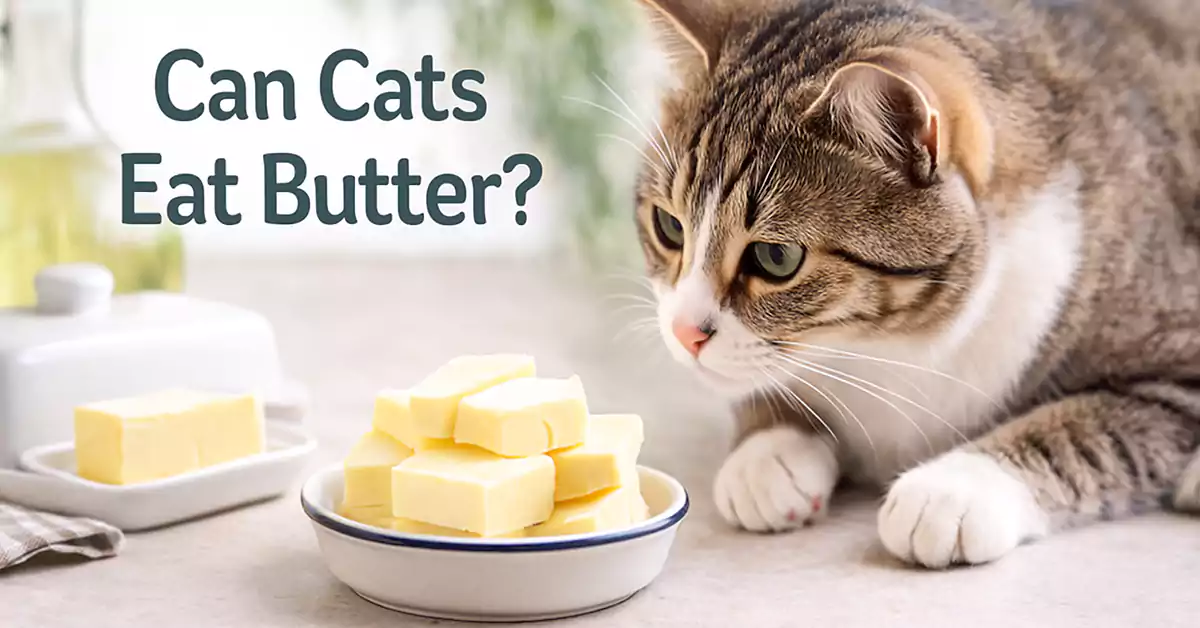
Can Cats Eat Butter?
Many cat owners wonder whether a tiny lick of butter is harmless — especially when their cat seems obsessed with the smell of warm bread or melted butter.
So, can cats eat butter?
The short answer: No — cats should not eat butter.
While butter is not highly toxic, it offers no nutritional benefit, is high in fat and lactose, and can easily upset a cat’s stomach. Regular consumption can lead to diarrhea, vomiting, obesity, and pancreatitis.
But the full story is more nuanced — and that’s what we’ll explore in this complete guide.
Also Read: Can Cats Drink Lactose-Free Milk? A Vet-Style, Easy-to-Understand Guide for Cat Owners 2026
Why Do Cats Love Butter?
Before we dive into safety, it helps to understand why many cats try to steal butter.
Cats may be drawn to butter because:
- Butter contains fat, and cats naturally gravitate toward fatty foods.
- The aroma of butter resembles cooked animal fats.
- Butter spreads are soft and easy to lick.
- Cats are curious and often imitate their owners’ eating habits.
However, just because cats want it doesn’t mean it’s safe.
Is Butter Toxic to Cats?
Butter is not toxic, meaning a cat licking a tiny amount is unlikely to get severely ill.
But “not toxic” does not equal “safe.”
Butter contains:
- Lactose (hard for most cats to digest)
- High saturated fat
- Salt (depending on type)
- Additives or flavorings (in some butter spreads)
These components can cause both short-term and long-term health problems.
Why Butter Is Not Good for Cats?
Below are the main reasons vets recommend avoiding butter altogether.
1. Butter Causes Digestive Upset
Most adult cats are lactose intolerant.
Their bodies lack lactase, the enzyme needed to break down lactose in dairy products.
So even a teaspoon of butter can cause:
- Diarrhea
- Gas
- Vomiting
- Stomach cramps
- Loose stool
Some cats react more strongly than others, but digestive upset is very common
2. High Fat Content Can Trigger Pancreatitis
Butter is extremely high in fat.
Cats’ digestive systems are not built to handle such fatty foods.
High-fat foods can trigger:
- Pancreatitis (inflammation of the pancreas — a painful, serious condition)
- Obesity
- Lethargy
- Fatty liver disease
Even occasional butter-fed cats can develop long-term health issues over time.
3. Butter Can Increase the Risk of Obesity
Obesity is a major issue in domestic cats today.
Butter is:
- Calorie-dense
- Pure fat
- Devoid of nutrients for cats
Even small amounts add up quickly, especially in indoor cats with low energy expenditure.
4. Salted Butter Is Even More Dangerous
Some butter contains added salt.
Cats’ kidneys are sensitive to sodium, and excess salt may lead to:
- Dehydration
- Increased thirst
- Elevated blood pressure
- Electrolyte imbalances
Salted butter is never recommended.
5. Flavored Butter Spreads Can Be Toxic
Butter spreads often contain ingredients that are toxic to cats, such as:
- Garlic
- Onion
- Herbs
- Artificial flavors
- Sweeteners
Garlic and onion, even in small amounts, can cause hemolytic anemia, a potentially fatal condition.
Can Cats Eat Butter for Hairballs?
A popular myth says butter helps cats pass hairballs.
Truth: Do not use butter as a hairball remedy.
While butter may temporarily “lubricate” digestion, the risks outweigh the benefits.
Better options include:
- Vet-approved hairball gels
- Fiber supplements
- Pumpkin puree (plain)
- Regular brushing
Butter is outdated and unsafe as a hairball treatment.
Is Butter Safe for Kittens?
No — kittens are even more sensitive.
Kittens fed butter may experience:
- Severe diarrhea
- Rapid dehydration
- Electrolyte imbalance
- Failure to gain weight
Their tiny digestive systems cannot handle lactose or high fat.
Different Types of Butter: Safe or Unsafe?
1. Regular Dairy Butter
❌ Not recommended.
Contains lactose, salt, and very high fat.
2. Salted Butter
❌ Dangerous due to sodium levels.
3. Unsalted Butter
❌ Still high in fat and lactose.
Less harmful than salted butter but still not safe.
4. Plant-Based “Vegan” Butter
❌ Not safe.
Usually contains oils that cats cannot digest, plus spices/flavorings.
5. Clarified Butter (Ghee)
⚠️ Some people claim ghee is safe because it lacks lactose.
However, ghee is even higher in fat and can trigger pancreatitis.
Avoid giving ghee to cats.
What Happens If Your Cat Eats Butter?
If your cat licks a small amount:
Chances are they will be fine, but may experience:
- Soft stool
- Gas
- Mild vomiting
- Temporary lethargy
If your cat ate a large amount, monitor for:
- Continuous vomiting
- Severe diarrhea
- Signs of abdominal pain
- Loss of appetite
- Lethargy
- Rapid breathing
If symptoms persist beyond 12–24 hours, contact your veterinarian.
How to Keep Cats Away From Butter?
Cats can be sneaky — so here are practical tips:
- Keep butter covered or stored in the refrigerator
- Don’t leave buttered toast on the counter
- Teach family members not to give “table scraps”
- Store butter in containers with lids
Cats are opportunistic eaters, so prevention is key.
Healthy Alternatives to Butter for Cats
If you want to treat your cat, choose safe, vet-approved alternatives.
Protein Treats (Best)
- Cooked chicken
- Cooked turkey
- Freeze-dried salmon
- Tuna flakes (unsalted)
Healthy Fiber Treats
For digestion or hairballs:
- Pumpkin puree
- Small amounts of cooked carrots (rarely)
Commercial Cat Treats
Look for:
- Low-calorie
- High-protein
- No artificial coloring
Avoid all human dairy products.
Frequently Asked Questions
Not toxic, but unsafe due to lactose and high fat.
No — better alternatives exist that won’t upset digestion.
Monitor for vomiting or diarrhea; contact a vet if symptoms worsen.
No. It is even higher in fat and can trigger pancreatitis.
Cats are drawn to the fat content and smell, but it’s still unsafe.
Final Verdict: Can Cats Eat Butter?
No, cats should not eat butter.
While a lick of butter is unlikely to be fatal, butter provides no nutritional benefits and may cause digestive upset, weight gain, or dangerous pancreatitis.
A cat’s diet should always be protein-based. Butter is a human food, and not a cat-friendly one.
Choosing safer alternatives will keep your cat healthier, happier, and free of stomach issues.