
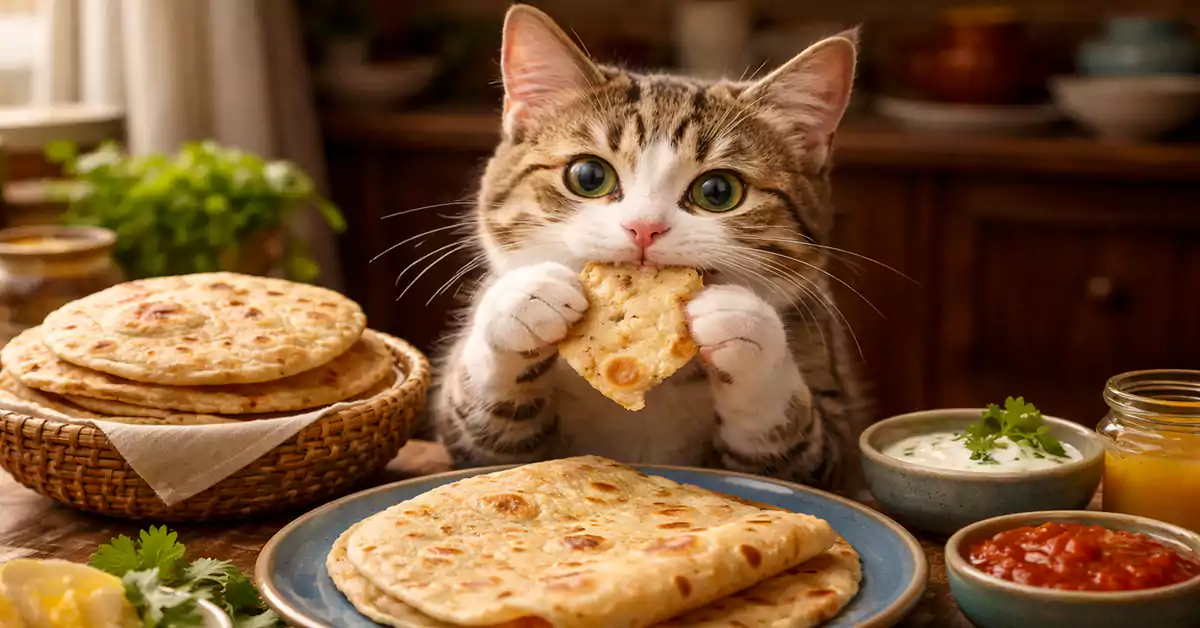
Chapati is a common staple in Indian households. You’d see Indians regularly consuming chapati or roti at breakfast, lunch, or dinner. So, if you have a cat in your home, you may notice that they like to try chapati or roti — not because they love it, but out of curiosity. However, as a pet parent, this question often arises in your mind: whether you should give chapati to your cat, and whether chapati or roti is toxic to your cat. If, as a cat parent, this thought has crossed your mind, this article will answer the question in detail.
The short answer is: cats can eat a very tiny amount of plain chapati occasionally, but it is not recommended and should never be a regular part of a cat’s diet. While chapati is not toxic to cats, it offers no nutritional benefit and may cause digestive problems.
In this detailed guide, we’ll explain whether cats can eat chapati, potential risks, symptoms to watch for, and safer alternatives for your cat.
Quick Safety Overview
| Food | Safe for Cats? | Risk Level | Notes |
|---|---|---|---|
| Chapati / Roti | ⚠️ Occasionally | Moderate | Hard to digest, no nutrition |
Why Do Cats Try to Eat Chapati (Roti)?
Cats don’t want chapati because it meets their nutritional needs. Instead, their interest is usually driven by behavior and environment.
Common reasons include:
- Curiosity: Cats like to investigate whatever their humans eat.
- Smell and texture: Warm chapati may smell appealing due to oils or ghee used during cooking.
- Association with attention: If a cat gets attention while begging, the behavior repeats.
- Boredom: Indoor cats may chew on food items out of stimulation-seeking behavior.
- Kittens exploring: Younger cats explore new textures with their mouths.
This curiosity doesn’t mean chapati is good or necessary for them.
Is Chapati Safe for Cats?
Chapati is made primarily from wheat flour, water, and sometimes oil or ghee. While none of these ingredients are immediately toxic, they are not suitable for a cat’s digestive system.
Cats are obligate carnivores, meaning their bodies are designed to digest animal-based proteins and fats. They lack the digestive enzymes needed to efficiently process carbohydrates like wheat.
Key concerns include:
- Poor digestion of wheat
- Risk of stomach upset
- No essential nutrients for cats
So while a crumb of plain chapati is unlikely to cause serious harm, feeding it intentionally is not advisable.
What Happens If a Cat Eats Chapati?
Most cats that eat a small amount of plain chapati may show no symptoms at all. However, some cats—especially those with sensitive stomachs—may develop digestive issues.
Common Symptoms to Watch For
- Vomiting
- Diarrhea
- Gas or bloating
- Lethargy
- Loss of appetite
- Mild abdominal discomfort
Symptoms usually appear within a few hours after ingestion.
When Is Chapati Dangerous for Cats?
Chapati becomes more dangerous under certain conditions:
1. Spiced or Flavored Roti
Chapati made with:
- Salt
- Butter or ghee in excess
- Oil
- Onion or garlic
can be harmful. Onion and garlic are toxic to cats, even in small amounts.
2. Large Quantities
Eating a larger portion can:
- Overload the digestive system
- Lead to diarrhea or vomiting
- Increase the risk of obesity over time
3. Kittens and Senior Cats
- Kittens have very sensitive digestive systems.
- Older cats may have underlying health issues that worsen symptoms.
What To Do If Your Cat Eats Chapati?
If your cat eats a small piece of plain chapati:
- Remove access to any remaining food.
- Observe your cat for the next 24 hours.
- Ensure fresh water is available.
- Do not induce vomiting.
- Contact a vet if vomiting, diarrhea, or lethargy lasts more than 24 hours.
Seek immediate veterinary care if the chapati contained onion, garlic, or heavy spices.
Can Cats Eat Chapati Regularly?
No. Chapati should never be a regular food for cats.
Reasons include:
- No nutritional value for cats
- High carbohydrate content
- Risk of digestive upset
- Potential weight gain
- Encourages begging behavior
Regular feeding of chapati may also cause cats to reject proper cat food.
Can Cats Be Allergic to Wheat?
Yes, although rare, some cats may have wheat sensitivity or intolerance.
Signs may include:
- Chronic diarrhea
- Vomiting
- Itchy skin
- Ear infections
If symptoms appear after eating chapati, avoid wheat products and consult a veterinarian.
Safer Alternatives to Chapati for Cats
Instead of offering chapati, choose foods that support feline health:
- High-quality commercial cat food
- Plain boiled chicken (no salt or spices)
- Vet-approved cat treats
- Occasional plain cooked fish (boneless)
- Cat grass for chewing instincts
These options are safer and nutritionally appropriate.
Indian Foods Cats Should Never Eat
All indian food is not bad for your cat; however, there are several common Indian foods that can be harmful or toxic to cats, including:
- Spicy foods
- Onion and garlic (in any form)
- Garam masala
- Fried snacks
- Sugary sweets
Always keep seasoned and cooked human food away from cats.
Can Kittens Eat Chapati?
No. Kittens should not eat chapati at all.
Their digestive systems are still developing, and even small amounts can cause:
- Diarrhea
- Dehydration
- Nutritional imbalance
Stick strictly to kitten-specific food.
Veterinarian’s Opinion on Cats Eating Chapati
Most veterinarians advise avoiding human foods like chapati. Since I have spent several years with a veterinarian, they always suggest that Cats have very specific dietary requirements, and feeding non-meat-based foods may lead to long-term digestive and health issues.
Even if a cat seems to tolerate chapati, it does not mean it is safe or beneficial.
Frequently Asked Questions (FAQs)
Yes, cats can eat a small piece of chapati quite often, but you should not give your cat chapati regularly as it would not be good for your cat’s health.
No, plain chapati is not toxic, but added ingredients like onion or garlic can be dangerous.
Roti with ghee increases fat content and may cause stomach upset. It is not recommended.
Cats may beg due to curiosity, smell, or attention-seeking behavior—not because they need it.
Stop feeding chapati, offer water, and contact a veterinarian if vomiting continues.
Final Verdict
While chapati (roti) is a daily food in Indian households, it is not suitable for cats. Even though it is not toxic in its plain form, chapati offers no nutritional benefit and can cause digestive problems, especially if eaten regularly.
For your cat’s long-term health and well-being, it’s best to stick to foods specifically made for cats and avoid sharing human staples like chapati.