
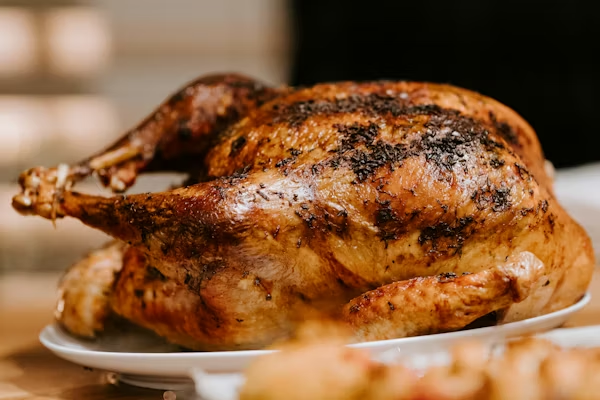
Chicken is one of the most common protein sources found in both human kitchens and commercial cat food. From boiled chicken to chicken-based treats, many cat parents like me often wonder whether chicken is safe for cats. Since chicken is considered healthy for human beings, we usually assume it would be good for our cats as well — and that assumption is somewhat right.
I remember when I became a cat parent for the first time. Like every new cat parent, I was always curious to know what food items I could feed my cat so she stays healthy. Back then, there wasn’t as much clear and trustworthy information available online like we have today.
That’s actually one of the main reasons why I started this website — to answer all those common doubts about what you can feed your cat and what you should not.
So if you’re asking these questions as a cat parent:
- Can I feed chicken to my cat?
- How much chicken can I feed my cat?
In this article, I’ll try to answer all these questions and clear your confusion in a simple and practical way.
Quick Answer: Can Cats Eat Chicken?
Yes, cats can eat chicken—but only when it is plain, fully cooked, and unseasoned.
Chicken can be a safe and nutritious protein for cats when prepared correctly. However, chicken cooked with spices, oil, salt, bones, or sauces can be harmful and should be avoided.
Chicken Safety for Cats – Quick Overview
Here is a simple table that we created it will help you in knowing whether you can feed chicken to your cat or not
| Type of Chicken | Safe for Cats? | Notes |
|---|---|---|
| Plain boiled chicken | ✅ Yes | Best and safest option |
| Plain cooked chicken (no seasoning) | ✅ Yes | Occasional treat |
| Raw chicken | ⚠️ Not recommended | Risk of bacteria |
| Fried chicken | ❌ No | Oil, salt, spices |
| Chicken curry | ❌ No | Spices, onion, garlic |
| Chicken bones | ❌ No | Choking & injury risk |
| Chicken skin | ⚠️ Avoid | High fat content |
| Chicken liver | ⚠️ Limited | Only occasionally |
Why Chicken Is Often Considered Safe for Cats?
Cats are obligate carnivores, which means their bodies are biologically designed to survive and thrive on animal-based protein. Unlike humans, cats do not require carbohydrates, grains, or plant-based foods for nutrition. Their digestive system, teeth, and metabolism are all built for consuming meat.
Chicken fits well into this natural dietary requirement, which is why it is often considered one of the safer human foods for cats when prepared correctly.
Chicken provides several important nutritional benefits for cats:
1️⃣ High-Quality Animal Protein
Chicken is rich in high-quality animal protein, which is essential for:
- Muscle development and maintenance
- Healthy skin and coat
- Proper organ function
- Overall strength and energy
Protein is the most important nutrient in a cat’s diet, and chicken delivers it in a form that cats can easily digest and utilize.
2️⃣ Essential Amino Acids
Chicken contains essential amino acids such as taurine, which cats cannot produce on their own in sufficient quantities.
Taurine is critical for:
- Heart health
- Vision
- Reproductive health
- Proper digestion
This is one of the main reasons chicken is commonly used as a primary ingredient in commercial cat food.
3️⃣ Natural Fats for Energy
Chicken contains natural fats that provide cats with a concentrated source of energy. These fats help support:
- Body temperature regulation
- Healthy coat and skin
- Sustained energy levels
However, this is also why portion control is important. Too much chicken, especially with skin or fat, can lead to weight gain if fed excessively.
4️⃣ Easy Digestibility (When Prepared Properly)
When chicken is plain, cooked, and unseasoned, it is generally easy for cats to digest. This is why veterinarians sometimes recommend plain boiled chicken for cats who are experiencing mild stomach upset or temporary appetite loss.
Unlike heavily processed or spiced human foods, plain chicken does not irritate the digestive system when given in moderation.
5️⃣ Widely Used in Commercial Cat Food
Another reason chicken is considered safe is its widespread use in commercial cat food. Many high-quality cat foods use chicken as:
- A main protein source
- A limited-ingredient option for sensitive cats
- A base protein for both dry and wet food
This does not mean cats should eat home-cooked chicken daily instead of cat food, but it reinforces that chicken itself is not harmful when prepared correctly.
Important Note
While chicken itself is safe, how it is prepared matters more than the chicken itself. Chicken becomes unsafe for cats when it is:
- Fried
- Spiced
- Salted
- Mixed with onion, garlic, or sauces
This distinction is very important and should always be kept in mind by cat parents.
The Most Important Rule: Preparation Matters
Chicken itself is not the problem.
Human-style cooking is.
Cats should never eat chicken prepared with:
- Salt
- Oil or butter
- Spices
- Onion or garlic
- Sauces or gravies
These additions are common in Indian cooking but are unsafe for cats.
Is Boiled Chicken Good for Cats?
Yes. Plain boiled chicken is the safest way to feed chicken to cats.
It should be:
- Fully cooked
- Boneless
- Skinless
- Unseasoned
Boiled chicken is often used as:
- A temporary bland diet
- A high-value treat
- A topper to encourage eating
It should not replace a complete cat diet but can be a helpful addition.
Can Cats Eat Chicken Every Day?
This is a very common question that almost every cat parent asks, including me in my early days of being a cat parent. When I first started giving chicken to my cat, I used to feed her daily without really knowing whether it was good for her or not.
So I understand this doubt completely. Almost every cat parent goes through this phase, and in this section, I’ll try to clear all your doubts about whether cats can eat chicken every day.
Cats need:
- Taurine
- Vitamins
- Minerals
Plain chicken alone does not provide complete nutrition. A balanced cat food should remain the primary diet.
Raw Chicken and Cats: Is It Safe?
Some people believe raw chicken is “natural” for cats. However, raw chicken carries risks such as:
- Bacterial contamination
- Digestive upset
- Inconsistent nutrient balance
For most household cats, cooked chicken is the safer choice.
Why Chicken Bones Are Dangerous?
Here we are sharing why chicken bones are not safe for your cats.
- Splinter
- Cause choking
- Damage the mouth or digestive tract
Even small bones should never be offered to cats. Therefore, you should never give it to your cat at any condition otherwise it’d create health problems for her.
What About Chicken Skin?
Chicken skin is:
- Very high in fat
- Difficult to digest
- Likely to cause stomach upset
While a tiny accidental bite may not cause harm, chicken skin should not be intentionally fed.
Is Chicken Liver Safe for Cats?
Chicken liver is rich in nutrients but should be given only occasionally.
Too much liver can:
- Upset nutrient balance
- Lead to digestive issues
Small amounts, infrequently, are acceptable—but moderation is key.
Can Kittens Eat Chicken?
Yes, kittens can eat plain cooked chicken, but only:
- In very small amounts
- As a supplement, not a main meal
Kittens need specially formulated kitten food for proper growth. My cat stella when she was young I fed her chicken in large amount and it created health issues for her so i’d suggest you to keep the portions in check while feeding your kitten chicken.
Why Some Cats Love Chicken So Much?
Cats are attracted to chicken because:
- It has a strong smell
- It’s high in protein
- It closely matches their natural diet
Interest does not mean unlimited safety—portion and preparation still matter.
Common Mistakes Cat Parents Make With Chicken
Though chicken is good for your cats, however, you should avoid these mistakes while giving chicken to your cat.
- Sharing leftovers
- Assuming “less spicy” is safe
- Feeding bones accidentally
- Replacing complete cat food with chicken
These mistakes are common but avoidable.
Key Insights for Cat Parents
Before moving to the final verdict, here are the most important takeaways:
- Chicken is safe, but only when plain and cooked
- Boiled chicken is the best option
- Spices, oil, and salt make chicken unsafe
- Chicken should support, not replace, a balanced diet
- Preparation matters more than protein choice
Understanding these points helps you feed chicken confidently and responsibly.
Frequently Asked Questions (FAQs)
Here we are sharing a few very commin asked questions about whether cats can eat chicken or not you should read it to know everything about it in the detail.
Can cats eat boiled chicken daily?
Yes, cats can eat boiled chicken daily in small amounts, but it should never replace a complete and balanced cat diet. Boiled chicken provides protein, but it lacks essential nutrients such as taurine, vitamins, and minerals that cats need for long-term health. It works best as an occasional supplement or topper rather than a primary food source.
Can cats eat chicken from human meals?
No. Chicken prepared for humans usually contains salt, oil, spices, or seasoning that are unsafe for cats. Ingredients commonly used in human cooking—such as onion, garlic, or masala—can cause digestive upset or more serious issues. Even mildly seasoned chicken should not be shared with cats.
Is chicken better than fish for cats?
Both chicken and fish can be safe for cats when prepared properly. Chicken is often easier to digest and less oily, making it a better option for regular feeding. Fish can be offered occasionally, but it should not be the main protein source. Variety and proper preparation matter more than choosing one over the other.
Can cats eat chicken when they are sick?
Plain boiled chicken is sometimes offered to cats with mild appetite loss because it is easy to digest and smells appealing. However, it should only be used temporarily. If a cat refuses regular food for more than a short period, relying on chicken alone is not sufficient, and professional guidance may be needed.
Can cats eat chicken leftovers from the fridge?
Only if the chicken was originally cooked plain, without seasoning, oil, or salt, and has been stored safely. Leftovers from spiced or sauced dishes are not suitable. If there is any doubt about ingredients or freshness, it is safer not to offer it to your cat.
Is store-bought rotisserie chicken safe for cats?
No. Store-bought rotisserie chicken contains salt, seasoning, preservatives, and sometimes added flavor enhancers. These ingredients make it unsuitable for cats, even if the meat looks plain on the surface.
Why does my cat beg for chicken?
Chicken has a strong aroma and high protein content, which makes it especially attractive to cats. Begging behavior usually reflects preference and learned behavior rather than actual nutritional need. Cats quickly associate chicken with reward, especially if it has been shared before.
Final Verdict: Can Cats Eat Chicken?
Yes, cats can eat chicken—but only when it is plain, cooked, and unseasoned.
Chicken can be a healthy, enjoyable protein source for cats when offered responsibly. Problems arise not from chicken itself, but from human cooking methods and overfeeding.
As a cat parent, the safest approach is simple:
- Keep chicken plain
- Avoid bones and seasoning
- Use it as a supplement, not a replacement
When prepared correctly, chicken can be a safe and beneficial addition to your cat’s diet.