
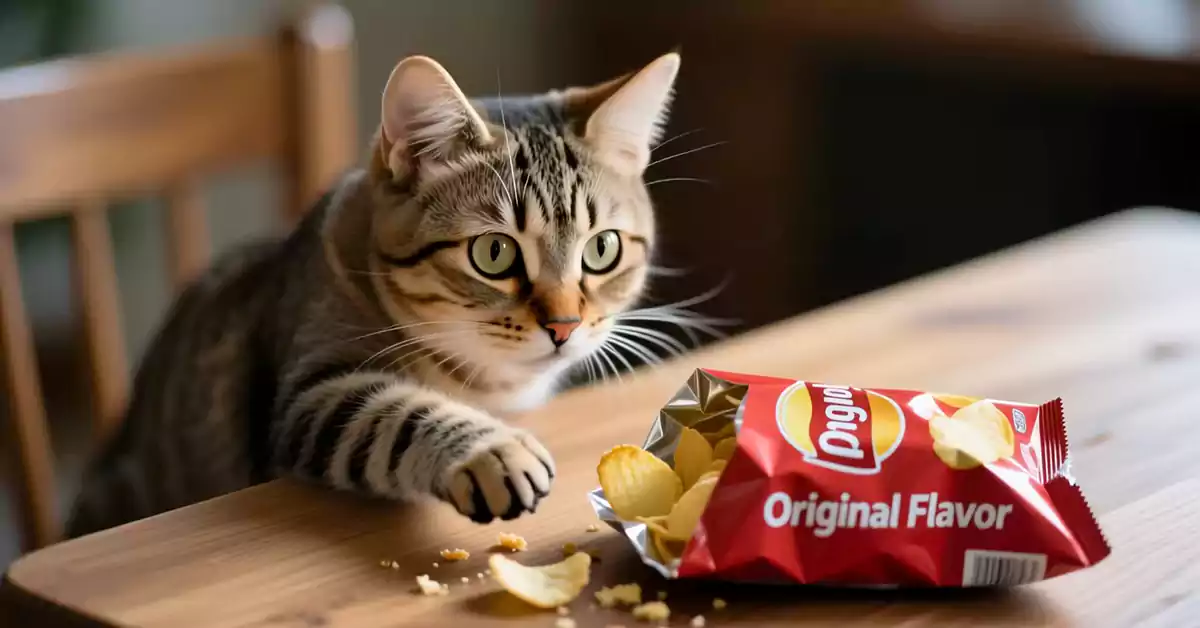
As cat owners, we often face a familiar scenario: you’re enjoying a bag of chips, your cat jumps beside you, eyes wide, whiskers pointed forward, waiting for a share. The temptation hits—“One chip won’t hurt, right?”
But the truth is different. While cats can technically eat chips, they should not. Chips contain high levels of salt, oil, preservatives, flavoring powders, and sometimes toxic ingredients like garlic or onion, which can upset a cat’s digestive system and cause more serious health complications if consumed regularly.
In this guide, we break down everything a responsible pet parent must know.
Also Read: Can Cats Eat Chocolate? A Complete Vet Approved Guide for Cat Owners 2026
Can Cats Eat Chips?
The short answer is: Yes, they can physically eat chips, but it is not recommended.
Chips are processed snacks made for humans—not for cats. Cats have very different dietary needs, and chips offer no nutritional benefit to them.
A tiny piece occasionally may not cause instant harm, but routine feeding can lead to sodium toxicity, dehydration, obesity, gastric distress, and long-term kidney problems.
Why Chips Aren’t Safe for Cats: A Deep Look into Ingredients?
Chips contain four main things—none of which are healthy for cats:
| Ingredient | Why It’s Harmful For Cats |
|---|---|
| Salt | Onion/garlic seasoning is toxic to cats, even in small amounts |
| Oil/Fried Fat | Leads to vomiting, diarrhea, obesity & pancreatitis |
| Preservatives | Causes dehydration, high blood pressure, and risk of salt poisoning |
| Flavor Powders | Onion/garlic seasoning is toxic to cats even in small amounts |
Let’s break these down with more clarity.
1. Excessive Salt – The Biggest Danger
Cats need very little sodium daily. A single chip can contain more than their entire safe daily limit.
Salt overdose symptoms in cats:
- Extreme thirst
- Frequent urination
- Vomiting
- Tremors or seizures (in severe cases)
If your cat eats too many salty snacks, this can lead to sodium poisoning, a medical emergency requiring immediate vet attention.
2. Oil & Fats – Not for a Cat’s Stomach
Chips are either fried or baked using oil. Cats lack the digestive efficiency to handle greasy, fatty foods.
Possible outcomes include:
- Loose stools
- Upset stomach or stomach pain
- Risk of pancreatitis (in severe repeated intake)
- Rapid weight gain
Even if a chip seems harmless, your cat’s body reacts differently than yours.
3. Flavorings & Seasonings – A Hidden Toxic Risk
Most chips are not plain—they come coated with powders that may contain:
✔ Onion
✔ Garlic
✔ Chili
✔ Cheese flavoring
✔ MSG
Onion & garlic are extremely toxic to cats and can damage their red blood cells, leading to hemolytic anemia.
Symptoms of onion/garlic toxicity:
- Pale gums
- Weakness & lethargy
- High heart rate
- Collapsing
Just a few chips with seasoning can be dangerous.
4. Preservatives & Additives
Cats’ digestive systems are designed to break down animal protein, not chemical preservatives. Over time these can strain the kidneys and liver.
So while a chip now and then may look harmless, it is cumulative damage that creates risk.
Can You Give Chips to Cats Occasionally?
If your cat steals one or two chips, don’t panic. A tiny amount rarely causes severe harm. But it should not become a habit.
Safe rule for cat owners:
One plain, unseasoned potato chip once in a long while is the maximum limit—zero is still better.
Anything flavored, salty, spicy, cheesy, or fried should be avoided completely.
If My Cat Ate Chips – What Should I Do?
Stay calm. Check what type of chips were eaten.
✔ If it was 1–2 plain chips:
- Offer fresh water to help dilute salt
- Monitor for vomiting or diarrhea
- No further chips or human snacks
❗ If chips contained seasoning (onion/garlic/spices):
- Observe closely for the next 12–24 hours
- Watch for fatigue, drooling, and pale gums
- Contact a vet if symptoms appear
❗ If your cat consumed many chips:
You need to act quickly.
Call your veterinarian immediately and mention:
- Approximate quantity eaten
- Type & flavor of chips
- Cat’s weight and age
- Any visible symptoms
Why Cats Beg for Chips (Even If It Isn’t Good for Them)
Surprisingly, cats do not taste sweetness. They’re attracted to chips due to:
- Crunchy texture (prey-like sensation)
- Smell of oil or cheese
- Curiosity
- Wanting what their humans are eating
It’s not that they love chips—they love sharing your food and attention.
Healthier Snack Alternatives for Cats
Instead of chips, offer snacks that are safe, yummy & nutritionally beneficial.
🐾 Safe Human Food Treats for Cats:
| Safe Option | How to Give |
|---|---|
| Plain boiled chicken | Shredded, no salt or spices |
| Boiled fish (salmon/tilapia) | Boneless, plain only |
| Plain scrambled/boiled egg | No butter or oil |
| Bits of plain cheese (rare treat) | For cats without lactose sensitivity |
| Fresh cucumber or carrot slices | Small amounts only |
🐾 Ready-Made Cat Treat Alternatives:
You can also buy:
- Freeze-dried meat treats
- Soft chicken snacks
- Dental cat chews
- Catnip treats
Your cat will be happier—and healthier.
Different Types of Chips & Their Safety Levels
| Type of Chips | Safe or Unsafe? | Notes |
|---|---|---|
| 🥔 Plain salted potato chips | Not recommended | High salt & oil |
| Irritates the stomach, toxic spices | Unsafe | Contains lactose, salt & chemicals |
| 🌶 Spicy masala or chili chips | Dangerous | Irritates stomach, toxic spices |
| 🧄 Garlic/onion flavored chips | Highly toxic | Can cause anemia |
| 🍠 Sweet potato chips | Slightly better but still not ideal | Plain only, limit consumption |
| 🥬 Baked vegetable chips | Not good | Still salty/oily & lacks nutrients |
Even the “healthier” options don’t make chips good for cats.
Can Kittens Eat Chips?
Absolutely not.
Kittens have weaker organs, more sensitive stomachs, and lower tolerance levels. Even one chip can upset their little digestive system and lead to dehydration.
Feed kittens only cat-approved kitten food & treats.
Signs Your Cat Is Sick After Eating Chips
Monitor your pet for anything unusual. Immediate symptoms may include:
- Excessive thirst
- Vomiting or gagging
- Diarrhea or constipation
- Panting or restlessness
- Drooling
- Loss of appetite
- Lethargy or unusual tiredness
If symptoms persist beyond 8–12 hours, a veterinary visit becomes necessary.
Vet-Approved Tips for Responsible Cat Treating
Here are meaningful ways to keep your cat healthy while still enjoying treat-time together:
💡 Choose treats formulated for cats
💡 Keep human snacks—including chips—out of reach
💡 Read ingredient labels for hidden garlic/onion powders
💡 Keep water available at all times
💡 Treats should be <10% of total daily calories
💡 Build food habits that support long-term kidney & heart health
Healthy cats live longer, happier lives—and diet plays a big role in that.
Frequently Asked Questions
Usually, nothing extreme. Just offer water and don’t repeat it. Remove the habit early.
No. Both contain high salt, artificial flavors, oils, and often onion/garlic seasoning.
Slightly, but still not recommended unless completely plain, oil-free & saltless.
Distract with better treats, store chips away, and establish routine feeding times.
Only plain air-popped popcorn, in moderation, but cats gain no nutrition from it either.
Final Verdict: Chips Aren’t Worth the Risk for Cats
Cats are obligate carnivores whose bodies are optimized for meat, not human junk snacks.
Though a tiny piece of plain chip here and there may not cause immediate danger, the long-term effects can be harmful. High sodium, fats, preservatives, and toxic seasonings make chips an unhealthy and unsafe snack for cats.
The kindest thing you can do is choose safer, vet-approved alternatives and reserve chips for yourself—not your cat.
Your fur baby deserves better.