
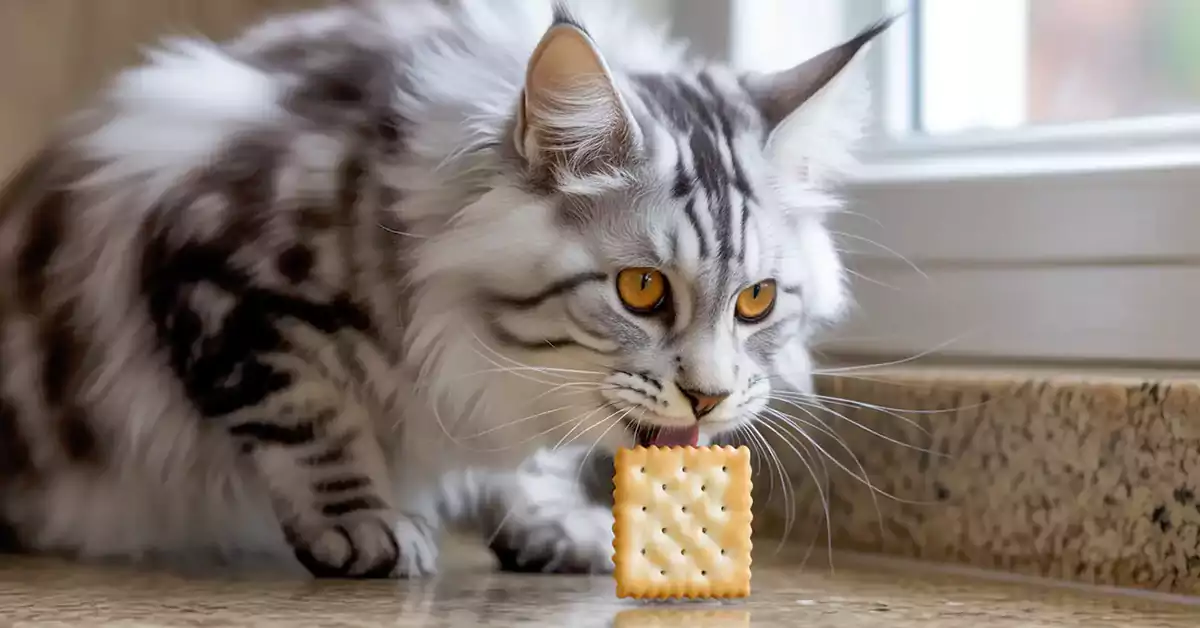
Crackers are a quick human snack—crispy, salty, and easy to munch.
But when your cat tries to swipe one off your plate, the real question appears:
Can cats eat crackers? Are they safe or harmful?
Short Answer:
Cats can eat a tiny piece of plain cracker occasionally, but crackers are not recommended.
They offer no nutritional value to cats, and many varieties contain salt, sugar, oils, garlic/onion seasoning, and dairy, all of which can upset a cat’s stomach or even become dangerous.
In this guide, you’ll learn everything you need to know—including how much is safe, which crackers to avoid, symptoms to watch for, and healthier alternatives for your feline companion.
Also Read: Can Cats Eat Cookies? Risks, Safety & Better Treats to Choose
Are Crackers Safe for Cats?
Crackers are not toxic to cats, but they are not healthy either.
Cats are obligate carnivores designed to eat meat, not grain-based snacks made for humans.
Most crackers contain:
- Wheat/refined flour
- Salt and preservatives
- Butter, oil, dairy
- Sugar
- Artificial flavors & spices
Even plain crackers give no nutrition—they’re empty calories that fill the stomach without providing protein or taurine, which cats actually need.
So while one nibble won’t harm most cats, crackers should not be a regular treat.
Why Cats Should Not Eat Crackers (Risks Explained)
1. Too Much Salt
Cats require very little sodium daily. Crackers can exceed that limit quickly.
Salt overdose symptoms include:
- Excessive thirst
- Vomiting
- Lethargy
- Tremors or seizures
Just 1–2 salted crackers can be risky for small cats
2. High Carbohydrates & Low Nutrition
Crackers = flour + starch + additives
Cats = protein-driven digestive system
Regular cracker feeding may lead to:
- Weight gain
- Diabetes risk
- Poor digestion
- Lethargy
- Nutritional deficiency if overused as snack
3. Seasonings Can Be Dangerous
Many crackers contain onion, garlic, spices, cheese, butter, or sweet coatings.
Garlic & onion powders are toxic for cats even in tiny amounts.
| Flavor Type | Safety |
|---|---|
| Plain unsalted | Safer, but pointless nutritionally |
| Salted/Buttered | Not recommended |
| Cheese crackers | Lactose + flavoring = digestive upset |
| Garlic/Onion/Herb crackers | Toxic — avoid completely |
4. Choking Hazard
Crackers crumble into sharp dry pieces.
Cats may swallow without chewing fully, which increases risk of:
⚠ choking
⚠ coughing fits
⚠ crumbs stuck in teeth or throat
Especially dangerous for kittens & senior cats.
If Your Cat Ate Crackers — What To Do
✔ Plain & small amount?
Offer water, observe for 12–24 hours.
❗ Salted or flavored?
Monitor for vomiting, diarrhea, unusual thirst, drooling, restlessness.
☠ Garlic/onion flavored?
Immediate vet attention required — risk of hemolytic anemia.
Keep ingredient list or product packaging if you contact the vet—it helps.
How Much Crackers Can Cats Eat Safely?
If you really want to share a bite:
Max = 1/4 of a plain, unsalted cracker only occasionally.
Break it into tiny crumbs.
No daily feeding. No flavored versions. No buttered crackers.
Best choice: Avoid completely and offer proper cat treats instead.
Healthy Snack Alternatives for Cats
Instead of crackers, try:
| Snack | Why It’s Better |
|---|---|
| Boiled chicken bits | Natural protein source |
| Freeze-dried chicken/fish | Nutritious and tasty |
| Plain scrambled egg | High protein treat |
| Vet-approved cat treats | Made for feline digestion |
| Catnip/cat grass | Enrichment + safe fun |
These foods support your cat’s health — crackers don’t.
FAQ For Can Cats Eat Crackers
1. Can cats eat plain crackers?
Yes, cats can eat a tiny amount of plain, unsalted crackers without immediate harm, but it’s not recommended as a snack. Crackers made from wheat and flour give cats little to no nutritional benefit and are mostly made of carbohydrates—something cats do not naturally require.
A crumb or two won’t cause damage if your cat accidentally eats one, but plain crackers still lack protein, taurine, and amino acids essential for feline health. Regular feeding may lead to weight gain, digestive irritation, and eventually metabolic problems. The safest approach is to avoid feeding crackers altogether and choose protein-rich alternatives.
2. Can cats eat cheese crackers like Cheez-Its or Monaco?
Cheese crackers should be avoided.
They contain high levels of sodium, artificial cheese flavoring, dairy, oils, and preservatives. Many cats are lactose-sensitive, so cheese crackers can cause:
- Gas
- Bloating
- Diarrhea
- Vomiting
Even if your cat enjoys the smell, they gain nothing nutritionally. Cheese crackers are far more likely to upset the stomach than benefit a cat.
3. Can kittens eat crackers?
No — kittens should never eat crackers.
Their throats are narrower, increasing the risk of choking, and their digestive systems are still developing. High-carb foods like crackers may cause diarrhea or constipation quickly. Kittens need kitten-formulated food to support rapid growth. Human snacks like crackers should be avoided completely.
4. My cat ate salted/buttered crackers—what should I do?
Salted or buttered crackers can cause dehydration, stomach upset, and sodium overload. First, offer fresh water immediately and observe your cat closely for 12–24 hours. If you notice vomiting, excessive thirst, restlessness, or drooling, call your vet.
Butter adds fat, which increases the risk of digestive issues and pancreatitis—especially in older, obese, or diabetic cats. If symptoms worsen or your cat seems weak, seek veterinary care.
5. What if my cat ate garlic or onion-flavored crackers?
Garlic & onion (even powdered form) are toxic to cats.
They can damage red blood cells and lead to hemolytic anemia.
Symptoms may include:
- Pale gums
- Weakness or collapse
- Rapid breathing
- Lack of energy
- Loss of appetite
This is a medical emergency. Contact a veterinarian immediately.
6. How often can cats eat crackers safely?
Ideally… never.
If you must share during a snack moment, offer only a tiny crumb once in a while. Treats of any kind should not exceed 10% of daily calories, and crackers should not be part of that 10%. Long-term feeding risks digestion problems, obesity, and nutrition imbalance.
Final Verdict: Should Cats Eat Crackers?
Crackers are not toxic, but they are not good for cats.
They’re salty, starchy, low-nutrition snacks designed for humans—not carnivorous animals.
✔ A tiny crumb once in a while = Safe
✖ Flavored/salted crackers = Avoid
✖ Regular feeding = Unhealthy
Better alternatives = Chicken, fish, eggs, cat treats
Your cat deserves real nutrition—not empty calories.