
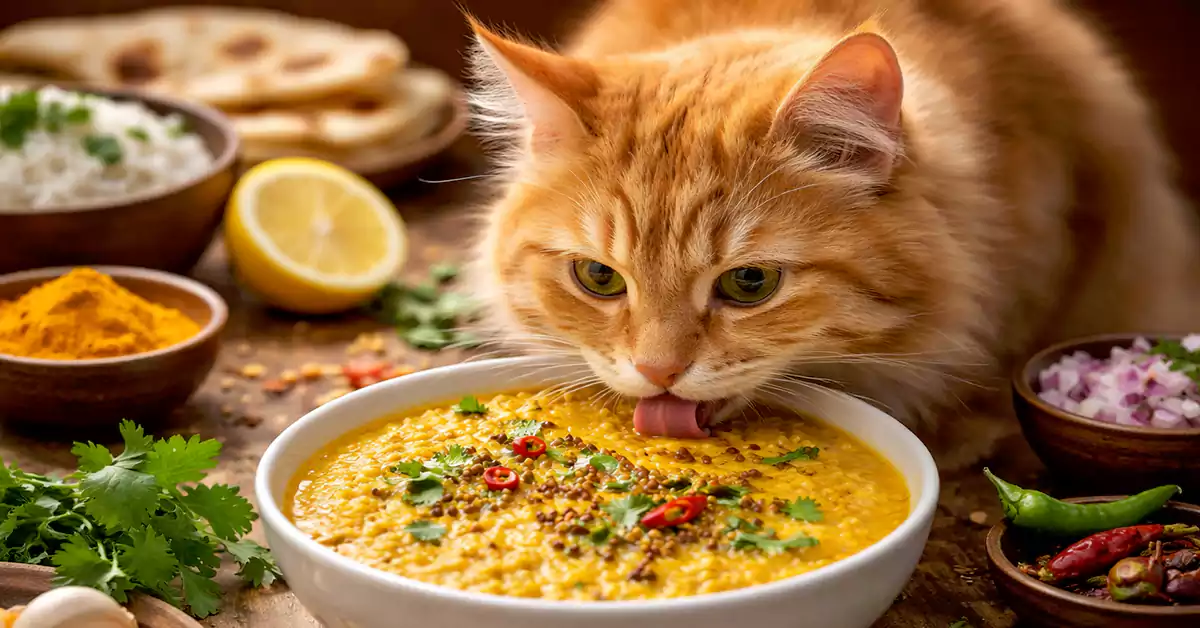
Dal is a daily food in most Indian households. From moong dal to arhar (toor) dal, and comforting meals like dal rice, it’s hard to imagine an Indian kitchen without lentils. So if you have a cat at home, it’s very common to see them sniffing dal or trying to lick a little from your plate — mostly out of curiosity.
This naturally raises an important question: can cats eat dal?
And more specifically: can cats eat moong dal, arhar dal, or dal rice?
In this article, we’ll cover all common Indian dals in one place, explain whether they are safe, possible risks, and what cat parents should know.
Quick Safety Overview
| Food | Safe for Cats? | Risk Level | Notes |
|---|---|---|---|
| Plain cooked dal | ⚠️ Occasionally | Moderate | Hard to digest |
| Moong dal (plain) | ⚠️ Occasionally | Moderate | Least risky among dals |
| Arhar / Toor dal | ❌ Not recommended | Moderate–High | Heavier, causes gas |
| Dal with spices | ❌ Unsafe | High | Spices, onion, garlic |
| Dal rice | ❌ Not recommended | Moderate | Too many carbs |
Why Do Cats Try to Eat Dal?
Cats do not want dal because it is good for them. Their interest is usually due to:
- Curiosity about what their humans are eating
- Smell of cooked food
- Texture of soft dal
- Habit of licking plates
- Attention-seeking behavior
This curiosity does not mean dal is suitable for cats.
Is Dal Safe for Cats?
Dal is not toxic, but it is not suitable for cats.
Cats are obligate carnivores, which means their bodies are designed to digest animal-based protein, not plant-based foods like lentils. Dal is rich in carbohydrates and plant protein, which cats struggle to digest properly.
Main concerns with dal:
- Difficult digestion
- Gas and bloating
- Diarrhea
- No nutritional benefit for cats
Because of this, dal should never be a regular food for cats.
Can Cats Eat Moong Dal?
Moong dal is the lightest and easiest to digest among Indian dals, which is why many people assume it is safe for cats.
The truth:
- Plain, well-cooked moong dal (no salt, no spices) may not cause harm in a very tiny amount
- However, it still offers no benefit to cats
- Many cats may still develop loose stools or gas
👉 Verdict: Moong dal is less risky than other dals, but it is still not recommended.
Can Cats Eat Arhar Dal (Toor Dal)?
Arhar dal (toor dal) is heavier and harder to digest than moong dal.
Problems with arhar dal:
- Causes gas and bloating
- High fiber content
- Often cooked with oil, onion, garlic, and spices
Even a small amount can upset a cat’s stomach.
👉 Verdict: Arhar dal should be avoided completely for cats.
Can Cats Eat Dal Rice?
Dal rice is a very common comfort food in Indian homes, but it is not suitable for cats.
Why dal rice is a bad choice:
- Rice is high in carbohydrates
- Dal adds more indigestible plant protein
- Together, they overload a cat’s digestive system
Regular or repeated exposure can lead to:
- Diarrhea
- Weight gain
- Nutritional imbalance
👉 Verdict: Cats should not eat dal rice.
What Happens If a Cat Eats Dal?
If a cat eats a small amount of plain dal accidentally, symptoms may range from mild to moderate.
Common Symptoms to Watch For
- Diarrhea
- Vomiting
- Gas or bloating
- Stomach discomfort
- Lethargy
- Reduced appetite
Symptoms usually appear within a few hours.
When Is Dal Dangerous for Cats?
Dal becomes more dangerous in these situations:
1. Spiced Dal
Dal cooked with onion, garlic, masala, or chilli is unsafe and potentially toxic.
2. Large Quantities
Eating more than a few licks increases the risk of digestive upset.
3. Kittens and Senior Cats
- Kittens have very sensitive digestion
- Older cats may have weaker gut health
What To Do If Your Cat Eats Dal?
If your cat eats dal:
- Remove access to the food
- Observe your cat for 24 hours
- Ensure fresh drinking water
- Do not give more human food
- Contact a vet if symptoms persist or worsen
Seek immediate veterinary help if dal contained onion, garlic, or heavy spices.
Can Cats Eat Dal Every Day?
No. Cats should never eat dal daily.
Regular feeding may cause:
- Chronic digestive problems
- Poor nutrient absorption
- Dehydration from diarrhea
- Long-term health issues
Even if a cat seems fine once, repeated feeding can slowly harm gut health.
Are Lentils Healthy for Cats?
Lentils, including all types of dal, are healthy for humans, not cats.
Cats:
- Do not need plant protein
- Cannot efficiently digest lentils
- Get no essential nutrients from dal
Any perceived benefit is a myth.
Safer Alternatives to Dal for Cats
Instead of dal, offer foods that actually support feline health:
- High-quality commercial cat food
- Plain boiled chicken (no salt or spices)
- Plain cooked fish (boneless)
- Vet-approved cat treats
- Fresh water at all times
Frequently Asked Questions About Cats Eating Dal
Moong dal water may seem harmless, but it is not recommended for cats. Even though it looks light, dal water still contains starch, plant compounds, and residues from lentils that a cat’s digestive system is not designed to handle. Some cats may tolerate a few licks without visible issues, but many can develop stomach upset, loose stools, or gas. Since moong dal water provides no nutritional benefit to cats, it’s best to avoid giving it altogether.
Dal by itself is not toxic to cats. However, the way dal is commonly prepared in Indian households makes it unsafe. Dal is usually cooked with ingredients like onion, garlic, oil, salt, and spices — all of which can be harmful or toxic to cats. Onion and garlic are especially dangerous, even in small amounts. So while plain dal may not be poisonous, most cooked dal should be considered unsafe for cats.
No, kittens should never eat dal. Kittens have very delicate and developing digestive systems, and lentils are extremely difficult for them to digest. Even a small amount can quickly cause diarrhea, stomach pain, and dehydration. Because kittens need precise nutrition for growth, feeding dal or any human food can interfere with their development. Kittens should only be fed mother’s milk or vet-recommended kitten food.
Cats are attracted to dal mainly because of its smell, warmth, and soft texture, not because it is good for them. Cooked food releases strong aromas that naturally attract cats, especially when they see their owners eating. In some cases, cats also lick dal out of curiosity or boredom. This interest does not mean dal meets their nutritional needs or is safe to eat.
Even occasionally, feeding dal to cats is not advised. While a tiny accidental lick may not cause serious harm, repeated exposure can lead to digestive problems over time. Cats do not benefit from plant-based foods like dal, and regular or occasional feeding can slowly irritate their digestive system. It’s always safer to stick to foods made specifically for cats.
If your cat develops diarrhea after eating dal, stop giving all human food immediately and ensure your cat has access to fresh water. Monitor your cat closely for the next 24 hours. If diarrhea continues, worsens, or is accompanied by vomiting or lethargy, contact a veterinarian. Dehydration can happen quickly in cats, especially kittens and senior cats.
Final Verdict
Dal is a nutritious food for humans, but it is not suitable for cats. Whether it’s moong dal, arhar dal, or dal rice, lentils are hard for cats to digest and provide no nutritional benefit.
For your cat’s health and comfort, it’s best to avoid feeding dal and stick to foods specifically designed for cats.