
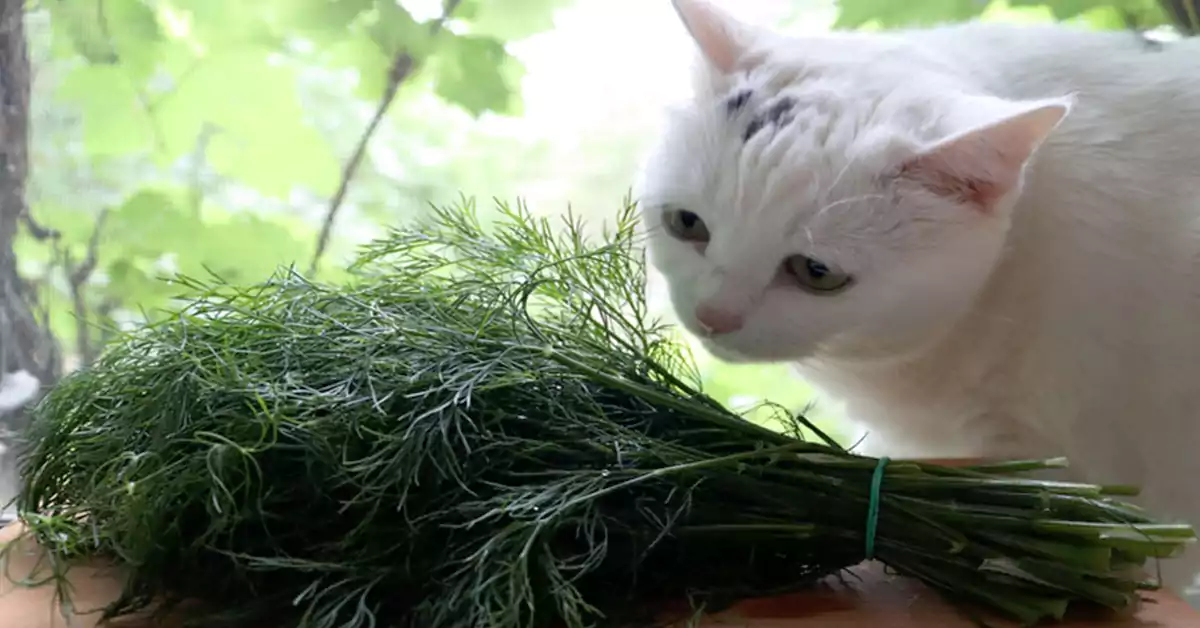
Dill is a fragrant herb commonly used in salads, pickles, soups, fish dishes, and spice blends. Its fresh, grassy aroma often attracts curious cats, especially when dill is used in the kitchen or grown in home gardens. But many cat owners wonder:
Can cats eat dill safely?
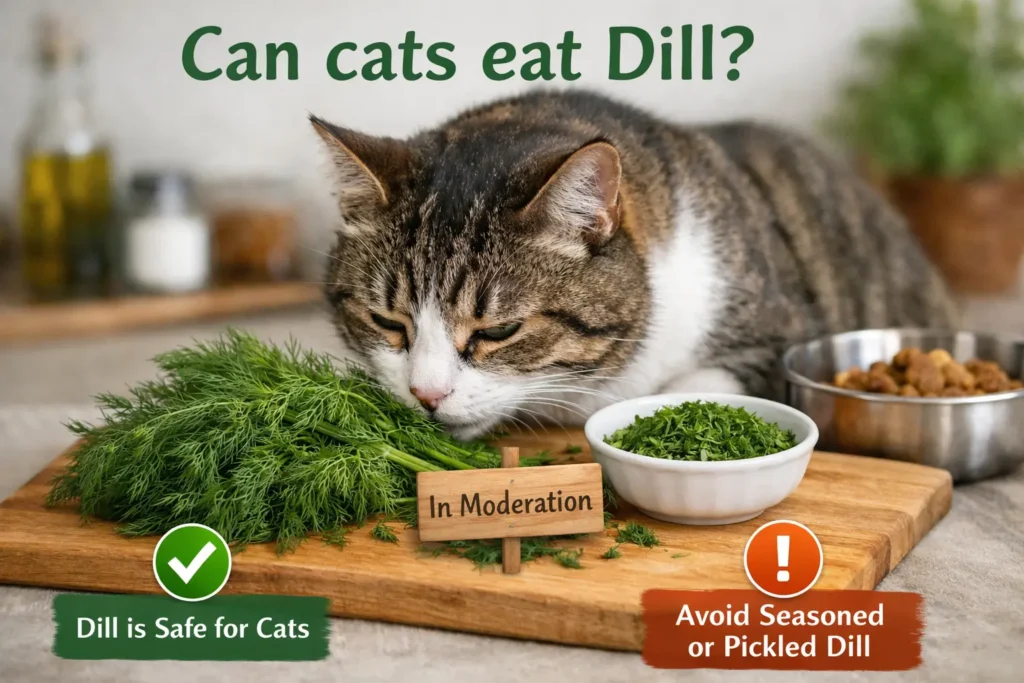
Yes — dill (Anethum graveolens) is non-toxic to cats and is considered one of the safer culinary herbs for felines. Cats can nibble small amounts of fresh dill leaves without risk of poisoning. However, dill should still be fed responsibly, and certain forms (like dill essential oil or dill pickles) must be avoided.
This complete guide breaks down everything you need to know — safety, benefits, risks, serving size, preparation tips, and what to do if your cat eats too much dill. A detailed FAQ is included at the end.
Moreover, i have written a detailed guide on which herbs, plants are safe or toxic for cats, if you want to know at one place then you can read the complete guide here: Plants That Can Be Deadly for Cats: Safe and Toxic Herbs, Flowers & Houseplants
Also Read: Can Cats Eat Oregano? Toxic or Safe? Full Vet-Aware Warning
Is Dill Safe for Cats?
Yes. Dill is classified as non-toxic to cats according to veterinary plant safety lists. The leaves, stems, and seeds are safe when consumed in small amounts.
Safe forms of dill:
- Fresh dill leaves
- Fresh dill stems (finely chopped)
- Tiny amounts of dried dill
- Fresh dill flowers (small amounts)
Unsafe forms:
- Dill essential oil (toxic)
- Dill pickles (high in salt & vinegar)
- Dill seasoning blends with garlic/onion
While dill is safe, it’s still important to offer it in moderation. Cats do not require herbs for nutrition, and too much plant matter can upset their digestion.
Do Cats Like Dill? Why Some Cats Show Interest
Cats have a highly sensitive sense of smell. Dill has a strong, distinctive aroma that may attract some cats. Cats may:
- Sniff dill leaves
- Paw at the herb
- Chew on fresh dill
- Roll near the plant
- Show curiosity when dill is chopped or used in food
Some cats ignore dill entirely, while others treat it like mild enrichment.
Dill is not like catnip. It does not trigger pleasure or hyper behaviour. Cats are simply drawn to new smells and textures.
Health Benefits of Dill for Cats (Small, but Real)
Though not necessary for a cat’s diet, dill offers mild, natural benefits when eaten occasionally.
1. Digestive Support
Dill has natural carminative properties — meaning it helps:
- reduce gas
- ease mild bloating
- soothe minor stomach discomfort
This is the same reason dill is used in gripe water for human infants.
2. Mild Antibacterial Properties
Dill contains compounds that help inhibit bacterial growth. This benefit is small in cats but still notable.
3. Antioxidants
Fresh dill contains flavonoids and vitamin C, which support cellular health and immune function — though cats obtain necessary antioxidants from their regular food.
4. Breath Freshening
Chewing small amounts of dill can slightly improve breath odour due to its aromatic oils.
5. Safe Enrichment
Dill is safe for cats to sniff and explore, providing sensory enrichment without toxicity.
Remember — all benefits are mild. Dill is not medicine and does not replace veterinary care.
Risks of Dill for Cats
Even non-toxic herbs can cause issues if eaten improperly or in excess.
1. Digestive Upset (Most Common)
Cats cannot digest large amounts of plant fibre. Eating too much dill may cause:
- Vomiting
- Diarrhea
- Soft stool
- Gas
- Stomach discomfort
Always feed tiny portions.
2. Dill Essential Oil Is Toxic
Dill essential oil is dangerous because cats cannot metabolise essential oils due to liver enzyme limitations.
Exposure to dill oil can cause:
- Drooling
- Tremors
- Lethargy
- Difficulty breathing
- Liver stress
Never apply or diffuse dill essential oil around cats.
3. Dill Pickles Are Unsafe
Pickles contain:
- High salt
- Vinegar
- Garlic/onion (sometimes)
- Sugar
- Preservatives
Absolutely never feed dill pickles to cats.
4. Allergic Reaction (Rare)
Some cats may react to dill with:
- Itching
- Sneezing
- Red skin
- Pawing at the mouth
Stop feeding if any signs appear.
How Much Dill Can Cats Eat?
Dill should be served in tiny amounts only.
Safe serving size:
- Fresh dill → a few small leaves (finely chopped)
- Dried dill → a tiny pinch
Frequency:
→ Once every 1–2 weeks
Never feed dill daily or in large portions.
How to Safely Feed Dill to Cats?
Follow these steps to ensure dill is safe for your cat:
1. Wash the dill thoroughly
This removes pesticides, dirt, and residue.
2. Chop it finely
Large leaves and stems may be hard to chew.
3. Offer a very small amount
Start with a tiny piece to test for tolerance.
4. Mix with food if desired
You may sprinkle a pinch into wet food.
5. Avoid dill from flavoured dishes
Human dishes with dill contain unsafe ingredients like garlic, onion, salt, or seasoning.
6. Do NOT use dill essential oil
Even inhalation or skin contact can be harmful.
7. Monitor your cat after feeding
Watch for vomiting, diarrhea, or lethargy.
Can Cats Eat Dill Seeds?
Yes — dill seeds are non-toxic, but:
- Hard to chew
- Difficult to digest
- May cause mild stomach irritation
Dill seeds are safe if eaten accidentally but should not be fed intentionally.
Can Cats Eat Dill Stems?
Yes, dill stems are safe but fibrous.
If feeding, chop stems into tiny pieces.
Can Cats Eat Dill Flowers?
Yes. Dill flowers are non-toxic and safe, but their strong aroma may deter some cats. Feed only a tiny amount.
Can Kittens Eat Dill?
Avoid feeding herbs to kittens.
Kittens’ stomachs are sensitive, and herbs may cause stronger digestive upset.
Is Dill Good for Cat Digestion?
Dill can provide mild digestive support, especially for gas or bloating, but it is not a proven or necessary treatment.
For real digestive support, use:
- Pumpkin
- Vet-recommended probiotics
- Digestive-care diets
What to Do If Your Cat Eats Too Much Dill?
If your cat overate dill, monitor them for:
- Vomiting
- Diarrhea
- Drooling
- Lethargy
- Gas
Most symptoms resolve within 12–24 hours.
Call a vet if:
- Symptoms last longer than 24 hours
- Your cat becomes weak or dehydrated
- Your cat ate dill essential oil
- Your cat has existing digestive issues
Essential oil exposure requires immediate veterinary attention.
DETAILED FAQ — Cats & Dill
No. Dill is non-toxic to cats, but should be fed only in tiny amounts.
Yes. Fresh dill is safe if offered in small quantities and finely chopped.
Yes, but dried dill is more concentrated. Use only a tiny pinch.
No. Pickles are unsafe due to salt, vinegar, and spices.
No. Dill essential oil is toxic and should never be diffused or applied near cats.
Yes, but seeds are hard to digest and should not be given intentionally.
Cats are often curious about strong smells. Dill is aromatic, making it interesting for sniffing and enrichment.
Very mildly, yes — but it is not a primary digestive treatment.
Avoid giving herbs to kittens because their systems are more sensitive.
Stop feeding dill and monitor for 24 hours. If vomiting continues, consult a veterinarian.
No. Cooked dishes with dill usually contain harmful seasonings.
Yes.
Dill is safe.
Mint is risky.
Oregano is potentially toxic.
Conclusion — Should Cats Eat Dill?
Dill is one of the safer culinary herbs for cats. It is non-toxic, gentle, and generally well-tolerated in tiny amounts. Cats may enjoy sniffing or nibbling dill leaves, and the herb offers mild digestive and antioxidant benefits.
However, dill should only be an occasional treat. Too much can lead to digestive upset, and dill essential oil must be strictly avoided.
In short:
✔ Fresh dill = safe in tiny amounts
✔ Dried dill = tiny pinch only
✔ Dill pickles = unsafe
✔ Dill essential oils = toxic
✔ Herbs are enrichment, not food