
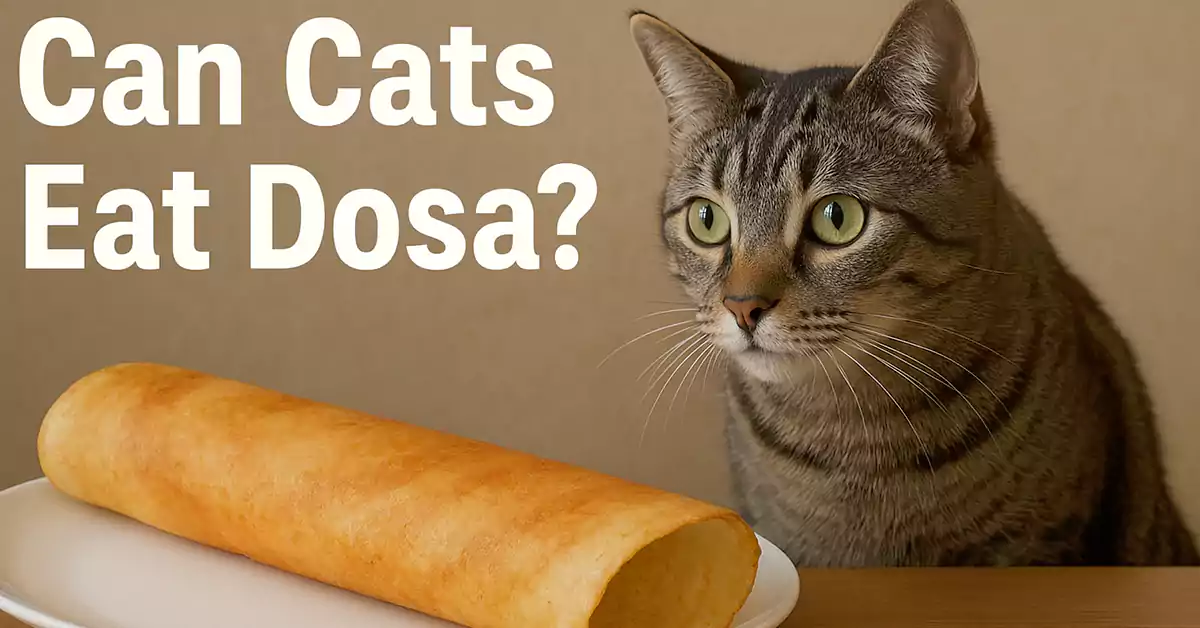
Dosa is a beloved Indian breakfast—crispy, light, and delicious. But when your cat sneaks close during breakfast time, you might wonder:
Can cats eat dosa? Is it safe to give your cat a piece?
Short Answer:
Cats can eat a tiny piece of plain dosa occasionally, but dosa is not recommended and should never replace real cat food. Most dosas contain rice, urad dal, salt, oil, ghee, butter, chutney, and spices—many of which cats should not consume regularly.
In this guide, you’ll learn whether dosa is safe, how much is okay, what risks it carries, and healthier snack alternatives for your cat.
Also Read: Can Cats Eat Chapati (Roti)? What Every Cat Owner Must Know
Is Dosa Safe for Cats?
Plain dosa without salt, butter, oil, or spices is not toxic, but it’s also not nutritious for cats.
Typical dosa ingredients include:
| Ingredient | Safe for Cats? | Why |
|---|---|---|
| Rice batter | Limited | Carbs only → no nutrition |
| Urad dal | Hard to digest | May cause gas & bloating |
| Salt | ❌ Avoid | Harmful in excess |
| Oil/Ghee/Butter | ❌ Avoid | Fat causes stomach upset |
| Spices | ❌ Never | Irritate digestive system |
Cats are obligate carnivores—they need protein and taurine from animal-based foods. Dosa has neither.
A nibble is okay. A habit is not.
Why Cats Should Not Eat Dosa Regularly
1. High Carbohydrates, Low Nutrition
Cats are not built to digest carbs like humans.
Dosa is made mostly from rice and lentils—both carb-heavy and low in protein for cats.
Regular dosa feeding can cause:
- Weight gain
- Lethargy
- Diabetes risk
- Nutritional imbalance
2. Salt, Oil & Ghee Are Harmful
Dosa batter usually contains salt, and it’s cooked in oil, butter, or ghee.
Salt can cause:
- Excessive thirst
- Vomiting
- Sodium toxicity (in high amounts)
Ghee/oil can lead to:
- Diarrhea
- Vomiting
- Pancreatitis in severe cases
3. Chutneys & Fillings Are Dangerous
Cats should never eat dosa with:
❌ Coconut chutney
❌ Onion chutney
❌ Tomato chutney
❌ Sambar
❌ Masala filling
Reasons:
- Spices irritate the stomach
- Onion & garlic are toxic
- Tomato base can cause acidity
- Sambar contains salt, chilli, and tamarind
Even small quantities can cause digestive upset.
If Your Cat Ate Dosa—What Should You Do?
✔ Plain dosa & small bite
No panic. Offer fresh water and observe.
❗ Dosa with chutney/sambar/oil/ghee
Watch for symptoms:
- Loose stools
- Vomiting
- Gas & bloating
- Lethargy
- Excessive thirst
If symptoms last > 12–24 hrs → contact a vet.
☠ Masala dosa with onion/garlic
Seek veterinary help immediately.
Even small onion exposure can damage red blood cells.
How Much Dosa Is Safe for Cats?
If you want to let your cat taste a bit:
👉 Only pea-sized piece
👉 No salt, no chutney, no spices
👉 Only once in a while → not weekly, not daily
Remember: Treats should be <10% of daily calories.
Dosa should be 0–1% — just a taste, not a snack.
Healthy Alternatives to Dosa for Cats
Instead of dosa or human foods, try:
| Better Option | Why |
|---|---|
| Boiled chicken (tiny pieces) | Natural protein |
| Fish (plain, boneless) | Easy to digest |
| Plain scrambled egg | Nutritious treat |
| Freeze-dried chicken snacks | Cat-approved |
| Catnip or cat treats | Safe & fun |
These foods support your cat’s growth and health—dosa does not.
FAQ Related Can Cats Eat Dosa?
1. Can cats eat plain dosa without chutney or oil?
Yes, but only in very tiny amounts. Plain dosa is non-toxic but nutritionally empty for cats. Even plain dosa contains rice and dal that cats cannot digest efficiently. If you give a piece, make sure it is salt-free, oil-free, spice-free and extremely small. It should not be fed frequently or as part of a meal.
2. Can kittens eat dosa?
No. Kittens have delicate digestive systems and require protein-rich diets to grow. Carbohydrates like dosa can cause stomach discomfort, diarrhea, and nutritional imbalance. Avoid feeding dosa to kittens altogether.
3. Can cats eat masala dosa?
Absolutely not. Masala dosa contains onions, garlic, oil, salt and spices, which are dangerous for cats. Onion & garlic can cause hemolytic anemia, a life-threatening condition. Never give masala dosa to cats.
4. Why do cats want dosa if it’s not good for them?
Cats may sniff dosa due to its aroma or because they want what you’re eating. Cats enjoy textures and smells more than taste—especially since they cannot taste sweetness. Curiosity does not equal nutritional suitability!
5. What happens if cats eat dosa often?
Regular dosa feeding may lead to:
- Weight gain
- Poor digestion
- Nutritional deficiency
- Diabetes risk
- Low energy levels
Cats need animal protein—not carbs. Habitual dosa feeding can weaken them long-term
Final Verdict: Should You Feed Dosa to Cats?
Dosa is not toxic, but it is not a healthy cat food.
❌ Not nutritious
❌ Hard to digest
❌ Risky with spices, oil & salt
✔ A tiny plain bite = safe
❌ Regular feeding = unhealthy
Cats thrive on meat-based diets — not dosa.