
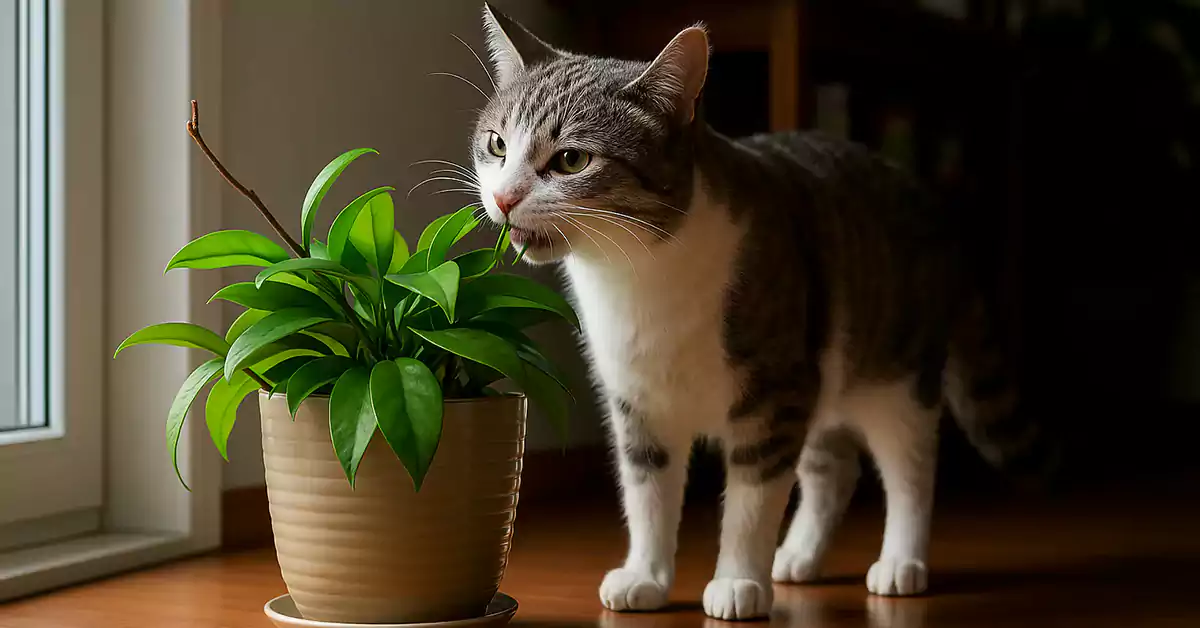
If you live with a cat, you’ve probably seen it happen — your cat sniffing, nibbling, or chewing a houseplant when you’re not looking. This often leads to an immediate worry: can cats eat houseplants, or are they dangerous?
The short answer is NO — cats should not eat houseplants.
While a few houseplants are non-toxic, many common indoor plants can cause vomiting, poisoning, organ damage, or even death in cats. Because cats cannot tell safe plants from toxic ones, houseplants pose a real risk in cat homes.
This guide explains why cats chew houseplants, which plants are toxic, which are safer, the symptoms of poisoning, and what to do if your cat eats one.
Why Do Cats Eat Houseplants?
Cats don’t eat houseplants because they need vegetables. This behavior is driven by instinct, curiosity, and environment. Another reason in my opinion is that Cats are often attracted to greenery, whether it’s houseplants, decorative flowers, or leaves that move easily.
1. Natural Curiosity
Cats explore with their mouth. New textures, smells, and shapes trigger investigation, especially with leafy or dangling plants.
2. Texture & Movement
Leaves that sway or hang resemble prey. This visual stimulation often encourages chewing or batting.
3. Digestive Instinct
Some cats chew plants to help induce vomiting, especially when dealing with hairballs or stomach discomfort.
4. Boredom or Stress
Indoor cats lacking mental stimulation may chew plants as a form of entertainment or stress relief.
5. Attention-Seeking
If a cat notices you react strongly when they approach plants, they may repeat the behavior to get attention.
Are Houseplants Safe for Cats?
In most cases, NO. Many common indoor plants, including succulents, may look harmless but can be toxic if chewed by cats.
Houseplants fall into three categories:
- Highly toxic (medical emergency)
- Mildly toxic (digestive upset, irritation)
- Non-toxic (still not meant to be eaten)
Because many toxic and non-toxic plants look similar, veterinarians recommend treating all houseplants as unsafe unless confirmed otherwise.
Highly Toxic Houseplants for Cats (Never Allow Access)
These common houseplants can be extremely dangerous for cats.
Lilies (Most Dangerous)
- Easter lily
- Asiatic lily
- Tiger lily
- Daylily
➡ Causes acute kidney failure
➡ Even pollen or water from the vase can be fatal
Aloe Vera
Plants like aloe vera, commonly kept indoors for skin care or decoration, are toxic to cats if ingested.
- Vomiting
- Diarrhea
- Tremors
- Lethargy
Jade Plant
- Vomiting
- Low heart rate
- Loss of coordination
Snake Plant
- Nausea
- Drooling
- Vomiting
Pothos (Money Plant)
- Mouth burning
- Swelling
- Excessive drooling
ZZ Plant
- Severe mouth irritation
- Vomiting
Dieffenbachia (Dumb Cane)
- Swollen tongue
- Difficulty breathing
- Painful mouth burns
🚨 If your cat eats any of these, seek veterinary help immediately.
Mildly Toxic Houseplants (Still Unsafe)
These plants are not usually fatal but can still make cats sick:
- Peace lily
- Rubber plant
- Philodendron
- Dracaena
- Ivy
- Ficus
Symptoms may include:
- Vomiting
- Drooling
- Diarrhea
- Loss of appetite
- Lethargy
Repeated exposure increases risk.
Are Any Houseplants Safe for Cats?
Some plants are labeled “cat-safe,” but that does not mean cats should eat them.
Examples often considered non-toxic:
- Spider plant
- Areca palm
- Boston fern
- Calathea
- Orchids
Important:
- Non-toxic ≠ edible
- Eating large amounts can still upset digestion
- Plants offer no nutritional benefit to cats
Even safe plants should not be encouraged as chew toys.
Why Houseplants Are Dangerous for Cats?
Cats are obligate carnivores. Their digestive system is not designed to process plant compounds.
Houseplants may contain:
- Alkaloids
- Saponins
- Calcium oxalates
- Essential oils
- Cardiac glycosides
These substances can cause:
- Digestive irritation
- Neurological symptoms
- Heart rhythm problems
- Kidney or liver damage
Cats lack the enzymes to break these down safely.
Symptoms If a Cat Eats a Houseplant
Symptoms depend on the plant type and amount ingested, but common signs include:
- Vomiting
- Diarrhea
- Drooling or foaming
- Pawing at the mouth
- Swollen lips or tongue
- Lethargy
- Tremors
- Loss of appetite
- Difficulty breathing
- Reduced urination (kidney danger)
Lilies require emergency care even before symptoms appear.
How Much Houseplant Is Dangerous for Cats?
There is no safe amount for toxic houseplants.
- Even a small bite can be harmful
- Sap or pollen exposure can be enough
- Repeated nibbling increases toxin buildup
If you’re unsure which plant your cat ate, assume it’s unsafe.
What To Do If Your Cat Eats a Houseplant?
Step 1: Remove Access Immediately
Move the plant out of reach to prevent further exposure.
Step 2: Identify the Plant
Take a photo or bring a sample to your vet if possible.
Step 3: Do NOT Induce Vomiting
This can worsen irritation or cause aspiration.
Step 4: Call Your Veterinarian
Especially if the plant is known to be toxic.
Step 5: Monitor Closely
Watch for symptoms for at least 24 hours.
How to Stop Cats From Eating Houseplants?
You should always try to stop your cat from having houseplants. However, if your cat enjoys chewing greenery, offering cat grass is a much safer alternative than allowing access to houseplants.
1. Remove Toxic Plants
This is the safest solution.
2. Use Hanging or Enclosed Planters
Keep plants completely inaccessible.
3. Provide Safe Alternatives
- Cat grass
- Wheatgrass
- Catnip
4. Increase Enrichment
More playtime reduces destructive behavior.
5. Use Cat-Safe Bitter Sprays
These discourage chewing without harming your cat.
Are Artificial Houseplants Safe for Cats?
Not always.
Artificial plants may contain:
- Plastic
- Wires
- Glue
- Dyes
Cats may chew and swallow parts, causing choking or intestinal blockage.
Can Kittens Eat Houseplants?
Kittens are more vulnerable than adult cats.
- Smaller bodies
- Developing organs
- Strong curiosity
Even mildly toxic plants can affect kittens severely. Keep all plants out of reach.
FAQ: Cats and Houseplants
Because chewing is not about hunger. It’s driven by curiosity, texture, boredom, or instinctive behavior.
Indoor plants are often more dangerous because cats have constant access, increasing the risk of repeated exposure.
Yes. Certain plants like lilies, oleander, and jade plant can be fatal if not treated quickly.
Yes. Soil may contain fertilizers, pesticides, or mold that can be harmful if ingested.
No. Cats do not need plant nutrients. Any chewing is behavioral, not nutritional.
Cat grass is the safest and most recommended option.
Final Verdict: Can Cats Eat Houseplants?
No — cats should not eat houseplants.
While some plants are non-toxic, many common houseplants can cause serious health problems, and cats cannot tell the difference.
Best practice for cat parents:
- Remove toxic plants
- Avoid placing plants within reach
- Provide cat-safe alternatives
- Act quickly if ingestion occurs
Your cat’s curiosity is natural — keeping their environment safe is your responsibility.