
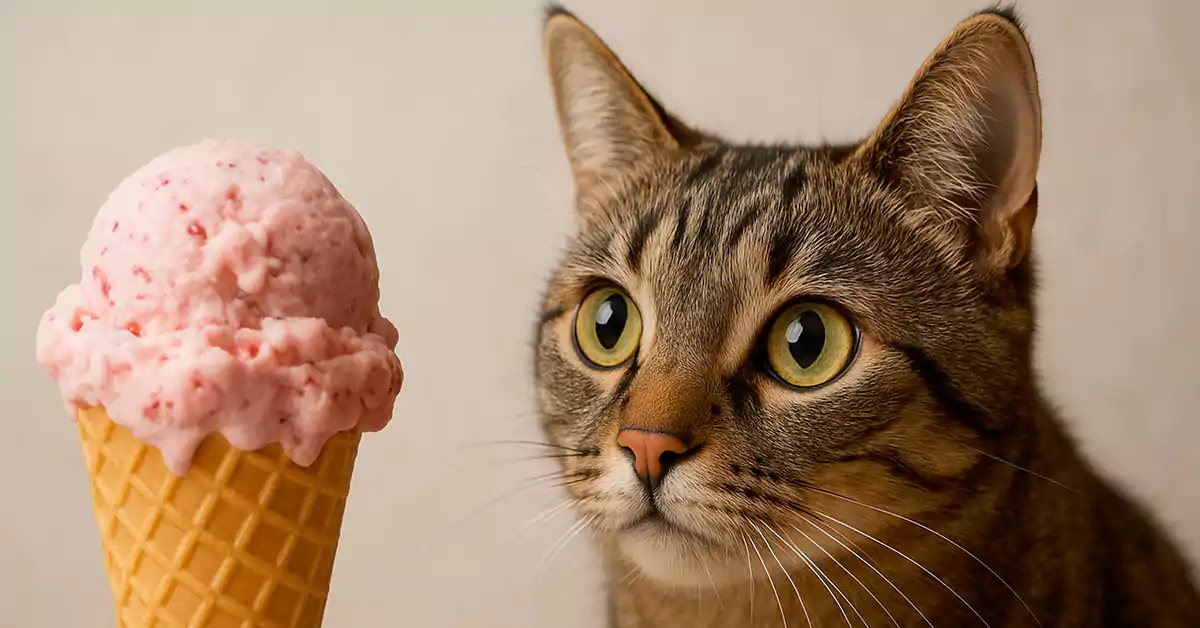
Can Cats Eat Ice Cream?
Most cats should not eat ice cream. While a tiny accidental lick is rarely dangerous, ice cream contains ingredients that cats cannot digest properly — including lactose, sugar, fat, artificial flavors, and sometimes toxic ingredients like chocolate or xylitol.
Even though your cat may seem curious when you’re enjoying a bowl of vanilla ice cream, that doesn’t mean it’s safe for them. Cats are obligate carnivores, and their digestive systems are not designed for dairy or sugary foods.
This article explains the risks, symptoms, safe alternatives, and what to do if your cat eats ice cream. Let’s check out
Also Read: Can Cats Eat Ghee? A Complete, Vet-Informed Guide for Cat Owners 2026
Why Ice Cream Is Not Safe for Cats?
1. Most Cats Are Lactose Intolerant
Kittens can digest milk because their bodies produce the enzyme lactase.
But after they are weaned, their lactase production drops sharply.
This means:
- They cannot digest milk or cream properly
- Even small amounts can lead to vomiting, diarrhea, stomach cramps, or gas
Ice cream is simply too heavy for their digestive system.
2. High Sugar Content
Cats cannot taste sweetness, but that doesn’t make sugar any safer.
Sugar can contribute to:
- Obesity
- Diabetes
- Dental problems
- Inflammation
Since cats don’t need carbohydrates at all, sugar is unnecessary and harmful.
3. Too Much Fat
Ice cream is high in dairy fats, which can cause:
- Pancreatitis
- Vomiting
- Soft stool
- Long-term weight gain
Pancreatitis can be life-threatening, so high-fat human foods should always be avoided.
4. Toxic Ingredients Are Common
Some ice cream flavors contain harmful or deadly substances for cats, such as:
- Chocolate (toxic)
- Coffee (toxic)
- Matcha or green tea (can overstimulate)
- Raisins (toxic)
- Xylitol (deadly artificial sweetener)
- Macadamia nuts (toxic)
Even “harmless” flavors like vanilla often contain alcohol-based extracts, which irritate a cat’s stomach.
5. Artificial Sweeteners & Additives
Sugar-free ice cream is even more dangerous because many brands use:
- Xylitol
- Sorbitol
- Stevia blends (still irritating for cats)
Xylitol is extremely poisonous and can kill a cat even in small doses.
What Happens if a Cat Eats Ice Cream?
The effects vary depending on the cat’s sensitivity and the ingredients in the ice cream.
Common symptoms include:
- Diarrhea
- Vomiting
- Bloating
- Gas
- Drooling
- Stomach pain
- Lethargy
- Restlessness
Cats with sensitive stomachs may react more intensely.
What If My Cat Already Ate Ice Cream?
If it was a tiny lick of vanilla ice cream:
- Do not panic — it’s usually harmless.
- Offer plenty of fresh water.
- Monitor your cat for digestive upset for 12–24 hours.
If your cat ate chocolate, coffee, or xylitol ice cream:
This is a medical emergency.
Symptoms of toxicity include:
- Rapid breathing
- Tremors
- Seizures
- Increased heart rate
- Vomiting
- Collapse
Contact your veterinarian immediately.
If your cat ate a large amount:
Even vanilla ice cream can cause pancreatitis or severe diarrhea.
Call your vet to be safe.
Can Cats Eat Lactose-Free Ice Cream?
Some brands sell “lactose-free” or “vegan” ice cream.
But beware — lactose-free does not mean cat-safe.
Many lactose-free options still contain:
- Sugar
- Fat
- Oils
- Caramel
- Chocolate chips
- Raisins
- Preservatives
Vegan ice creams often contain coconut milk or almond milk, which can still upset a cat’s stomach.
So even lactose-free ice cream should not be given intentionally.
Can Cats Eat Cat-Friendly Ice Cream?
Yes — cat ice cream exists, and it’s safe.
Brands like:
- PetSmart’s cat ice cream treats
- “Snowflake cat ice cream” (powder mix)
These contain:
- No lactose
- No sugar
- No toxic ingredients
They are made specifically for cats and freeze into a creamy treat.
If you want to spoil your cat safely, these are good options.
Why Do Some Cats Love Ice Cream?
Cats don’t taste sweetness — so they’re not attracted to sugar.
Their interest usually comes from:
- The cool temperature
- The fatty smell from the cream
- Curiosity (your food = interesting)
But just because they want it doesn’t mean they should have it.
Safer Alternatives to Ice Cream for Cats
Here are some healthy, cat-safe cool treats:
Frozen tuna water cubes
Freeze the water from canned tuna (in spring water).
Cats love this.
Frozen chicken broth cubes
Make sure the broth has:
- No salt
- No onion
- No garlic
Healthy and hydrating.
Commercial cat ice cream
Designed for feline digestion.
Plain frozen pumpkin puree
Great for digestion and soothing on hot days.
Cat yogurt treats (lactose-free only)
Some brands make safe, cat-friendly yogurt drops.
These alternatives satisfy your cat without harming their stomach.
Can Kittens Eat Ice Cream?
No, kittens have more sensitive digestive systems, and dairy is more likely to cause:
- Diarrhea
- Dehydration
- Nutrient imbalance
Kittens should only consume:
- Kitten milk replacer (KMR)
- Kitten formula food
Ice cream is never appropriate for kittens.
Frequently Asked Questions
A tiny accidental lick is okay, but it should never be given intentionally.
Not recommended. It contains lactose, sugar, and often carrageenan, which irritates the gut.
Cats are curious and attracted to the smell of fat — not the sweetness.
Regular feeding can contribute to: Obesity, Diabetes, Pancreatitis, Gut flora imbalance
Final Verdict: Can Cats Eat Ice Cream?
No — cats should not eat ice cream.
While a tiny lick is usually safe, ice cream contains lactose, sugar, fat, and often dangerous additives. Cats gain no nutritional benefit from it; instead, they risk digestive problems and, in some cases, toxic reactions.
If you want to treat your cat, choose cat-safe frozen snacks or homemade cold treats instead.
Your cat will enjoy them just as much — and stay much healthier.