
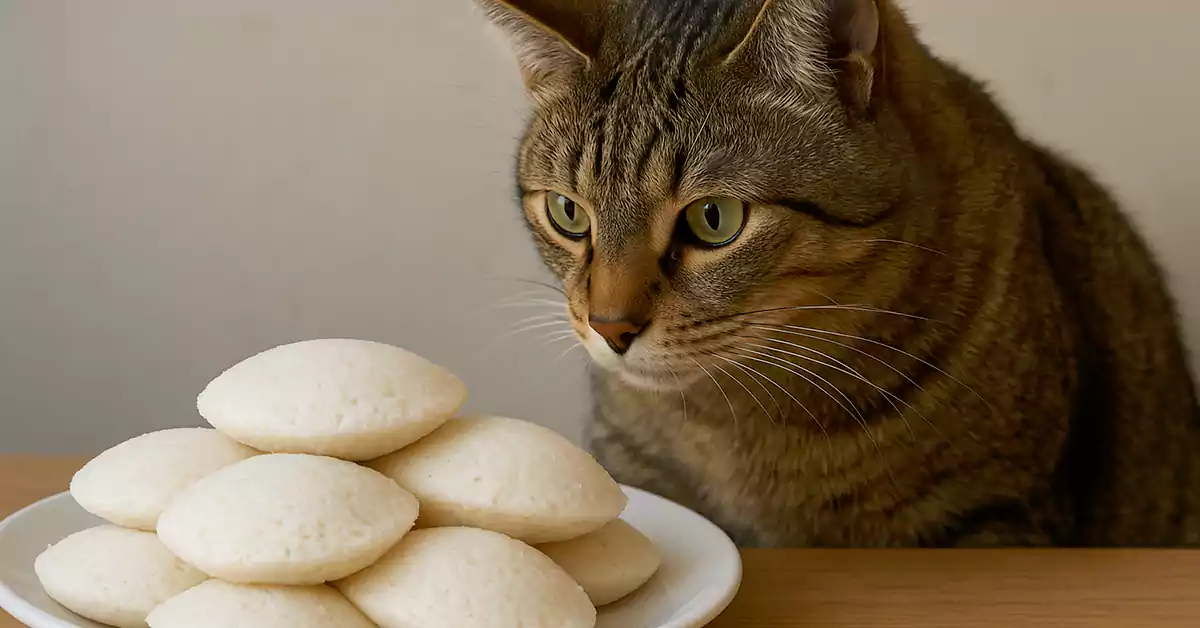
Idli is a soft, steamed breakfast staple in many Indian homes — light, fluffy and easy to digest for humans.
But when your cat sniffs the plate or tries to steal a bite, a question arises:
Can cats eat idli? Is it safe or harmful to give idli to cats?
Short Answer:
Cats can eat a very tiny piece of plain idlis occasionally — but idli is NOT recommended for cats as regular food.
It contains rice and urad dal, both high-carbohydrate ingredients that provide no nutritional value to a carnivorous animal like a cat.
This article explains when idlis are safe, how much is okay, the risks involved, and what you should feed instead.
Also Read: Can Cats Eat Dosa? (Plain, Masala, Ghee) Full Safety Explanation
Is Idli Safe for Cats?
Plain idlis without chutney, salt, oil or spices are not toxic, but they’re not ideal food either.
Idli is made from:
| Ingredient | Safe for Cats? | Notes |
|---|---|---|
| Rice batter | Limited | Carbs only — no nutrients for cats |
| Urad dal batter | Harder to digest | May cause gas & bloating |
| Salt | ❌ Avoid | Cats require very low sodium |
| Oil/Ghee/Butter | ❌ Avoid | Fat can cause stomach upset |
| Chutney/Sambar | ❌ Never | Contains chili, onion, garlic — harmful |
Even though idlis are soft, gentle and mild for humans, they’re nutritionally empty for cats.
Why Cats Should Not Eat Idlis Regularly
1. Cats Can’t Break Down Carbs Efficiently
Idli is a carbohydrate-heavy food, but cats run on protein and fat from meat.
Feeding idli often may lead to:
- Weight gain
- Lethargy
- Poor nutrition
- Diabetes risk
- Muscle loss
2. Risk of Stomach Upset
Some cats may handle carbs slightly, others react immediately.
Possible reactions include:
| Symptom | Reason |
|---|---|
| Loose stools / diarrhea | Improper carb digestion |
| Vomiting | Rice or dal sensitivity |
| Gas & bloating | Fermentation of dal in stomach |
| Constipation | Low moisture + high starch |
Even plain idlis aren’t gentle for all cats.
3. Chutneys & Sambar Are Unsafe
Never give idlis with:
❌ Coconut chutney
❌ Tomato chutney
❌ Onion chutney
❌ Sambar
❌ Spicy podi
Reason:
- Onion & garlic are toxic to cats
- Spices burn the stomach lining
- Tamarind causes acidity
- Salt & oil overload the kidneys
Even a lick of sambar or chutney is harmful.
How Much Idli Can a Cat Eat Safely?
If your cat insists, you may offer a very small piece.
Safe Serving Rules:
👉 Only a tiny pinch (pea-size)
👉 NO chutney, no spices, no ghee
👉 Not more than once in a while
👉 Never as a meal replacement
Best approach:
Let them taste — don’t let them snack.
If Your Cat Ate Idli — What Should You Do?
✔ If it was plain & small
Nothing to worry. Offer fresh water.
If idli had chutney/sambar/oil
Watch closely for:
- Vomiting
- Diarrhea
- Restlessness
- Increased thirst
- Gas or stomach pain
If symptoms remain beyond 12–24 hours → consult a vet. If onion/garlic were involved
Seek veterinary advice immediately — toxicity risk.
Healthy Alternatives to Idli for Cats
If you want to share a food moment with your cat, these options are much better:
| Safe Treat | Benefits |
|---|---|
| Small boiled chicken | High protein, natural |
| Plain boiled fish | Easily digestible |
| Scrambled egg (salt-free) | Nutritious occasional snack |
| Freeze-dried chicken/fish treats | Cat-approved |
| Catnip or cat treats | Fun & safe |
These actually support health — idli doesn’t.
FAQ: Can Cats Eat Idlis?
1. Can cats eat plain idli?
Yes, a tiny plain bite is safe, but idli has no nutritional value for cats. Idli is made from rice and urad dal — both carbohydrates that cats can’t properly utilize. A cat’s digestive system is built for meat-based protein and taurine, not grains. So while a crumb-sized taste is harmless, frequent feeding can lead to digestive issues, weight gain, and nutritional gaps.
2. Can kittens eat idli?
No — kittens should not eat idli at all. Their stomachs are extremely sensitive, and carbs can upset digestion quickly. Kittens need high-protein diets to build muscles, bones and immunity. Feeding idli instead of kitten food may slow development and cause nutrient deficiency.
3. Can cats eat idli with chutney or sambar?
Never. Chutneys and sambar contain spices, chili, tamarind, onion and garlic, all of which can irritate the stomach or cause toxicity. Even a small amount of onion or garlic can damage a cat’s red blood cells and lead to anemia. Always remove toppings completely.
4. Why do cats like idli if it isn’t good for them?
Cats get curious about human food because they like the smell and texture — not the nutrition. They can’t taste sweetness, so what attracts them is warmth and aroma. Just because they ask doesn’t mean their body needs it.
5. What happens if a cat eats idli regularly?
Over time, routine idli feeding may cause:
- Weight gain
- Weakness and low energy
- Digestion problems
- Risk of diabetes
- Nutrient deficiencies
Cats thrive on meat, not grain-based snacks.
Final Verdict: Should Cats Eat Idli?
Idli is safe only in tiny, plain amounts but offers no real benefit to your cat.
Regular feeding is unhealthy.
❌ No chutney
❌ No sambar
❌ No spices or ghee
✔ Tiny plain bite (rarely) is okay
🟢 Better option: meat-based treats
Your cat deserves real nutrition — not rice cakes.