

Kheer is fondly eaten across India. The sweet dessert has fans all across India, although the names could be different across India. You can find in North India people calling it kheer and in South India people call it Payasam. This sweet dish is mostly prepared during the auspicious occasions in Indian Households. Since Kheer is very common in Indian households, so if you have a cat in your house, you’d be curious to know whether you can feed kheer to your cat or not. Thus, in this post, we’ll answer all your questions about whether cats can eat kheer or not.
Can I Feed Kheer to My Cat?
If you are a cat parent like us and curious to know whether to feed your cat kheer, then the simple answer is “No”; you are not advised to feed kheer to your cat. While Kheer is not toxic to your cat like other toxic foods, it is not good for the digestive system of your cat. It can upset a cat’s stomach and may cause vomiting, diarrhea, and other health issues.
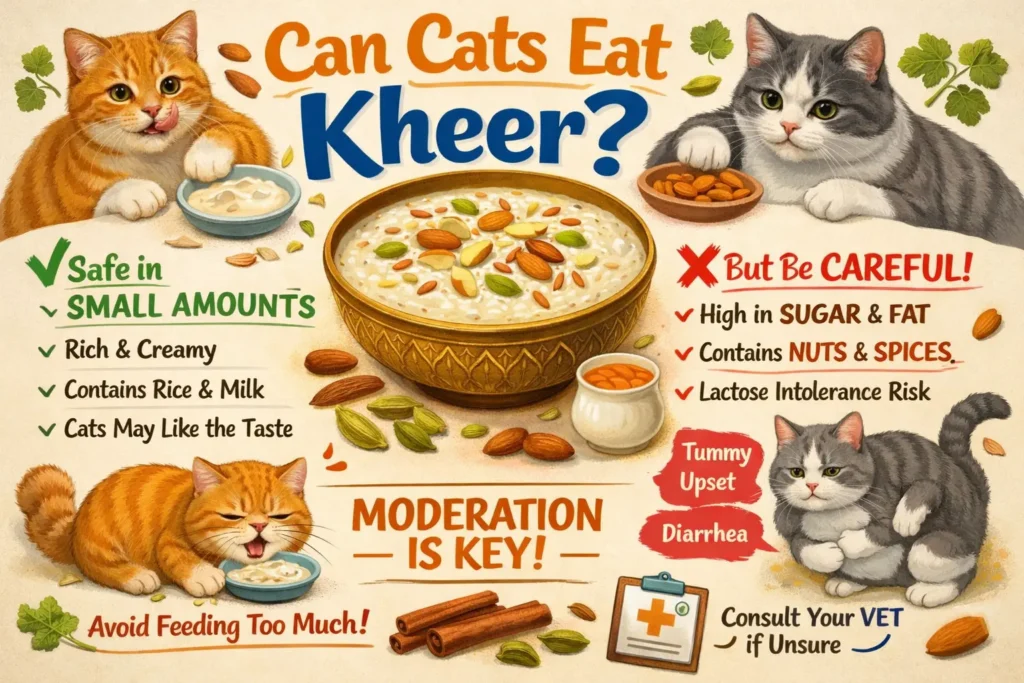
Why Kheer is Not Good for Your Cats?
Now the next question would be in your mind: why not give Kheeer to your cat? So the answer is the Kheer is made of Milk, Sugar, Rice, Jaggery or gur, and dry fruits, and each of these ingredients can create health problems for your cat.
Now, let’s discuss each of these ingredients in detail, why they can cause health issues for your cats.
Milk and Cats
Many people believe cats love milk, and while they may enjoy the taste, most adult cats are lactose intolerant.
When cats drink milk or eat milk-based dishes like kheer, their bodies often struggle to digest lactose. This can lead to:
- Stomach cramps
- Gas
- Loose stools
- Diarrhea
Even a small amount of milk-based dessert can cause digestive upset in sensitive cats.
Sugar in Kheer: Empty Calories for Cats
Kheer contains sugar or jaggery, both of which are unnecessary and unhealthy for cats.
Cats do not need sugar in their diet. Their bodies are designed to process protein, not carbohydrates. Regular exposure to sugary foods can contribute to:
- Weight gain
- Blood sugar imbalance
- Dental issues
Sugar also increases the risk of stomach upset.
Rice and Vermicelli: Not Harmful, but Not Helpful
Plain cooked rice is sometimes given in small amounts to cats with upset stomachs, but kheer rice is very different.
Rice or vermicelli in kheer is:
- Cooked in milk
- Mixed with sugar
- Often over-softened
This combination makes it unsuitable for cats and difficult to digest.
Dry Fruits and Spices: Extra Risk
Some versions of kheer contain:
- Raisins
- Cashews
- Almonds
- Cardamom
Raisins are toxic to cats, and nuts can be choking hazards or cause digestive issues. Spices, even mild ones, can irritate a cat’s stomach.
What Happens If a Cat Eats Kheer?
If a cat licks or eats a small amount of kheer, symptoms may appear within a few hours.
Possible reactions include:
- Vomiting
- Diarrhea
- Gas or bloating
- Lethargy
- Loss of appetite
Consuming these ingredients is usually not severely toxic, but it can cause discomfort for a day or two.
Is Homemade Kheer Good for Cats?
No, even homemade kheer without dry fruits or additional ingredients is not ideal for cats.
If you think preparing kheer at home makes it safe for your cat, that is incorrect. There is no version of traditional kheer that is truly cat-safe.
What to Do If My Cat Accidentally Ate Kheer?
If your cat manages to lick or eat some kheer, there is no need to panic or rush immediately to the veterinarian. Instead, do the following:
- Remove access to the dessert
- Offer fresh water
- Monitor your cat for digestive symptoms
If vomiting or diarrhea is severe or lasts more than 24 hours, consult your veterinarian.
Do not give home remedies unless advised by a vet.
Why Do Cats Try to Eat Kheer?
Cats may show interest in kheer because:
- It smells rich and creamy
- They are curious about human food
- They associate milk with treats
Curiosity does not mean safety.
Better Treat Alternatives for Cats
If you want to give your cat a treat, consider:
- Commercial cat treats
- Small amounts of plain boiled chicken
- Vet-approved cat snacks
These options are far safer than human desserts.
Frequently Asked Questions (FAQs)
No, Kheer is not even good for the kittens. Kittens may be even more sensitive to milk and sugar, making kheer unsafe for them as well. Therefore, you should not give any amount of kheer to kittens.
No, as Payasam contains the same ingredients — milk, sugar, and grains — and is equally unsafe for cats.
Even a small amount can cause stomach upset in lactose-intolerant cats.
No. Jaggery is still sugar and offers no benefit to cats. You should not give it to your cat at any cost.
Most Indian sweets are not safe for cats due to dairy and sugar content. It’s best to avoid sharing sweets altogether.
Final Verdict: Can Cats Eat Kheer?
Kheer is a beloved Indian dessert, but it is not suitable for cats. While a small accidental taste is unlikely to be life-threatening, it can cause digestive discomfort and should not be offered intentionally.
Keeping your cat on a diet designed for their nutritional needs is the safest and healthiest choice.
Disclaimer
This article is intended for informational purposes only and is based on general knowledge about feline nutrition and common food ingredients. It is not a substitute for professional veterinary advice, diagnosis, or treatment.
Every cat is different, and reactions to foods may vary depending on age, health, and individual sensitivity. If your cat has eaten something unusual or is showing signs of illness, always consult a qualified veterinarian for proper guidance.