
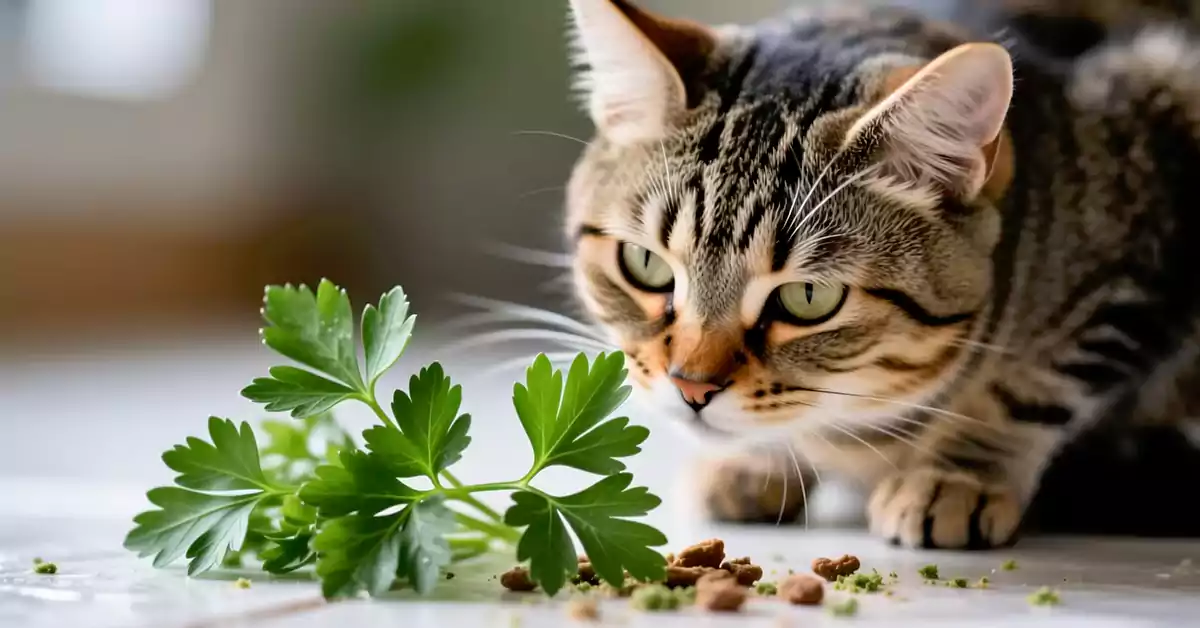
Parsley is a common herb used in kitchens worldwide. It adds freshness to soups, salads, garnishes, and home-cooked meals. But when cat owners see their pet sniffing, chewing, or pawing at parsley, one question naturally comes up:
Can cats eat parsley safely?
The answer is:
Yes — in moderation, parsley is safe for most cats.
Parsley is listed as non-toxic to cats by the ASPCA. It contains vitamins, antioxidants, and natural plant compounds that may offer mild benefits. However, parsley must be fed responsibly, because not all forms are safe. Some cats — especially those with urinary issues — should avoid parsley.
This complete guide explains everything you must know: the benefits, risks, appropriate serving size, safe forms, harmful forms, and what to do if your cat eats too much.
Let’s dive in.
Also Read: Can Cats Eat Basil? Safe or Not? Full Vet-Aware Guide for Cat Owners
Also i have written a detailed guide on which herbs, plants are safe or toxic for cats, if you want to know at one place then you can read the complete guide here: Plants That Can Be Deadly for Cats: Safe and Toxic Herbs, Flowers & Houseplants
Is Parsley Safe for Cats?
Yes, fresh culinary parsley (Petroselinum crispum) is non-toxic and safe for cats in small amounts.
Safe forms include:
- Fresh flat-leaf parsley
- Fresh curly parsley
- Very small amounts of dried parsley
Unsafe or risky forms include:
- Parsley essential oil (toxic to cats)
- Large amounts of parsley juice
- Parsley-infused supplements without vet approval
Even though parsley is safe, cats should eat it only occasionally. Their digestive system is designed for animal protein, not leafy herbs.
Why Do Cats Sometimes Eat Parsley?
Some cats ignore parsley entirely. Others may chew it from curiosity.
Reasons include:
1. Strong aroma
Parsley has a mild, grassy smell that can attract a curious cat’s senses.
2. Texture
The soft leaves can feel similar to chewing grass.
3. Enrichment
Many indoor cats enjoy chewing plants for stimulation.
4. Natural instinct
Some cats instinctively chew on greens to help move hairballs.
Cats don’t seek parsley for nutrition — they only enjoy exploring new smells and textures.
Health Benefits of Parsley for Cats (Small, but Real)
Parsley is one of the few herbs that may actually offer minor health benefits to cats when used correctly.
1. Natural Breath-Freshening Properties
Parsley contains chlorophyll, which has natural deodorizing qualities. This may help mildly reduce bad breath in some cats, though it does not fix dental disease.
2. Antioxidants
Parsley is rich in flavonoids and vitamin C, which help reduce oxidative stress. Cats already get antioxidants from their diet, but parsley can offer a tiny boost.
3. Anti-inflammatory Compounds
Some components in parsley may help reduce minor inflammation.
4. Digestive Support
Parsley contains small amounts of fiber, which may help mild stomach discomfort or hairball movement.
5. Natural Diuretic Effect (Caution!)
Parsley stimulates urination.
This is NOT helpful for every cat — especially those with kidney disease.
Because of this diuretic effect, cats with chronic kidney disease, urinary crystals, UTIs, or stones should NOT consume parsley without vet approval.
Risks of Parsley for Cats
Even though parsley is safe, there are still important risks to understand:
1. Digestive Upset
The most common reaction after eating too much parsley is:
- Vomiting
- Diarrhea
- Gas
- Soft stool
- Mild abdominal discomfort
Cats struggle with plant fiber, especially if they eat large amounts.
2. Toxicity of Parsley Essential Oil
Parsley essential oil is harmful to cats.
Cats cannot metabolize essential oils due to liver enzyme limitations.
Never use parsley oil near cats.
3. Diuretic Effect May Harm Certain Cats
Parsley makes the kidneys work harder.
Avoid parsley entirely if your cat has:
- Kidney disease
- Chronic dehydration
- Urinary blockages
- Bladder stones
- UTIs
4. Pesticide Risk
Store-bought parsley often contains pesticide residue. Always wash thoroughly before offering.
5. Photo-sensitivity (Rare but possible)
In very large amounts, parsley may increase sensitivity to sunlight. This effect is extremely rare but worth knowing.
How Much Parsley Can a Cat Eat?
Parsley should always be given in very tiny amounts:
Fresh parsley:
→ 1–2 small leaves (torn into tiny pieces)
Dried parsley:
→ A tiny pinch (less than 1/8 teaspoon)
Frequency:
→ Once every 1–2 weeks at most
Cats should never eat a “salad-sized” portion of parsley. Herb treats should remain minimal.
How to Safely Feed Parsley to Cats?
If you want to offer parsley safely, follow these steps:
1. Use fresh, washed parsley
Remove dirt, chemicals, or pesticides.
2. Chop it very finely
Large chunks are harder to chew.
3. Mix it with food (optional)
A pinch can be added to:
- Wet food
- Homemade treats
- Broth (small amount only)
4. Don’t give parsley to cats with urinary issues
The diuretic effect can worsen symptoms.
5. Observe your cat afterward
Signs of intolerance include:
- Vomiting
- Loose stool
- Drooling
- Lethargy
If your cat handles it well, parsley is safe as an occasional enrichment herb.
Is Dried Parsley Safe for Cats?
Yes, dried parsley is safe in tiny amounts only.
Because dried parsley is more concentrated, use only a light sprinkle.
Avoid:
- Seasoned dried parsley
- Parsley mixed with garlic powder or onion flakes
- Packaged spice blends
Always check ingredient labels
Is Italian Parsley or Curly Parsley Better?
Both are non-toxic and safe.
- Flat-leaf Italian parsley has a stronger aroma
- Curly parsley is milder
Cats generally show equal curiosity toward both types.
Can Cats Eat Parsley Stems?
Parsley stems are safe but harder to chew.
If feeding, chop them into tiny pieces or remove the stems entirely.
Can Parsley Help Cats With Bad Breath?
Parsley may freshen breath very mildly, but it will NOT fix:
- Plaque
- Gingivitis
- Tooth decay
- Gum infections
If your cat has persistent bad breath, schedule a dental checkup.
What to Do If Your Cat Eats Too Much Parsley?
Most cases are mild and resolve within 24 hours.
Monitor for:
- Diarrhea
- Vomiting
- Increased urination
- Weakness
- Reduced appetite
If symptoms persist after 24 hours or worsen, contact your veterinarian.
Cats with kidney disease or urinary issues require extra caution.
DETAILED FAQ — Cats & Parsley
1. Is parsley poisonous to cats?
No. Parsley is non-toxic to cats. The leaves and stems are safe in moderation. Only parsley essential oil is dangerous.
2. Can cats eat parsley every day?
No. Cats should not eat parsley daily. Frequent consumption may upset digestion and overstimulate the kidneys.
3. Can cats eat parsley in soup or human meals?
No. Human food with parsley often contains:
- Salt
- Oil
- Garlic
- Onion
All unsafe for cats.
4. Is parsley good for a cat’s kidneys?
No. Parsley has a natural diuretic effect that can stress the kidneys. Cats with kidney disease should avoid parsley.
5. Can parsley help with hairballs?
Mildly. The fiber in parsley may help move hair through the digestive tract, but pumpkin is far more effective.
6. Can parsley cause allergies in cats?
Rarely. Allergic reactions may include:
- Sneezing
- Itching
- Red skin
- Swelling
Stop feeding if any of these occur.
7. Can kittens eat parsley?
Avoid giving parsley to kittens. Their digestive system is too sensitive for herbs.
8. Can cats eat parsley root? (Parsnip)
No. Parsnip is a different vegetable and can cause stomach upset in cats. Do not feed parsley root.
9. Can cats smell parsley safely?
Yes. Smelling and touching parsley is completely safe.
10. Is it okay if my cat nibbled my parsley plant?
Yes, if it was a culinary parsley plant.
Just watch for mild stomach upset.
If the plant was treated with insecticides → wash or trim the leaves.
11. Can parsley improve digestion in cats?
Parsley may offer mild digestive support, but too much can cause diarrhea. Use sparingly.
12. Can cats eat parsley flakes?
Yes, a pinch is safe. Avoid spice blends containing garlic or onion.
13. Are there cats that should NOT eat parsley at all?
Yes. Avoid parsley if your cat has:
- Kidney disease
- Urinary crystals
- Urinary tract infection
- Bladder stones
- Dehydration
- History of urinary blockage
The diuretic effect can worsen their condition.
Conclusion — Should Cats Eat Parsley?
Parsley is completely safe and non-toxic for cats when offered in very small amounts. It may provide mild antioxidant or digestive benefits, but it is not a necessary part of a cat’s diet. Cats should only eat parsley occasionally and always in tiny pieces.
Avoid giving parsley to cats with urinary or kidney conditions, and never use parsley essential oil. As long as it’s fed responsibly, parsley can be a harmless and enriching herb for your cat to explore.