
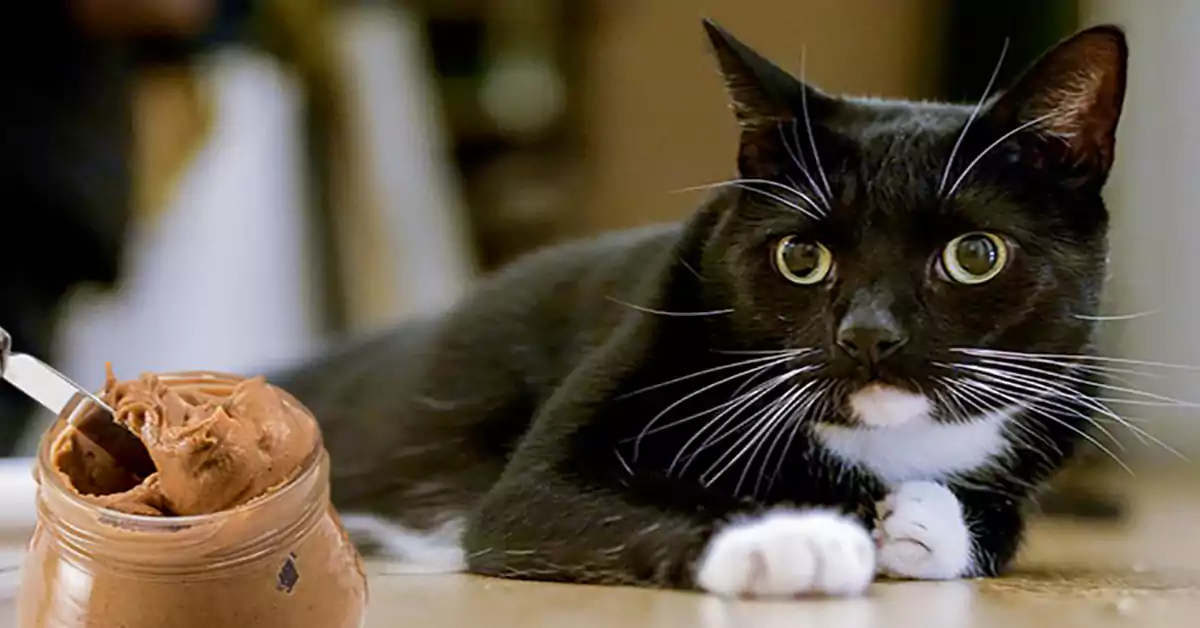
When you’re enjoying a spoonful of creamy peanut butter and those curious feline eyes stare right at you, it’s natural to wonder — can cats eat peanut butter?
The short answer is: Yes, cats can eat a tiny amount occasionally, but it’s not recommended or beneficial for them. Peanut butter is not toxic to cats, but it also doesn’t offer any nutritional benefits they actually need.
Let’s break this down properly so you know exactly when it’s safe, when it’s not, and how much (if at all) your cat should have.
Also Read: Can Cats Eat Popcorn? Vet Warning + Safe Alternatives Explained
Is Peanut Butter Safe for Cats?
Peanut butter isn’t poisonous to cats, but the problem is that it isn’t healthy for them either. Cats are obligate carnivores, which means their bodies are designed to get nutrition mainly from meat. Peanut butter is high in calories, fat, and sometimes sugar — things that do nothing good for a cat’s system.
So, even though a small lick won’t cause instant harm, making peanut butter a regular treat is not a good idea.
Why Peanut Butter Is Not an Ideal Treat for Cats?
Here are the main reasons why peanut butter should not be fed to cats intentionally:
1. High in Fat
Too much fat can lead to obesity and even pancreatitis, a painful and dangerous inflammatory condition.
2. Hard to Digest
Cats don’t have the enzymes needed to efficiently break down plant-based fats, making digestion slow and stressful.
3. Risk of Choking
Peanut butter’s sticky texture can cause coughing, gagging, or even choking, especially in small cats.
4. Contains Sugar & Salt
Commercial peanut butters often include preservatives, flavor enhancers, salt, and sugar — all unhealthy for felines.
The BIG Ingredient to Watch Out For: Xylitol
Some peanut butter brands contain xylitol, an artificial sweetener highly toxic to cats even in tiny amounts.
Xylitol can cause:
- vomiting
- rapid drop in blood sugar
- seizures
- liver failure
If you see xylitol on the label, never feed it to a cat.
How Much Peanut Butter Can a Cat Have?
If you still want to let your cat taste it, keep it minimal:
✔ Safe serving: a pea-sized amount, once in a while.
Anything more can upset their stomach or contribute to weight gain.
When Peanut Butter Can Be Useful?
Despite not being healthy as a treat, peanut butter can occasionally help with:
🐾 Giving medication
Some cat parents hide pills in a tiny dab of peanut butter so their cat eats it unknowingly.
This should only be done if your vet approves, and only in very small quantities.
Better Alternatives to Peanut Butter for Cats
Instead of peanut butter, here are healthier, cat-friendly treats:
💚 Cooked chicken pieces
💚 Boneless fish (cooked, never raw)
💚 Cat treats formulated by vets
💚 Cooked egg (plain, no salt/oil)
💚 Catnip or cat grass
These options suit a cat’s digestive system far better and offer actual nutritional value.
Symptoms to Watch If Your Cat Eats Too Much Peanut Butter
Call your vet if you notice:
- vomiting or diarrhea
- lethargy
- trouble breathing or swallowing
- tremors or seizures
Any product containing xylitol requires urgent emergency treatment.
FAQ: Can Cats Eat Peanut Butter? — Expert Answers for Pet Owners
Peanut butter itself is not toxic to cats, but it can become dangerous if it contains harmful additives like xylitol, salt, sugar, and preservatives. Always check the label before offering even a tiny amount.
Only a pea-sized amount occasionally is safe. It should not be part of a regular diet, and it should never be given daily.
Large amounts may cause vomiting, diarrhea, stomach discomfort, or choking due to its sticky texture. Cats may also experience weight gain and digestive trouble with frequent intake.
Yes — some owners use a small smear of peanut butter to hide pills. However, this should be done rarely and only if your vet approves, as there are safer alternatives like pill pockets or wet food.
Kittens have even more delicate digestive systems, so peanut butter may cause stomach upset and breathing difficulty. It’s better to avoid giving peanut butter to kittens altogether.
Avoid peanut butter containing:
❌ Xylitol (highly toxic)
❌ Excess salt and sugar
❌ Artificial sweeteners
❌ Hydrogenated oils
If any of these appear on the label, do not feed it to your cat.
Yes — better options include:
✔ Cooked chicken or turkey
✔ Cooked fish (boneless)
✔ Cat-specific treats
✔ Small amounts of boiled egg
✔ Catnip or cat grass
These offer more value to your cat’s health with less risk.
While peanut allergies in cats are rare, reactions may occur. Watch for symptoms like itching, swelling, coughing, sneezing, or skin irritation and contact your vet immediately if you notice them.
This is an emergency. Xylitol is highly toxic and can cause seizures, collapse, or liver failure. Contact your vet immediately if ingestion is suspected.
Smooth peanut butter is slightly safer because crunchy peanut pieces may pose a choking risk. Even then, only offer a tiny amount occasionally.
Final Verdict: Should Cats Eat Peanut Butter?
A tiny lick occasionally is okay, but peanut butter should never be a regular treat for cats. It doesn’t harm in small amounts, but it also doesn’t benefit them — and certain types can even be dangerous.
If you want to spoil your cat, choose cat-safe treats instead — their tummy (and your peace of mind) will thank you!