
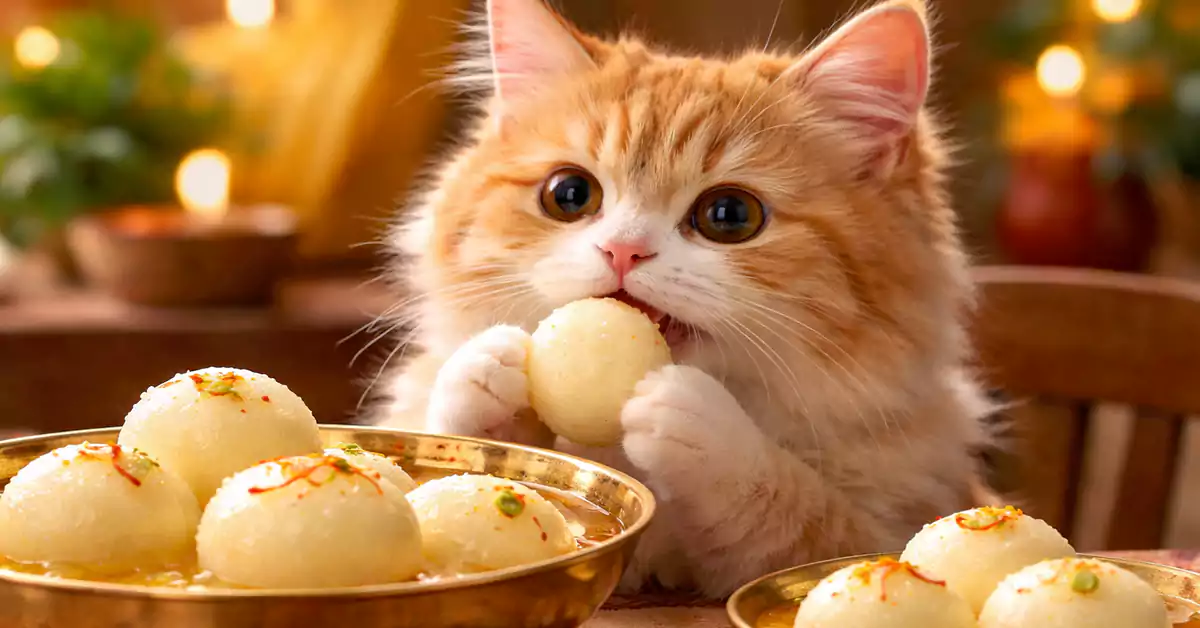
Rasgulla is one of the most popular Indian sweets, especially loved for its soft texture and juicy sugar syrup. Made from chhena (curdled milk) and soaked in syrup, rasgullas are often served during festivals, celebrations, or simply after meals. Because rasgulla looks soft, spongy, and milk-based, many pet parents assume it might be safe to share a small bite with their cat.
If you’ve ever caught your cat sniffing a rasgulla plate or licking syrup drops, you may be wondering:
can cats eat rasgulla, or is it harmful for them?
This article explains why rasgulla is unsafe for cats, what can happen if they eat it, and what you should do instead.
Quick Answer: Can Cats Eat Rasgulla?
No, cats should not eat rasgulla.
Rasgulla is not toxic, but it is unsafe and unhealthy for cats. It contains dairy and a large amount of sugar syrup—both of which can upset a cat’s digestive system and provide no nutritional benefit.
Even small amounts can cause stomach issues, especially in cats sensitive to dairy.
Why Are Cats Attracted to Rasgulla?
Cats are not interested in rasgulla because it’s good for them. Their curiosity usually comes from:
- The strong smell of dairy
- Sweet syrup aroma
- Soft, spongy texture
- Curiosity about human food
- Habit of tasting leftovers
Cats are obligate carnivores. Their bodies are designed for animal-based protein, not sweets or dairy-based desserts.
What Is Rasgulla Made Of?
Understanding the ingredients makes the risk clearer.
Rasgulla contains:
- Chhena (curdled milk solids)
- Sugar syrup
- Water
Each of these ingredients causes problems for cats when consumed together.
Is the Milk (Chhena) in Rasgulla Safe for Cats?
No. Most adult cats are lactose intolerant besides Rasgulla they are intolerant toward paneer and malai
Even though chhena has less lactose than milk, it can still:
- Cause diarrhea
- Trigger vomiting
- Lead to gas and bloating
- Upset gut balance
Milk-based sweets are especially hard for cats to digest.
Is Sugar Syrup Dangerous for Cats?
Sugar syrup is one of the biggest reasons rasgulla is unsafe.
Cats:
- Do not need sugar
- Cannot process it efficiently
- Gain no benefit from it
Sugar syrup can cause:
- Diarrhea
- Stomach pain
- Lethargy
- Weight gain over time
- Poor digestive health
Even licking syrup can cause issues in sensitive cats.
What Happens If a Cat Eats Rasgulla?
If a cat eats rasgulla, symptoms may appear within a few hours.
Common Symptoms to Watch For
- Diarrhea
- Vomiting
- Gas or bloating
- Lethargy
- Reduced appetite
- Stomach discomfort
Some cats may not react immediately, but repeated exposure increases health risks.
Can Cats Eat Rasgulla Syrup Alone?
No. Rasgulla syrup is even worse than the solid sweet.
Liquid sugar:
- Is absorbed faster
- Can trigger diarrhea quickly
- Can lead to dehydration
This is similar to why drinks like lassi or mango lassi are unsafe for cats.
Is Rasgulla Better Than Other Indian Sweets for Cats?
Not really.
While rasgulla is soft and not fried, it still contains:
- Dairy
- Sugar
- No protein suitable for cats
Compared to sweets like ladoo, rasgulla may seem lighter—but it is still unsafe.
Can Kittens Eat Rasgulla?
Absolutely not.
Kittens have very sensitive digestive systems. Feeding rasgulla can lead to:
- Severe diarrhea
- Dehydration
- Weakness
- Poor nutrient absorption
Kittens should only consume mother’s milk or veterinarian-approved kitten food.
What If My Cat Licked Rasgulla or Syrup?
If your cat only licked a small amount:
- Don’t panic
- Provide fresh water
- Monitor for 24 hours
- Avoid giving any more human food
If symptoms appear or worsen, contact a veterinarian.
Why Indian Pet Parents Think Rasgulla Is Safe
Rasgulla is often seen as:
- Soft
- Milk-based
- “Light” compared to fried sweets
These assumptions apply to humans—not cats. Cats digest food very differently, and dairy + sugar is a poor combination for them.
Safer Alternatives to Rasgulla for Cats
Instead of sweets, offer foods that are actually safe:
- High-quality commercial cat food
- Plain boiled chicken (no salt or spices)
- Plain cooked fish (boneless)
- Vet-approved cat treats
- Fresh drinking water
These support your cat’s health without digestive stress.
Frequently Asked Questions (FAQs)
Even a small piece of rasgulla can upset a cat’s stomach. Rasgulla contains dairy in the form of chhena and is soaked in sugar syrup, both of which are difficult for cats to digest. While a tiny bite may not cause an immediate emergency, it can still lead to diarrhea, bloating, or vomiting, especially in cats with sensitive digestion. For safety, rasgulla should be avoided completely.
Rasgulla is not toxic or poisonous in the strict sense, meaning it does not contain an ingredient that causes immediate poisoning. However, it is still unsafe and unhealthy for cats. Foods don’t need to be toxic to cause harm—rasgulla can still lead to digestive discomfort, stomach upset, and poor gut health if eaten.
No. Homemade rasgulla is just as unsafe for cats as store-bought rasgulla. Even when made at home, rasgulla still contains milk solids and sugar syrup. Removing preservatives or artificial ingredients does not make it suitable for cats. The core ingredients themselves are the problem.
Cats are often attracted to rasgulla because of its strong dairy smell, soft texture, and syrupy sweetness. This behavior is driven by curiosity and sensory interest, not nutritional need. Cats cannot taste sweetness the way humans do, so their interest does not mean rasgulla is good or safe for them.
No. Most milk-based Indian sweets—such as rasgulla, kheer, peda, and milk cake—are unsafe for cats. These sweets usually contain lactose, sugar, and sometimes fat, all of which can upset a cat’s digestive system. Cats do not benefit from dairy-based desserts and should not be given them, even in small amounts.
If your cat eats a rasgulla accidentally, remove access to the sweet immediately and provide fresh drinking water. Monitor your cat closely for the next 24 hours for signs like diarrhea, vomiting, or lethargy. If symptoms persist or become severe, it’s best to consult a veterinarian.
Yes. Rasgulla syrup can be even more problematic because liquid sugar is absorbed quickly and can cause diarrhea faster than solid food. Cats that lick syrup are more likely to experience digestive upset and dehydration, so syrup exposure should be avoided entirely.
Final Verdict: Is Rasgulla Safe for Cats?
Rasgulla may be a favorite Indian dessert, but it is not suitable for cats. Its combination of dairy and sugar syrup can upset a cat’s digestive system and provide no nutritional benefit.
For your cat’s well-being, keep rasgullas and all sweets out of reach and stick to food designed specifically for cats.