
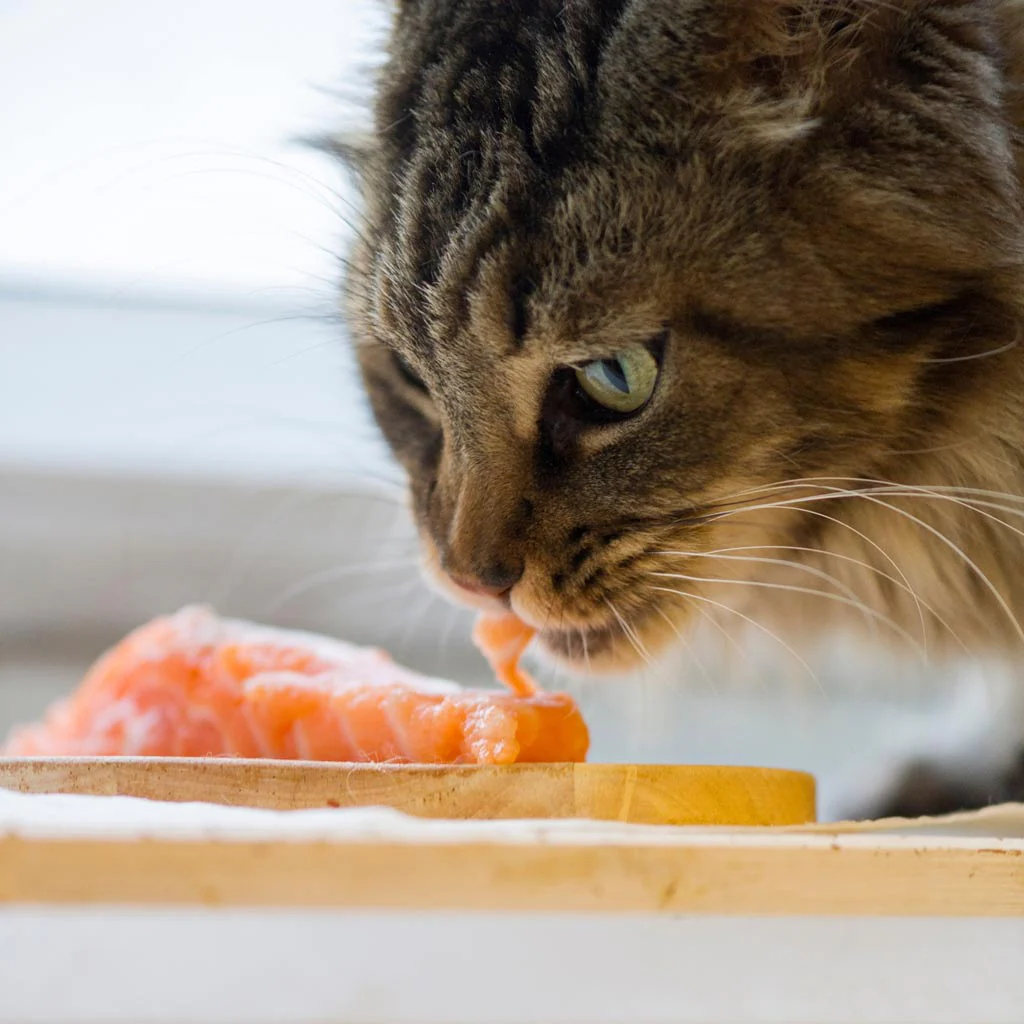
Salmon is often considered one of the healthiest foods for humans. It’s rich in protein, omega-3 fatty acids, and nutrients that support the heart, skin, and brain. Because of this healthy reputation, many cat parents naturally assume salmon must also be good for cats.
If you’ve ever cooked salmon at home, you’ve probably noticed your cat becoming unusually interested — sniffing the air, sitting close, or even trying to steal a bite. This curiosity makes the question unavoidable:
Can cats eat salmon, or is it unsafe for them?
The answer depends heavily on how the salmon is prepared, how often it’s fed, and which part of the fish is given.
Let’s break this down clearly and without confusion.
Quick Answer: Can Cats Eat Salmon?
Yes, cats can eat salmon occasionally, but only if it is fully cooked, boneless, unseasoned, and fed in small amounts.
Raw salmon, seasoned salmon, or salmon fed too frequently can be dangerous and should be avoided.
Salmon Safety for Cats – Quick Overview
| Type of Salmon | Safe for Cats? |
|---|---|
| Raw salmon | ❌ Unsafe |
| Cooked plain salmon | ⚠️ Occasionally safe |
| Salmon with salt or spices | ❌ Unsafe |
| Fried or grilled salmon | ❌ Not recommended |
| Salmon skin | ⚠️ Best avoided |
| Salmon with bones | ❌ Dangerous |
| Smoked salmon | ❌ Unsafe |
| Salmon-based cat food | ✅ Safe |
Why Are Cats So Attracted to Salmon?
Salmon has a powerful aroma, especially when cooked. Cats rely heavily on smell to decide whether food is appealing, and salmon releases strong protein- and fat-rich scents that quickly grab their attention.
In addition:
- Salmon is soft and flaky when cooked
- It contains fat that enhances smell
- Cats associate it with high-value food
However, attraction does not mean nutritional necessity.
Is Salmon Good for Cats?
Salmon does offer some benefits when fed correctly and rarely.
Salmon contains:
- High-quality animal protein
- Omega-3 fatty acids (support skin and coat health)
- Certain vitamins and minerals
These nutrients are beneficial, but they do not make salmon a complete or essential food for cats.
Why Salmon Can Be Risky for Cats?
This is where many cat parents make mistakes. Salmon itself is not toxic, but problems arise due to preparation, frequency, and portion size.
1️⃣ Raw Salmon Is Dangerous for Cats
Raw salmon can expose cats to serious health risks.
Why raw salmon is unsafe:
- May contain parasites
- Can carry harmful bacteria
- Contains enzymes that interfere with vitamin absorption
In some regions, raw salmon has been linked to salmon poisoning disease in animals, which can be fatal if untreated.
Because of this:
❌ Raw salmon should never be fed to cats.
2️⃣ Salmon Bones Are a Serious Hazard
Salmon bones can be:
- Thin and sharp
- Easy to overlook
- Dangerous even in small sizes
Cooked salmon bones can:
- Splinter
- Cause choking
- Injure the throat or intestines
Always remove every bone, even tiny pin bones.
3️⃣ Salmon Skin Is Too Fatty
Salmon skin is high in fat and oil.
While some cats may tolerate it, salmon skin can:
- Cause vomiting
- Trigger diarrhea
- Lead to greasy stools
- Upset sensitive stomachs
For safety, salmon skin is best avoided.
4️⃣ Seasoning Makes Salmon Unsafe
Most salmon cooked for humans contains:
- Salt
- Oil or butter
- Garlic or onion
- Herbs or spices
These ingredients can:
- Irritate a cat’s stomach
- Be toxic over time
- Stress the kidneys
Human-style salmon should never be shared with cats.
Can Cats Eat Cooked Salmon?
Yes, cooked salmon is the safest form, but only when prepared specifically for your cat.
Safe Way to Prepare Salmon for Cats
- Boiled or steamed
- No salt
- No spices
- No oil or butter
- Fully boneless
- Small portions only
If the salmon was cooked for human consumption, it is usually not safe for cats.
Can Cats Eat Fried, Grilled, or Smoked Salmon?
No.
These types of salmon are unsafe because they contain:
- Excess fat
- Salt
- Seasoning
- Smoke flavoring or preservatives
Smoked salmon is especially risky due to high sodium levels.
How Often Can Cats Eat Salmon?
Salmon should be given:
- Once a week or less
- In very small portions
Salmon should never be a daily food or meal replacement.
Overfeeding salmon may lead to:
- Nutritional imbalance
- Digestive upset
- Long-term health issues
Can Kittens Eat Salmon?
Kittens are more sensitive than adult cats.
Risks for kittens include:
- Digestive upset
- Nutritional imbalance during growth
- Higher sensitivity to fat and salt
Salmon is not recommended for kittens, especially under 3 months. Even older kittens should only receive tiny amounts with caution.
Why Does Salmon Sometimes Cause Vomiting in Cats?
Common reasons include:
- High fat content
- Food sensitivity or allergy
- Bones or skin
- Spoiled fish
If vomiting occurs:
- Stop feeding salmon
- Monitor your cat
- Consult a vet if symptoms persist
Is Salmon Better Than Chicken for Cats?
No.
Chicken is generally:
- Easier to digest
- Lower in fat
- Less likely to cause allergies
- Closer to a cat’s natural prey
Salmon should never replace chicken or balanced cat food.
Salmon in Commercial Cat Food vs Fresh Salmon
This distinction is important.
Salmon in Cat Food
- Carefully processed
- Balanced with essential nutrients
- Safe for regular feeding
Fresh Salmon
- Not nutritionally complete
- Risky if fed frequently
- Should only be a treat
Best Way to Offer Salmon to Cats
If you choose to give salmon:
- Keep portions tiny (a few bites)
- Feed it plain and cooked
- Offer it as an occasional treat
- Never mix with spices or gravy
Frequently Asked Questions (FAQs)
Can cats eat salmon every day?
No. Daily salmon feeding can lead to nutritional imbalance and digestive issues.
Can cats eat raw salmon sushi?
No. Raw salmon may contain parasites and bacteria and is unsafe for cats.
Can cats eat canned salmon?
Only plain canned salmon in water with no salt and no seasoning, and only rarely.
Can cats eat salmon skin?
Salmon skin is fatty and may cause stomach upset. Best avoided.
Can cats eat salmon bones if they are soft?
No. Even soft bones can splinter and cause injury.
Can cats eat salmon oil?
Small amounts of salmon oil formulated for pets may be safe, but human supplements should only be used with veterinary guidance.
Can senior cats eat salmon?
Senior cats can eat salmon occasionally, but extra caution is needed due to kidney and digestive sensitivity.
Is salmon toxic to cats?
Salmon itself is not toxic, but improper preparation or overfeeding can be harmful.
Key Insight: Salmon Is a Treat, Not a Staple
Salmon may be healthy for humans, but cats have very different nutritional needs. While salmon can be offered occasionally, it should never become a regular part of a cat’s diet.
Final Verdict: Can Cats Eat Salmon?
Yes, cats can eat salmon occasionally and carefully, but only if it is fully cooked, boneless, unseasoned, and fed in small amounts.
Raw, seasoned, or frequently fed salmon can cause health problems and should be avoided.
When in doubt, stick to balanced cat food and simple proteins like plain chicken.