
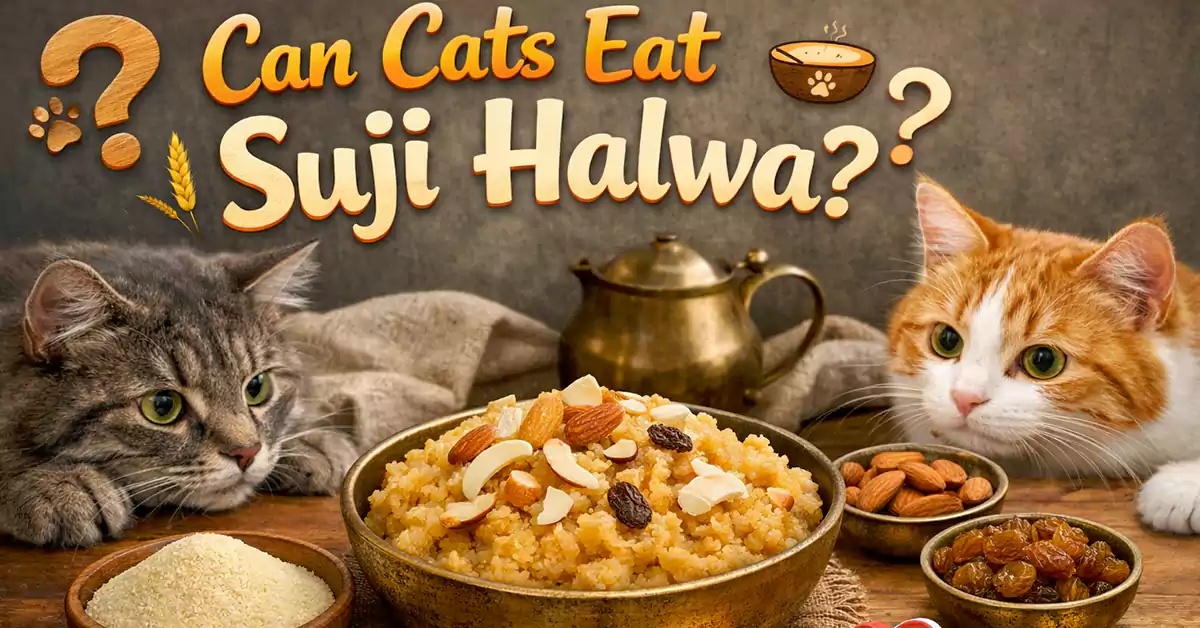
Halwa is one of the most common Indian household desserts, and everyone loves to eat it—even I literally love this delicious dessert. It is commonly prepared in Indian homes during auspicious occasions and festivals. The rich aroma of freshly prepared halwa can attract anyone, and cats are no different.
They too get curious because of the smell and may want to taste suji halwa. But as a careful cat parent, you naturally want to be sure that whatever your cat eats is safe for her health. So if you are wondering whether eating suji halwa is safe for cats or not, this article will answer all your questions clearly.
Quick Answer: Can Cats Eat Suji Halwa?
No, cats should not eat suji halwa.
Suji halwa is not toxic, but it is unsafe and unhealthy for cats. It contains sugar, ghee, and refined carbohydrates, which a cat’s digestive system is not designed to handle.
Even small amounts can cause stomach upset, especially in cats with sensitive digestion.
Why Are Cats Attracted to Suji Halwa?
Cats are not attracted to halwa because it is good for them. Their curiosity comes from:
- The strong smell of ghee
- Warm, freshly cooked food
- Sweet aroma
- Curiosity about what humans are eating
Cats cannot taste sweetness the way humans do. Their interest is purely sensory, not nutritional.
What Is Suji Halwa Made Of?
Traditional suji halwa usually contains:
- Suji (semolina / refined wheat)
- Ghee
- Sugar
- Sometimes milk
- Dry fruits (in some homes)
- Cardamom
None of these ingredients provides nutritional value to cats, and most of them can upset a cat’s digestive system.
Is Suji (Semolina) Safe for Cats?
Suji is a refined wheat product. Cats are obligate carnivores, which means their bodies are designed to digest animal protein, not grains.
Suji can:
- Be hard to digest
- Cause bloating
- Lead to loose stools
- Offer no real nutrition
While a tiny accidental bite may not be dangerous, suji should not be part of a cat’s diet.
Is Sugar in Suji Halwa Bad for Cats?
Yes. Sugar is one of the main reasons suji halwa is unsafe.
Cats:
- Do not need sugar
- Cannot process it efficiently
- Gain no health benefit from it
Sugar can cause:
- Diarrhea
- Stomach discomfort
- Lethargy
- Weight gain over time
Is Ghee Safe for Cats?
Ghee is pure fat. While cats do need some fat in their diet, ghee is too rich for them.
Ghee in halwa can:
- Trigger vomiting
- Cause loose stools
- Upset the stomach
- Lead to obesity if given repeatedly
When ghee and sugar are combined, the risk becomes even higher.
What Happens If a Cat Eats Suji Halwa?
If a cat eats suji halwa, symptoms may appear within a few hours.
Common Symptoms Include:
- Diarrhea
- Vomiting
- Gas or bloating
- Loss of appetite
- Lethargy
- Stomach discomfort
Some cats may tolerate a small amount without obvious symptoms, but repeated exposure can cause long-term digestive issues.
Can Cats Eat Suji Halwa Occasionally?
Even occasional feeding is not recommended.
Many pet parents think:
“It’s just once in a while.”
But for cats:
- Even small amounts matter
- Sugar and ghee still affect digestion
- Bad eating habits can develop
There is no benefit, only risk.
Can Kittens Eat Suji Halwa?
Absolutely not.
Kittens have very sensitive digestive systems. Feeding suji halwa to kittens can quickly cause:
- Severe diarrhea
- Dehydration
- Weakness
- Nutritional imbalance
Kittens should only eat mother’s milk or veterinarian-approved kitten food.
What If My Cat Licked or Tasted Halwa?
If your cat only licked a small amount:
- Don’t panic
- Offer fresh drinking water
- Monitor for 24 hours
- Avoid giving any more human food
If symptoms appear or worsen, consult a veterinarian.
Why Indian Pet Parents Feel Halwa Is Harmless?
In Indian culture, halwa is associated with:
- Purity
- Auspicious occasions
- Homemade goodness
While this may be true for humans, cats digest food very differently. Cultural beliefs do not apply to feline nutrition.
Safer Alternatives to Suji Halwa for Cats
Instead of sharing desserts, offer foods that are actually safe:
- High-quality commercial cat food
- Plain boiled chicken (no salt or spices)
- Plain cooked fish (boneless)
- Vet-approved cat treats
- Fresh water
These keep your cat healthy without digestive stress.
Frequently Asked Questions (FAQs)
Even a small bite of suji halwa can upset a cat’s stomach. Suji halwa contains sugar, ghee, and refined wheat, which are all difficult for cats to digest. While one accidental taste may not cause an emergency, it can still lead to diarrhea, bloating, or vomiting—especially in cats with sensitive digestion. Because there is no benefit and only risk, it’s best to avoid giving suji halwa completely.
Suji halwa is not toxic or poisonous in the strict sense, but that does not mean it is safe. Many foods are non-toxic yet still harmful to cats. Suji halwa can irritate a cat’s digestive system and cause discomfort, even if it doesn’t cause immediate poisoning. Regular exposure can lead to repeated stomach issues.
No. Homemade suji halwa is just as unsafe for cats as store-bought halwa. Even when prepared at home, it still contains sugar, ghee, and refined grains, which cats cannot digest properly. Removing preservatives or artificial ingredients does not make halwa suitable for cats—the core ingredients themselves are the problem.
Cats are usually attracted to halwa because of its strong smell, warm temperature, and the presence of ghee. This behavior is driven by curiosity and sensory interest, not because their body needs it. Cats cannot taste sweetness the way humans do, so their interest does not mean the food is safe or healthy for them.
Most Indian desserts are unsafe for cats because they contain sugar, dairy, ghee, or refined grains. Desserts like halwa, kheer, ladoo, rasgulla, and gulab jamun may seem harmless but can easily upset a cat’s digestive system. Cats should only eat food designed specifically for feline nutrition.
If your cat accidentally eats a small amount of suji halwa, do not panic. Remove access to the food immediately and make sure your cat has fresh drinking water. Monitor your cat for the next 24 hours for symptoms such as vomiting, diarrhea, or lethargy. If symptoms persist or become severe, consult a veterinarian.
Yes. Kittens are at a much higher risk because their digestive systems are still developing. Even a small amount of suji halwa can quickly cause diarrhea and dehydration in kittens. Kittens should never be given halwa or any human desserts.
Even sugar-free halwa is unsafe for cats. It still contains ghee and refined grains, which can upset digestion. Some sugar substitutes can also be harmful to pets. Halwa, in any form, is not suitable for cats.
Final Verdict: Is Suji Halwa Safe for Cats?
Suji halwa may be a beloved Indian dessert, but it is not safe for cats. Its sugar, ghee, and refined ingredients can upset a cat’s digestive system and provide no nutritional benefit.
As a responsible pet parent, it’s best to enjoy halwa yourself and keep it out of your cat’s reach.