
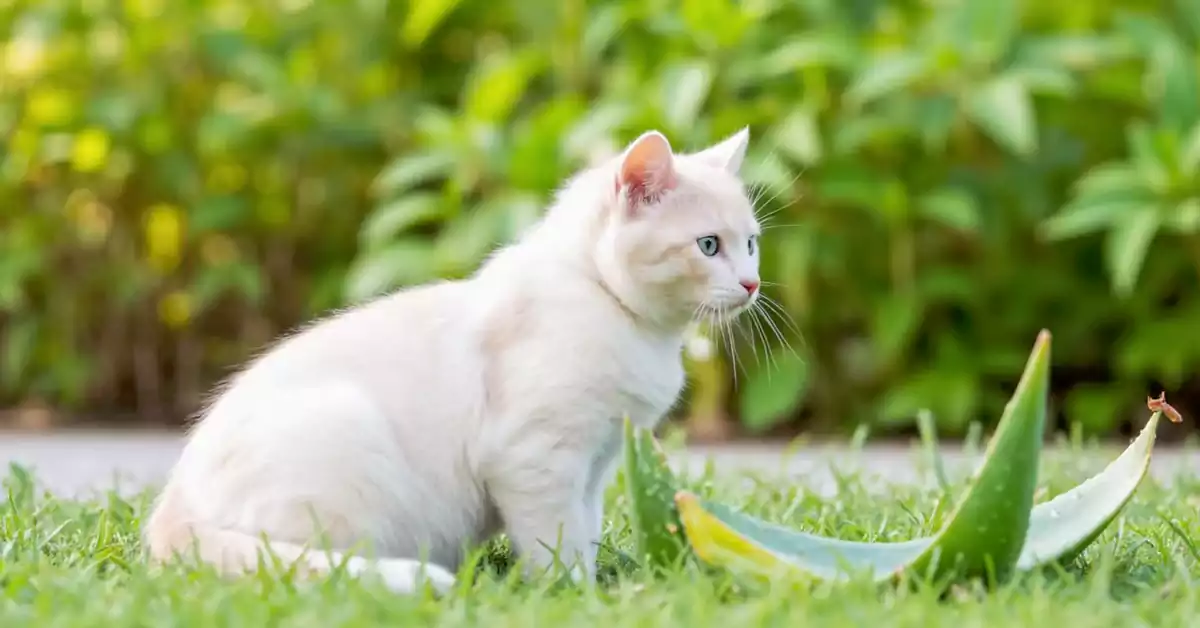
If you have ever kept an aloe plant on your kitchen counter or in a sunny corner of your living room, you’ve probably noticed how cats react to it. Some ignore it completely. Others walk straight up, sniff the thick leaves, and give it a curious nibble like it’s a crunchy green toy.
Aloe vera is famous for helping us—sunburn relief, skin healing, soothing gel. But what many pet parents don’t realize is this:
Aloe vera is toxic to cats. The plant’s gel may be soothing for humans, but it contains compounds that can seriously harm cats if eaten.
This guide will explain why aloe is dangerous, how much exposure is risky, what symptoms you should watch for, and what to do if your cat has chewed, licked, or swallowed aloe vera.
Let’s keep your cat safe without giving up your houseplants.
Also i have written a detailed guide on which herbs, plants are safe or toxic for cats, if you want to know at one place then you can read the complete guide here: Plants That Can Be Deadly for Cats: Safe and Toxic Herbs, Flowers & Houseplants
Quick Safety Table: Aloe Vera and Cats
| Question | Answer |
|---|---|
| Is aloe vera safe for cats? | No — toxic if swallowed. |
| What part of aloe is harmful? | Leaf latex (“aloin”) found under the skin. |
| Can cats eat aloe gel? | Still risky — gel often contains latex traces. |
| Symptoms of aloe poisoning? | Vomiting, diarrhea, lethargy, tremors, pale gums. |
| Is aloe used in pet products? | Only processed gel with latex removed — still vet-advice needed. |
| Should I keep aloe at home? | Safe only if kept out of reach or in closed rooms. |
| What to do if cat eats aloe? | Call a vet immediately; monitor for symptoms. |
Why Aloe Vera Is Toxic to Cats?
Cats react badly to aloe for one main reason:
1. The plant contains “aloin” (a bitter yellow latex).
Aloin acts as a strong laxative and irritant. In small animals like cats, it can cause:
- intestinal inflammation
- electrolyte imbalance
- dehydration
- sudden diarrhea or vomiting
The latex is found just under the green outer leaf, which is exactly the part cats often bite first.
2. Saponins trigger stomach and neurological issues.
Saponins are mild foaming chemicals that can irritate the digestive system and sometimes affect the central nervous system.
3. Cats lack liver enzymes that humans have.
Cats cannot process plant toxins effectively, which makes even “small nibbles” dangerous.
Even though aloe gel feels soft and soothing to us, it’s unsafe for cats in raw plant form.
But What About the Aloe Gel Inside?
This part is confusing for many pet owners.
✔ The inner gel is less toxic than the outer latex.
❌ But it is NOT completely safe.
Commercial aloe products (like lotions or gels) remove toxic latex through processing — the aloe plant sitting in your house does not.
If your cat licks or swallows raw aloe gel directly from the leaf:
Still dangerous and can still cause poisoning symptoms.
Cats are extremely sensitive. What feels “mild” for humans can be serious for them.
Symptoms of Aloe Vera Poisoning in Cats
Signs can appear within 1–6 hours after chewing the plant.
Gastrointestinal symptoms:
- Vomiting
- Diarrhea (often watery or foamy)
- Abdominal pain
- Loss of appetite
Behavioural symptoms:
- Lethargy or weakness
- Drooling
- Depression
- Hiding more than usual
Severe symptoms (rare but possible):
- Tremors
- Pale gums
- Irregular heartbeat
- Shaking or unsteady movement
If your cat shows any of these signs after touching aloe, treat it seriously.
How Much Aloe Is Dangerous for Cats?
There is no “safe” quantity.
Even one bite of the leaf skin can expose your cat to aloin. Some cats can handle a tiny lick without visible symptoms, while others may get sick from just a nibble.
Factors that increase risk:
- Small body weight
- Existing stomach issues
- Senior cats
- Kittens
- Cats with liver or kidney problems
So the safest guideline is:
Zero tolerance. No aloe ingestion is safe for cats.
What To Do if Your Cat Ate Aloe Vera?
Step 1: Remove plant access immediately.
Cats often return to chew more — prevent further exposure.
Step 2: Check their mouth.
If you see plant pieces, gently wipe them out using a damp cloth.
Step 3: Rinse their mouth (optional).
Use a small amount of water to rinse the lips and gums if the cat allows.
Step 4: Call your veterinarian.
Even if symptoms are mild or haven’t started yet.
Tell the vet:
- How much your cat ate
- Whether it was latex or gel
- When it happened
- Any visible symptoms
Step 5: Watch for symptoms over the next 12–24 hours.
If symptoms worsen or don’t improve, emergency care may be needed.
Is Aloe Vera Gel Safe for Cats on Skin?
Some cat owners think aloe gel helps soothe:
- scratches
- hot spots
- rashes
But here’s the truth:
❌ Pure aloe gel from the leaf can still contain latex traces — not safe.
❌ Cats groom themselves and will lick the gel.
❌ This leads to ingestion and toxicity.
Commercial aloe products for pets ONLY from reputable brands sometimes use purified gel. Even then:
✔ Only use vet-approved aloe products
✔ Avoid human aloe creams (they contain alcohol, fragrances, preservatives)
When in doubt — skip aloe completely.
Why Cats Are Attracted to Aloe Plants?
Not all cats care about plants, but the curious ones tend to chew aloe because:
- The leaves look like grass
- The texture feels rubbery
- The plant has a mild, interesting smell
- Some cats chew plants out of boredom
If your cat loves chewing leaves, switch to cat grass — safe and enjoyable.
Safe Alternatives to Aloe for Households With Cats
If you like indoor plants but want zero risk, choose these cat-friendly options:
✔ Spider Plant
✔ Areca Palm
✔ Calathea
✔ Baby Rubber Plant (not Rubber Plant)
✔ Boston Fern
✔ Cat Grass
✔ Bamboo Palm
These give you the greenery you want without worrying about accidental poisoning. You can also read can cats eat bamboo?, since many people confuse real bamboo with toxic lookalikes.
How to Keep Cats Away From Aloe Plants?
If you still want aloe at home, keep it protected:
1. Place aloe in a closed room
Bathroom shelf, high cabinet, study room.
2. Use hanging planters
Cats can’t jump high enough to reach.
3. Put citrus peels around the pot
Cats dislike citrus smell.
4. Use double-sided tape around the pot edge
They hate the sticky feel.
5. Provide chew alternatives
Cat grass is perfect and keeps them away from toxic plants.
Frequently Asked Questions
Not safely. Even the inner gel can irritate the stomach and contains small amounts of latex. Licking aloe from a broken leaf is unsafe.
Some commercial products purify aloe gel to remove latex, but many contain additives like alcohol or fragrances that are harmful. Only use aloe products labeled specifically for pets and recommended by a vet.
Not directly. Cats groom themselves, so anything you apply to the skin will be licked off. Instead, your vet can recommend safe topical treatments that don’t require ingestion.
Because they refer to purified aloe gel, not the natural plant. The aloe plant you grow at home contains toxins cats cannot tolerate.
Yes, but dogs are less sensitive than cats. Still, ingestion can cause vomiting and diarrhea.
Mild symptoms can improve within 24 hours. More serious cases may require fluids or medication and can take 2–3 days to resolve.
If your cat ate more than a tiny nibble, or if symptoms start, yes. Early treatment prevents dehydration and complications.
Summary: Aloe Vera and Cats — Final Verdict
Aloe vera may be a healing plant for humans, but it is unsafe for cats in its natural form. The latex beneath the leaf skin contains aloin, a toxin that can cause vomiting, diarrhea, abdominal discomfort, and lethargy.
You don’t need to get rid of your aloe plant — just ensure it stays out of your cat’s reach. If your cat does get hold of it, call your vet and monitor them closely.
Your cat’s safety comes first, and understanding toxic plants helps prevent emergencies before they happen.