
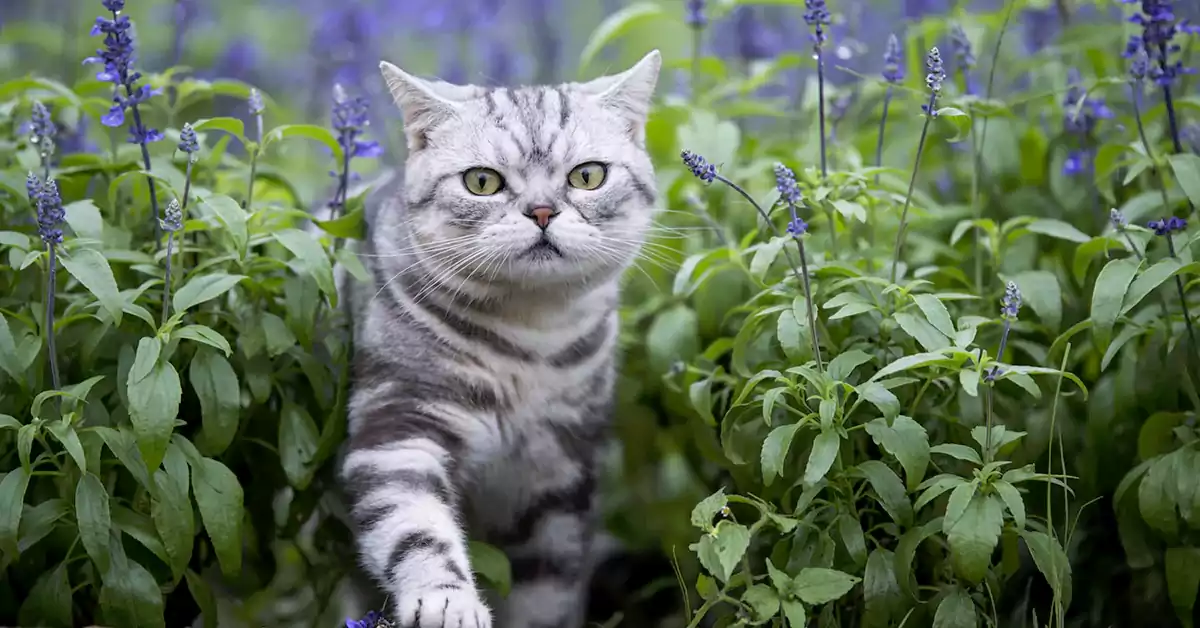
Lavender is one of the world’s most popular herbs. It’s used in perfumes, oils, soaps, candles, fresh bouquets, skincare, and home décor. Many homes use lavender fragrances daily. Because the smell is strong and calming to humans, cat owners often wonder:
Can cats eat lavender safely?
The answer is NO — lavender is toxic to cats.
While the plant itself is mildly toxic, lavender essential oil is extremely dangerous and can cause severe poisoning, even through inhalation or skin contact.
This complete guide explains:
- Why lavender is toxic
- Which forms are dangerous
- What happens if a cat eats lavender
- How to treat lavender poisoning
- Whether lavender diffusers are safe
- Safe alternatives for calming cats
Let’s break down everything cat owners need to know.
Also Read: Are Bay Leaves Toxic to Cats? Full Vet-Aware Safety Guide
Is Lavender Toxic to Cats?
Yes. Lavender (Lavandula spp.) is toxic to cats.
All parts of the lavender plant — the flowers, leaves, stems, and the oil within them — contain compounds that are harmful to cats.
Lavender contains:
- Linalool
- Linalyl acetate
- Terpenes
- Essential oils
Cats lack the liver enzymes needed to metabolize these compounds, causing toxicity buildup.
✔ Toxic Plant?
Yes.
✔ Safe in small amounts?
No. Not recommended.
✔ Most dangerous form?
Lavender essential oil — highly toxic.
Why Is Lavender Toxic to Cats?
Cats cannot break down linalool, a natural compound found in lavender.
Linalool is harmless to humans but toxic to cats because they lack glucuronyl transferase, the enzyme responsible for detoxifying essential oils.
When a cat ingests or inhales lavender, these compounds can cause:
- Liver stress
- Digestive irritation
- Neurological symptoms
- Skin reactions
Essential oils make the toxicity even worse because they contain concentrated levels of linalool.
Forms of Lavender and Their Safety Level
Different lavender products pose different risks. Here’s the breakdown:
❌ Fresh Lavender (flowers, stems, leaves)
Mild to moderate toxicity if eaten.
❌ Dried Lavender
More concentrated — more dangerous.
❌ Lavender Essential Oil
EXTREMELY TOXIC — can poison cats through:
- ingestion
- skin contact
- inhalation (diffusers)
❌ Lavender Candles, Sprays, Incense
Often contain essential oils → unsafe.
❌ Lavender Tea
Unsafe — contains extracted oils.
❌ Lavender Oil in Beauty Products
Lotions, creams, balms — toxic if your cat licks your skin.
⚠ Lavender Diffusers
Very risky.
Can cause respiratory distress and toxicity through inhalation.
✔ Lavender Scented Items WITHOUT real oil (rare)
Sometimes safe, but ingredients must be verified.
Do Cats Like Lavender?
Most cats are naturally repelled by lavender.
Lavender often triggers avoidance behavior:
- Backing away
- Turning head
- Walking in the opposite direction
Cat owners sometimes use lavender oil near furniture to repel cats — which works, but is dangerous.
A small subset of cats might chew lavender out of curiosity.
These cats are at greater risk of toxicity.
Symptoms of Lavender Poisoning in Cats
If a cat ingests or inhales lavender, symptoms can appear within 30 minutes to several hours.
Digestive Symptoms
- Vomiting
- Diarrhea
- Drooling
- Loss of appetite
- Nausea
Neurological Symptoms
- Lethargy
- Weakness
- Tremors
- Unsteady walking
Respiratory Symptoms (especially from diffusers)
- Breathing difficulty
- Sneezing
- Coughing
- Wheezing
Skin Symptoms (contact exposure)
- Redness
- Itching
- Burns
Severe Symptoms
- Liver damage
- Seizures (rare)
- Collapse (rare)
If lavender essential oil was ingested or inhaled → symptoms can be severe and require urgent veterinary treatment.
Can Cats Eat Lavender Leaves or Flowers?
No.
Even small amounts of the actual plant can irritate the stomach and liver.
Lavender in ANY form — fresh, dried, or cooked — is unsafe.
Are Lavender Essential Oils Safe for Cats?
Absolutely not.
Lavender essential oil is one of the most dangerous forms for cats.
Cats can be poisoned simply by:
- inhaling diffused lavender oil
- absorbing it through skin contact
- licking residue off surfaces
- touching humans who wear lavender lotions/perfumes
Lavender oil can cause:
- liver damage
- neurological symptoms
- respiratory distress
- skin burns
Never diffuse lavender oil around cats.
Are Lavender Candles Safe for Cats?
Most lavender candles contain synthetic fragrances or essential oils.
Both are unsafe.
Burning candles releases vaporized compounds that cats inhale → causing toxicity over time.
Safer alternatives: use unscented candles.
Are Lavender Plants Safe to Keep at Home?
Lavender plants should not be kept inside homes with cats.
If grown outdoors, ensure:
- Your cat cannot nibble the plant
- It is fenced or elevated
- Essential oil runoff cannot reach the cat
Outdoor lavender is still mildly dangerous but less risky than indoor exposure.
What To Do If Your Cat Eats Lavender?
1. Stay calm
Lavender poisoning can be treated if handled early.
2. Identify the form
Fresh plant? Dried? Oil? Diffuser?
3. Remove all lavender from reach
4. Check for symptoms
Monitor your cat for vomiting, drooling, weakness, tremors.
5. Contact your veterinarian immediately
Especially if:
- The cat ate the essential oil
- Symptoms are moderate or severe
- The cat is young, old, or has health issues
6. Do NOT induce vomiting unless a vet instructs you
Essential oils can cause aspiration if vomiting occurs incorrectly.
7. Bring packaging or samples to the vet
Helps with diagnosis.
Safe Calming Alternatives to Lavender for Cats
If you want to calm your cat without using lavender, safer options include:
✔ Catnip
Energizing for some cats, calming for others.
✔ Silvervine
Helps reduce stress and boredom.
✔ Valerian Root (tiny amounts)
Natural calming herb.
✔ Cat Grass
Safe for chewing.
✔ Feliway (pheromone diffuser)
Veterinarian-recommended and 100% safe.
Lavender is NOT a safe calming solution for cats.
DETAILED FAQ — Cats & Lavender
Yes. Lavender is toxic due to its linalool and essential oil content.
No. Even small amounts can cause digestive upset and mild toxicity.
No. Dried lavender is more concentrated and more dangerous.
NO — it is extremely dangerous and can cause liver damage, tremors, and respiratory problems
Not recommended.
Even inhaling lavender oil vapor can be toxic.
Cats cannot metabolize essential oils and phenols as humans can.
Yes. Seek vet advice, especially if essential oils were present.
Yes — in severe poisoning cases, especially from essential oil exposure.
Absolutely not. Kittens are more sensitive to toxins.
Yes — scent from a distance is less dangerous, but prolonged inhalation is risky.
Yes, if your cat cannot chew the plant. Outdoor exposure is less toxic but still risky.
No. Cats can absorb it through skin contact or inhalation.
Conclusion — Should Cats Eat Lavender?
Lavender is toxic to cats.
Both the plant and essential oils contain compounds that cats cannot process, leading to vomiting, diarrhea, lethargy, neurological issues, and, in severe cases, liver damage.
Safe takeaway for cat owners:
✔ Avoid lavender completely
✔ Do not diffuse lavender oil
✔ Remove lavender plants from cat areas
✔ Use safe alternatives like catnip, silvervine, or Feliway
Lavender may be calming for humans, but it is dangerous for cats in any form.