
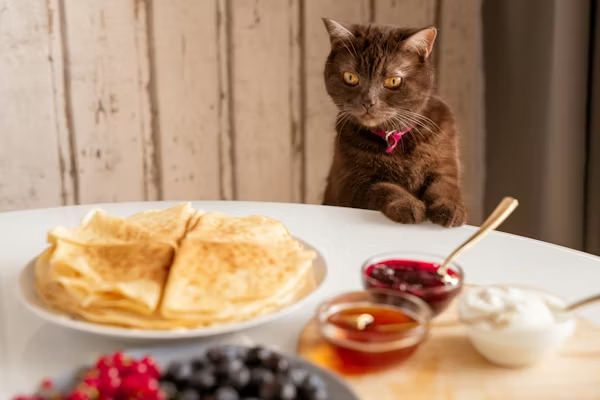
If you live with a cat, you’ve probably seen this happen: the food bowl is placed down, and within seconds your cat is eating as if the food might disappear forever. Some cats barely chew, others gulp their food and then look around for more. For many cat parents, this behavior can be confusing and sometimes worrying.
So why does this happen?
Is it hunger, habit, or something else entirely?
Let’s break this down in a simple, non-alarming way and understand why cats eat too fast and when it’s normal behavior versus when it deserves attention.
Quick Answer: Why Do Cats Eat Too Fast?
Most cats eat too fast because of instinct, learned behavior, or routine-related factors, not because something is wrong. In many cases, fast eating is completely normal. However, when it happens regularly and causes discomfort like vomiting or regurgitation, it may indicate a feeding issue rather than a health problem.
Understanding How Cats Eat Naturally
Cats are obligate carnivores and natural hunters. In the wild, cats do not eat slowly from a guaranteed food source. Instead, they:
- Hunt small prey
- Eat quickly
- Move on to avoid competition or danger
Even indoor cats retain this instinct. When food is presented in a bowl, their brain may still interpret it as a “limited resource,” triggering fast eating.
Common Reasons Why Cats Eat Too Fast
1️⃣ Instinctive Survival Behavior
Fast eating is deeply rooted in a cat’s survival instincts.
In nature:
- Food is never guaranteed
- Other animals may steal it
- Eating quickly reduces vulnerability
Even cats that have never faced food scarcity can display this behavior purely due to instinct.
2️⃣ Competition From Other Pets
If your cat lives with:
- Other cats
- Dogs
- Previously lived in a multi-pet household
They may eat quickly to ensure they get their share.
Even if there is no active competition now, cats can retain this behavior long after the environment has changed.
3️⃣ Past Food Insecurity
Cats that were:
- Strays
- Rescued
- Adopted later in life
- Raised in shelters
May have experienced irregular feeding schedules earlier in life. This can lead to a “eat now before it’s gone” mindset that persists even in a safe home.
4️⃣ Scheduled Feeding Creates Anticipation
Cats that are fed:
- Once or twice a day
- On a strict schedule
May become overly excited at mealtime. The longer the gap between meals, the more intense the anticipation, which can lead to rapid eating.
This doesn’t mean scheduled feeding is bad—only that some cats respond to it differently.
5️⃣ Highly Palatable Food
Certain foods trigger faster eating, especially:
- Strong-smelling wet food
- New or novel flavors
- Warm or freshly served meals
Cats may rush through meals simply because the food is especially appealing.
6️⃣ Bowl Design and Feeding Setup
Believe it or not, the feeding environment matters.
Fast eating can be encouraged by:
- Deep bowls
- Narrow bowls
- Bowls placed near distractions
- Slippery surfaces
When food is easy to access in large portions, cats may gulp instead of chew.
Is Eating Too Fast Bad for Cats?
Eating fast is not automatically bad, but it can cause problems if it happens consistently.
Possible issues include:
- Regurgitation (food coming back up undigested)
- Vomiting shortly after meals
- Gas or bloating
- Discomfort after eating
These issues are usually mechanical, not medical.
Vomiting vs Regurgitation (Important Difference)
Many cat parents worry when they see food come back up.
- Regurgitation: Food comes up quickly, often undigested, shortly after eating
- Vomiting: Food is digested and expelled later
Cats that eat too fast are more likely to regurgitate than vomit.
This distinction helps you understand whether the issue is related to eating behavior rather than illness.
Why Some Cats Gulp Without Chewing?
Cats are not designed to chew food extensively like humans.
They:
- Tear
- Swallow
- Digest efficiently
However, dry food and large portions can encourage gulping, especially if the cat is excited or anxious during meals.
Does Fast Eating Mean My Cat Is Still Hungry?
Not necessarily.
Cats can eat quickly and still be:
- Properly fed
- At a healthy weight
- Satisfied nutritionally
Fast eating is often about behavior and habit, not hunger levels.
When Fast Eating Is Usually Normal?
Eating quickly is generally normal if:
- Your cat maintains a healthy weight
- There is no frequent vomiting
- Energy levels are normal
- Appetite is stable
In these cases, fast eating is simply part of your cat’s personality.
When You Should Pay More Attention
You may want to observe more closely if fast eating is accompanied by:
- Regular regurgitation
- Refusal to eat later meals
- Visible discomfort after eating
- Sudden changes in eating speed
Observation—not panic—is the key.
How Feeding Routine Influences Eating Speed?
Small changes in routine can have a big impact.
Cats may eat faster when:
- Meals are inconsistent
- Feeding time is delayed
- The environment is noisy or stressful
A calm, predictable feeding setup often reduces rushing behavior over time.
Why Some Cats Eat Fast and Then Beg for More Food?
This behavior is common and often misunderstood.
Cats may beg after fast eating because:
- Eating quickly doesn’t trigger fullness immediately
- They associate humans with food rewards
- Begging has worked before
Begging does not always mean hunger—it often means expectation.
Is This Behavior Linked to Age?
- Kittens often eat fast due to growth and excitement
- Adult cats eat fast due to habit or instinct
- Senior cats may eat faster if they feel insecure or anxious
Age alone doesn’t determine eating speed, but it can influence motivation.
Can Dry Food vs Wet Food Make a Difference?
Yes.
- Dry food is easier to gulp
- Wet food often slows eating slightly
- Mixed feeding may balance pace
Texture plays a big role in how fast cats consume food.
Simple Ways to Encourage Slower Eating (Without Stress)
You don’t need to force change.
Gentle approaches include:
- Dividing meals into smaller portions
- Spreading food across a wider surface
- Creating a calm feeding space
- Avoiding distractions during meals
The goal is comfort, not control.
Why You Should Avoid Punishing Fast Eating?
Punishment creates:
- Anxiety
- Resource guarding
- Fear around food
Cats respond better to environment changes than discipline.
Frequently Asked Questions (FAQs)
Is it normal for cats to eat very fast?
Yes. Many cats naturally eat fast due to instinct, past experiences, or excitement around food. This behavior is common and not always a sign of a problem.
Can eating too fast cause vomiting?
Yes. Eating too fast can lead to regurgitation, where food comes back up shortly after eating, often undigested. This is usually related to eating behavior rather than illness.
Does fast eating mean my cat is starving?
No. Fast eating does not automatically mean your cat is hungry or underfed. Many well-fed cats still eat quickly due to habit or anticipation.
Why does my cat eat fast and then ask for more food?
Some cats eat so quickly that their body doesn’t register fullness immediately. Begging afterward is often about routine, habit, or learned behavior rather than true hunger.
Should I worry if my cat eats fast but seems healthy?
If your cat maintains a healthy weight, has normal energy levels, and does not vomit frequently, fast eating is usually not a concern.
Can changing feeding times help slow down eating?
Sometimes. Smaller or more frequent meals can reduce excitement and help some cats eat at a calmer pace.
Does dry food make cats eat faster than wet food?
Often, yes. Dry food is easier to gulp, while wet food may slow eating slightly due to texture and moisture.
Can stress or environment affect how fast my cat eats?
Yes. Noisy surroundings, competition from other pets, or inconsistent routines can cause cats to rush through meals.
Final Thoughts: Why Does My Cat Eat Too Fast?
In most cases, fast eating is normal feline behavior, shaped by instinct, routine, and environment. It doesn’t automatically signal a problem and doesn’t mean your cat is unhealthy or underfed.
The key is observation. If your cat eats fast but remains comfortable, active, and content, there’s usually no cause for concern. Understanding your cat’s behavior helps you respond calmly rather than worry unnecessarily.
Cats don’t eat like humans—and that’s okay.