
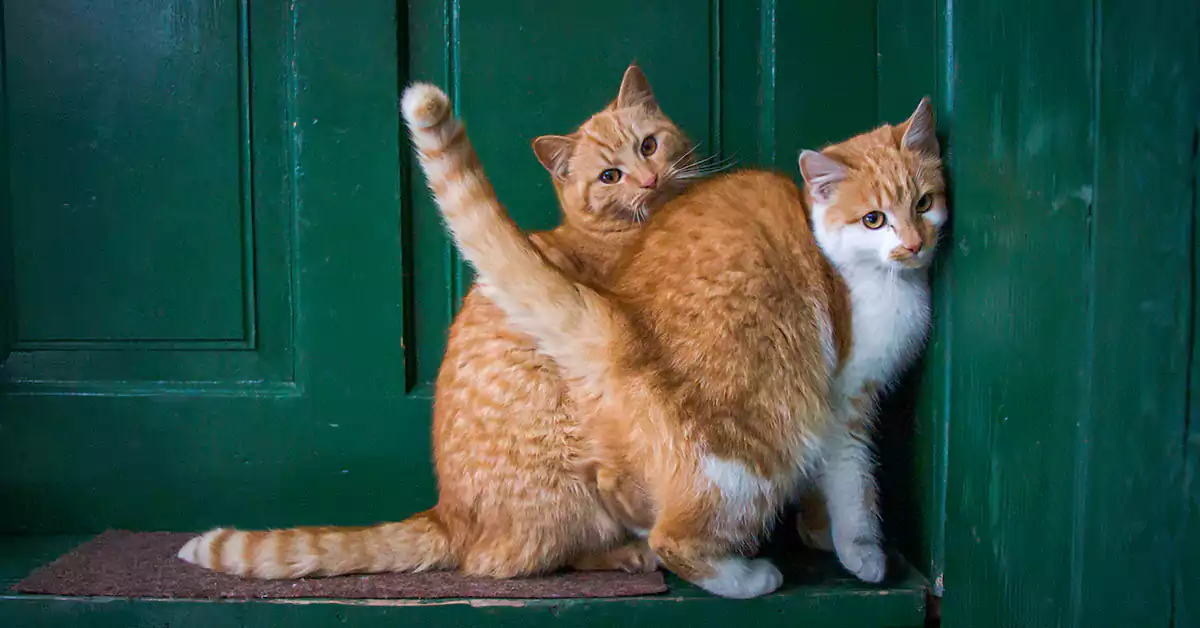
If you’re a cat parent, you’ve probably experienced this: the door is perfectly open, your cat can go anywhere she wants… but she still sits there and meows at the door like something is wrong.
Confusing? Yes.
Normal cat behaviour? Absolutely.
Cats are mysterious creatures, and sometimes their actions seem totally illogical to us. But there are real reasons behind this quirky habit. Let’s break them down.
Also Read: Why Does My Cat Suddenly Hate Being Touched? 12 Common Reasons & What You Can Do
Reasons Why Does Your Cat Meow at the Door Even When It’s Open?
1. Your Cat Wants Attention, Not Access
Sometimes the meow isn’t about the door at all—it’s about you.
Cats often meow at open doors simply because they want interaction. They might be calling you to follow them, pet them, or just acknowledge their presence.
Signs this is the reason:
- Your cat keeps looking at you while meowing
- They walk a few steps and look back, waiting for you
- They stop meowing once you talk to them or move toward them
2. Cats Love Routine and Get Confused by Changes
Cats are creatures of habit. If your cat is used to a door being closed or open at certain times, even a small change can make them vocal.
For example:
- If the door is usually closed at night but suddenly it’s open
- If you recently shifted furniture or changed the room layout
- If there are new sounds or people around
Your kitty is basically saying: “Hey, this is different—do something!”
3. Territory Checking Instincts Kick In
Doors represent boundaries. Even when a door is open, your cat may feel the need to “announce” themselves before entering or crossing that space.
This comes from natural instincts:
- Checking for danger
- Making sure no other animal was there
- Claiming the space with vocal cues
To us it looks funny, but to your cat, it’s just being cautious.
4. Your Cat Wants You to Follow Them Somewhere
Cats are surprisingly smart, and many of them use meowing to guide their humans.
Sometimes they meow at an open door because they want you to:
- Come play in that room
- Refill their food or water
- Check something they’ve discovered
- Give them access to a spot they can’t reach (like a window or cupboard)
Think of it as your cat saying, “Human, come here. I have something important to show you!”
5. They’re Feeling Anxious or Insecure
Cats express emotional discomfort through meowing.
An open door can sometimes make them feel vulnerable—especially if:
- You have guests
- There are loud noises
- A new pet has been introduced
- You recently shifted homes
The door becomes a “checkpoint,” and the meowing is a reassurance-seeking behaviour.
6. Your Cat Loves to Communicate—That’s It!
Some breeds, like Siamese, Bengals, and Sphynx cats, are naturally vocal.
Even mixed breeds can develop talking habits.
If your cat is a conversationalist by nature, they might meow at the door just because that’s their personality.
Cats talk to humans far more than they talk to other cats, so consider it a compliment!
7. Health Issues (Rare but Possible)
While most door-meowing behaviour is harmless, sometimes excessive vocalization can be linked to issues like:
- Hyperthyroidism
- Hearing loss
- Cognitive decline in older cats
- Pain or discomfort
If the behaviour is new or suddenly intense, a vet check is a good idea.
How to Stop Your Cat From Meowing at Open Doors
Here are simple tricks that work:
✔ Acknowledge them
Sometimes just talking back calms them.
✔ Stick to a routine
Regular feeding, playtime, and sleeping patterns reduce anxiety.
✔ Increase playtime
A bored cat = a noisy cat.
Interactive toys help a lot.
✔ Provide safe spaces
Cat trees, shelves, and cozy beds help them feel secure.
✔ Check if they want you to follow
Sometimes fulfilling their request stops the meowing immediately.
Final Thoughts
Cats aren’t being difficult—they’re communicating.
A meow at an open door is usually your cat’s way of saying:
- “Pay attention to me.”
- “Come with me.”
- “This feels different.”
- “I’m checking my territory.”
Once you understand the intention behind the meow, responding becomes easy—and your bond grows even stronger.